
In recent years, the escalating global energy demand and growing environmental concerns have intensified the focus on renewable energy sources. As an electrical engineer specializing in sustainable building technologies, I have witnessed firsthand the transformative potential of solar power systems in modern architecture. The shift from non-renewable to renewable energy is not just a trend but a necessity, and solar power systems represent a pivotal solution. In this article, I will delve into the comprehensive design of solar power systems for contemporary buildings, emphasizing their integration, components, and optimization. The term “solar power system” will be repeatedly highlighted to underscore its centrality in this discussion, as it encapsulates the core technology driving this evolution. By leveraging my experience in projects involving building-integrated photovoltaics, I aim to provide a detailed guide that addresses the complexities of designing efficient and reliable solar power systems, incorporating mathematical models, comparative tables, and practical insights to enhance understanding and implementation.
The concept of Building-Integrated Photovoltaics (BIPV) has revolutionized how we approach energy generation in urban environments. A solar power system, when seamlessly incorporated into a building’s structure, not only generates electricity but also serves as a multifunctional element, reducing the reliance on fossil fuels and minimizing carbon emissions. From my perspective, the advantages of such systems are manifold: they utilize underutilized surfaces like roofs and facades, eliminate the need for extensive land use, and reduce transmission losses by enabling localized power generation. For instance, in dense urban areas where space is scarce, a well-designed solar power system can transform a building into a self-sustaining unit. Moreover, the simultaneous design and construction of the building and the solar power system ensure cost-effectiveness and aesthetic harmony. As I have observed in various projects, this integration can lower surface temperatures through physical cooling methods, thereby reducing air conditioning loads and enhancing overall energy efficiency. The proliferation of solar power systems in buildings is not just about energy savings; it is about redefining architectural norms to prioritize sustainability.
To understand the design process, it is essential to grasp the fundamental components and working principles of a solar power system. A typical solar power system comprises photovoltaic (PV) modules, a charge controller, batteries, and an inverter, all interconnected to form a cohesive unit. The PV modules, often made of semiconductor materials like silicon, convert solar radiation into direct current (DC) electricity through the photovoltaic effect. This process can be modeled using the following equation for the output power of a PV module: $$ P_{pv} = \eta_{pv} \cdot A \cdot G \cdot (1 – \beta \cdot (T_c – T_{ref})) $$ where \( P_{pv} \) is the power output in watts, \( \eta_{pv} \) is the module efficiency, \( A \) is the surface area in square meters, \( G \) is the solar irradiance in W/m², \( \beta \) is the temperature coefficient, \( T_c \) is the cell temperature, and \( T_{ref} \) is the reference temperature. The charge controller regulates the flow of electricity to prevent overcharging or deep discharging of the batteries, which store energy for use during periods of low sunlight. The inverter then converts DC electricity into alternating current (AC), making it compatible with the building’s electrical grid and utility network. The overall efficiency of a solar power system can be expressed as: $$ \eta_{system} = \eta_{pv} \cdot \eta_{controller} \cdot \eta_{battery} \cdot \eta_{inverter} $$ where each \( \eta \) represents the efficiency of the respective component. In my designs, I prioritize optimizing these efficiencies to maximize the energy yield of the solar power system, ensuring that every component works in harmony to deliver reliable power.
Designing a solar power system for modern buildings requires a meticulous approach that considers geographical, climatic, and structural factors. As part of the electrical design process, I begin by analyzing the building’s location, including its latitude, longitude, and altitude, as well as local climate data such as average temperature, humidity, and solar radiation levels. This analysis informs the photovoltaic array design, where I determine the optimal orientation, tilt angle, and spacing of the PV modules to maximize energy capture. For example, the ideal tilt angle \( \theta \) for a fixed PV array can be approximated using the latitude \( \phi \) of the site: $$ \theta = \phi \pm 15^\circ $$ depending on the season. Additionally, the spacing between rows of modules must prevent shading, which can be calculated using the formula: $$ D = H \cdot \cot(\alpha) $$ where \( D \) is the distance between rows, \( H \) is the height of the module, and \( \alpha \) is the solar altitude angle. These calculations ensure that the solar power system operates at peak efficiency throughout the year. Furthermore, I assess the building’s electrical load profile to size the system appropriately, considering factors like peak demand, daily energy consumption, and the types of loads (e.g., lighting, HVAC, appliances). This load analysis is critical for determining the capacity of the solar power system and its components, as undersizing can lead to power shortages while oversizing increases costs unnecessarily.
Equipment selection is a cornerstone of designing an effective solar power system. Based on my experience, the choice of inverter, batteries, and charge controller significantly impacts the system’s performance, safety, and cost. For inverters, I often evaluate different types based on their safety, conversion efficiency, size, and cost. The following table summarizes the key characteristics of common inverter types used in solar power systems:
| Inverter Type | Safety | Conversion Efficiency | Size | Cost |
|---|---|---|---|---|
| High-Frequency Transformer | Medium | Low | Medium | Medium |
| Low-Frequency Transformer | High | Medium | Large | High |
| Transformerless | Low | High | Small | Low |
In most residential solar power system applications, I recommend transformerless inverters due to their high efficiency and compact size, provided that safety measures like grounding and isolation are implemented. For batteries, which store energy for backup and load leveling, I consider factors such as daily energy consumption, depth of discharge, temperature, and autonomy days. The capacity \( C \) of the battery bank in ampere-hours (Ah) can be estimated using: $$ C = \frac{E_d \cdot D}{V \cdot \eta_b \cdot DOD} $$ where \( E_d \) is the daily energy demand in watt-hours, \( D \) is the autonomy days, \( V \) is the system voltage, \( \eta_b \) is the battery efficiency, and \( DOD \) is the depth of discharge. I typically opt for maintenance-free or gel batteries in solar power systems for their environmental friendliness and reliability. When selecting a charge controller, I match its voltage and current ratings with the PV array and inverter, ensuring it can handle the maximum input current. For instance, the controller’s input current should exceed the short-circuit current of the PV modules, and its operating temperature range must suit the installation environment. In larger solar power systems, I use multi-input controllers to manage multiple PV strings efficiently, enhancing the overall robustness of the system.
The power distribution system in a solar power system is crucial for safe and efficient energy flow. In my designs, I incorporate components like junction boxes, combiner boxes, and protection devices to manage the DC and AC sides of the system. For example, bypass diodes in junction boxes prevent hot-spot effects in PV modules by providing alternative current paths. The combiner box, which consolidates multiple PV strings, includes fuses, surge protectors, and disconnects to safeguard against overcurrent and lightning-induced surges. The structure of a typical PV combiner box can be represented with elements like fuses for each input string, anti-reverse diodes, and surge arresters, all housed in an enclosure with an appropriate ingress protection (IP) rating, such as IP65 for outdoor installations. Lightning protection is another critical aspect; I employ a multi-tiered approach involving direct strike protection, surge suppression devices, and grounding to mitigate risks. Additionally, the wiring and cabling must be sized correctly to minimize losses, using the formula for voltage drop: $$ V_d = I \cdot R \cdot L $$ where \( V_d \) is the voltage drop, \( I \) is the current, \( R \) is the resistance per unit length, and \( L \) is the length of the cable. By optimizing the distribution network, I ensure that the solar power system delivers power reliably while adhering to electrical codes and standards.
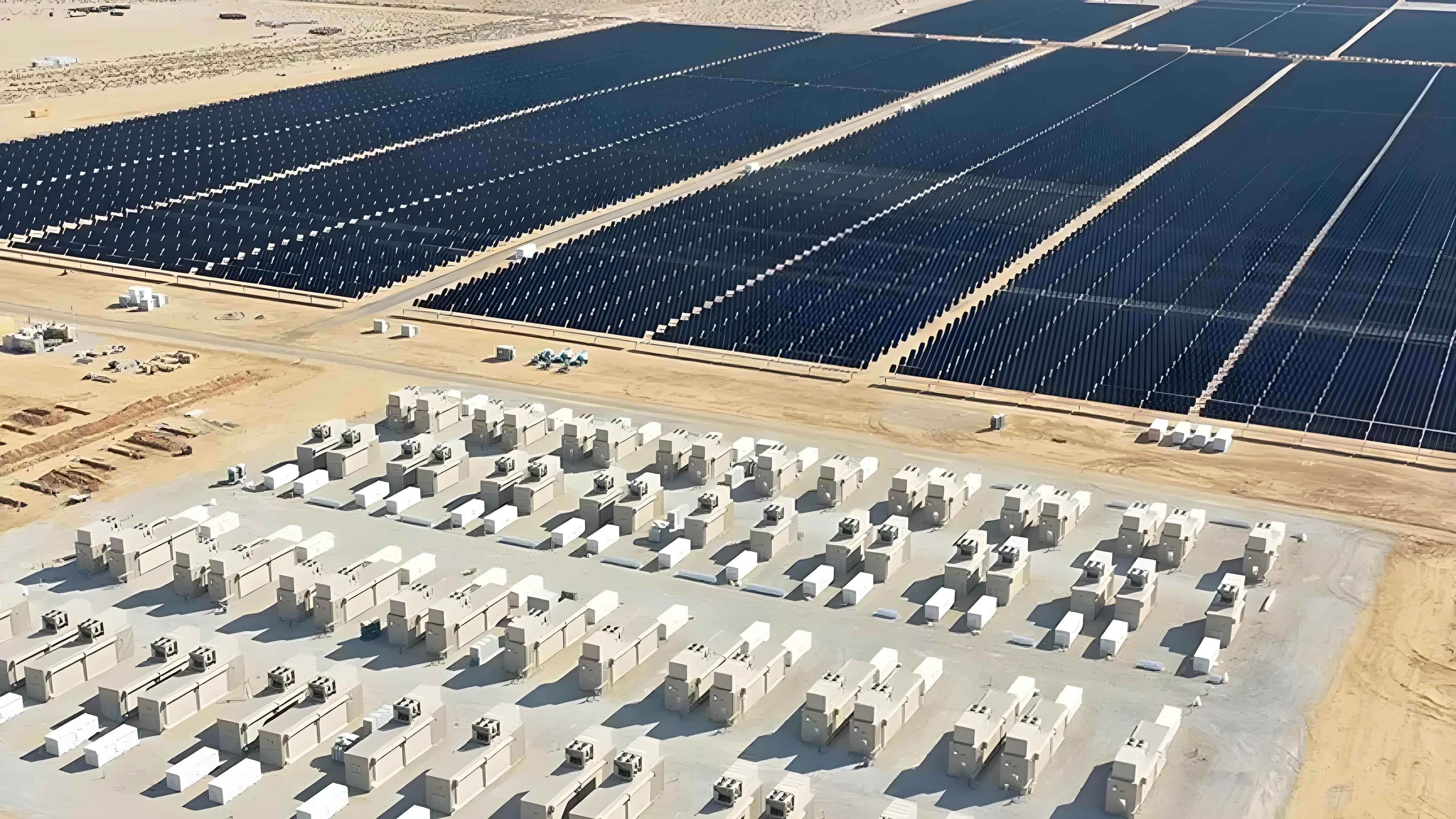
Grid connection design is a pivotal phase in integrating a solar power system with the utility network. As part of this, I determine the appropriate voltage level and connection point, often at the building’s main distribution board. Key equipment includes relays, circuit breakers, energy meters, and anti-islanding devices to ensure safety and compliance. In grid-tied solar power systems, I use two energy meters: one to measure the energy generated by the PV array and another to measure the energy consumed from the grid. This setup allows for accurate billing and monitoring, especially in net-metering scenarios. The power flow between the solar power system and the grid can be described using: $$ P_{net} = P_{pv} – P_{load} $$ where \( P_{net} \) is the net power exported to the grid (if positive) or imported from the grid (if negative). Anti-islanding protection is essential to prevent the solar power system from energizing the grid during outages, which I achieve through voltage and frequency monitoring. Furthermore, I design the system to synchronize with the grid’s phase and frequency, using inverters that meet relevant standards like IEEE 1547. In my projects, I have found that a well-executed grid connection enhances the reliability of the solar power system and provides economic benefits through energy credits and reduced peak demand charges.
In conclusion, the design of modern building solar power systems is a multifaceted process that demands a holistic approach. From array optimization to equipment selection and grid integration, each aspect requires careful consideration to achieve energy efficiency, cost-effectiveness, and environmental sustainability. As an engineer, I believe that advancing solar power system technologies through research and innovation is key to overcoming challenges like intermittency and storage limitations. The widespread adoption of solar power systems in buildings not only reduces carbon footprints but also fosters energy independence. By sharing these insights, I hope to inspire further exploration and implementation of solar power systems, ultimately contributing to a greener and more resilient future. Through continuous improvement in materials, such as perovskite solar cells, and smart grid technologies, the potential of solar power systems will only expand, solidifying their role in the global energy landscape.