
As a researcher deeply invested in renewable energy, I find the evolution of solar power systems to be a cornerstone of modern sustainable development. The dawn of the Industrial Revolution introduced “energy” as a critical concept, but it was the 20th century’s rapid expansion that highlighted the depletion of non-renewable resources like coal, oil, and natural gas. Today, the global community grapples with balancing environmental preservation and societal progress, making the resolution of conflicts between energy demands, Earth’s ecology, and development an urgent priority. Solar power systems offer a promising pathway, with solar energy generation technologies gaining widespread acceptance due to their unique advantages and immense potential. In this article, I will explore various solar power systems, delving into their principles, structures, and characteristics, while incorporating tables and formulas to provide a comprehensive analysis. The keyword “solar power system” will be frequently emphasized to underscore its significance in addressing global energy challenges.
The transformation of solar energy into electricity has become a focal point for scientists and engineers, particularly since the Second Industrial Revolution cemented electricity’s role in daily life. Solar power systems encompass a range of technologies, including photovoltaic, solar thermal, solar updraft, and solar pond power generation. Each of these solar power system variants operates on distinct principles, and I will examine their workings, system architectures, and key features in detail. By doing so, I aim to shed light on how these solar power system innovations can mitigate energy shortages and environmental degradation. The integration of formulas and tables will help quantify their efficiencies and performance, providing a clearer understanding of their capabilities.
Let me begin with photovoltaic power generation, a direct conversion method that lies at the heart of many solar power system applications. This technology leverages the photoelectric effect in semiconductor PN junctions to transform solar radiation into electrical energy. When sunlight strikes the PN junction, photons with sufficient energy excite electrons from the covalent bonds, creating electron-hole pairs. Under the influence of the built-in electric field in the PN junction, electrons drift toward the N-region and holes toward the P-region, generating a current when an external circuit is connected. The overall solar power system for photovoltaics typically includes solar panels, controllers, battery banks, DC-AC inverters, and loads, forming a cohesive unit for energy harvesting. The efficiency and cost of a solar power system heavily depend on the solar panels, which have evolved through generations of material advancements.
To illustrate the progression of solar cell materials, I have compiled Table 1, which summarizes the characteristics of different generations used in solar power systems. This table highlights the trade-offs between efficiency, cost, and environmental impact, underscoring the importance of ongoing research in optimizing solar power system components.
| Generation | Material Type | Lab Efficiency (%) | Practical Efficiency (%) | Advantages | Disadvantages |
|---|---|---|---|---|---|
| First | Monocrystalline Silicon | 24.7 | 23 | High efficiency, long lifespan, mature technology | High cost, high pollution, high energy consumption |
| First | Polycrystalline Silicon | 20.3 | 18.5 | Moderate efficiency, widely available | Similar drawbacks as monocrystalline |
| Second | CuInSe2 | 19.8 | 12 | Lower cost, lightweight, works in weak light | Lower efficiency, high pollution, rare metals |
| Second | CdTe | 19.6 | 13 | Cost-effective, good performance | Toxicity concerns, resource scarcity |
| Third | Dye-Sensitized | 22.7 | 18 | Low cost, eco-friendly, high potential efficiency | Experimental stage, stability issues |
| Third | Concentrator Cells | 42.7 | 30 | Very high efficiency, suitable for focused light | Complex setup, high initial investment |
The efficiency of a photovoltaic solar power system can be modeled using the formula for conversion efficiency, which is defined as the ratio of electrical power output to solar power input. For instance, the efficiency $$ \eta $$ is given by:
$$ \eta = \frac{P_{\text{out}}}{P_{\text{in}}} \times 100\% $$
where $$ P_{\text{out}} $$ is the electrical power generated by the solar power system and $$ P_{\text{in}} $$ is the incident solar radiation power. In practice, factors like temperature and shading affect performance, leading to derating factors that modify the ideal efficiency. For a typical solar power system, the overall output can be estimated by integrating panel efficiency with environmental conditions, emphasizing the need for robust design in solar power system deployments.
Moving on to solar thermal power generation, this indirect method uses optical principles to concentrate sunlight, storing thermal energy for electricity production. In a solar thermal power system, reflectors or lenses focus solar radiation onto a receiver, where a heat transfer fluid absorbs the energy. This heated fluid then passes through a heat exchanger to produce steam, driving a turbine connected to a generator. The ability of this solar power system to provide stable output, even during nighttime, makes it a valuable complement to intermittent sources. Common configurations include parabolic trough, power tower, linear Fresnel, and dish systems, each with unique focusing mechanisms.
The thermal efficiency of a solar power system like this can be expressed using the first law of thermodynamics. For example, the overall efficiency $$ \eta_{\text{th}} $$ might be calculated as:
$$ \eta_{\text{th}} = \frac{W_{\text{net}}}{Q_{\text{in}}} $$
where $$ W_{\text{net}} $$ is the net work output from the turbine and $$ Q_{\text{in}} $$ is the heat input from the solar concentrator. In a parabolic trough solar power system, the concentration ratio $$ C $$ plays a key role:
$$ C = \frac{A_{\text{aperture}}}{A_{\text{receiver}}} $$
where $$ A_{\text{aperture}} $$ is the area of the reflector and $$ A_{\text{receiver}} $$ is the area of the receiver. Higher concentration ratios generally lead to better efficiency in a solar power system, but they also increase complexity and cost. Table 2 compares the four main types of solar thermal power systems, highlighting their typical applications and performance metrics.
| Type | Concentration Method | Typical Efficiency (%) | Advantages | Disadvantages |
|---|---|---|---|---|
| Parabolic Trough | Line focusing using parabolic mirrors | 14-20 | Proven technology, good for large-scale plants | Lower efficiency than towers, land-intensive |
| Power Tower | Point focusing with heliostats | 15-23 | High temperature capability, scalable | High capital cost, complex control |
| Linear Fresnel | Line focusing with flat mirrors | 10-18 | Lower cost, simpler design | Lower efficiency, limited temperature range |
| Dish Stirling | Point focusing with parabolic dish | 20-30 | Very high efficiency, modular | Small scale, maintenance challenges |
In discussing energy storage for solar power systems, it is crucial to consider how thermal storage enhances reliability. For instance, molten salt storage in a solar thermal power system allows for extended operation, addressing intermittency issues. The energy stored $$ E_{\text{storage}} $$ can be approximated by:
$$ E_{\text{storage}} = m \cdot c_p \cdot \Delta T $$
where $$ m $$ is the mass of the storage medium, $$ c_p $$ is the specific heat capacity, and $$ \Delta T $$ is the temperature change. This principle is integral to designing a resilient solar power system that can meet base-load demands.
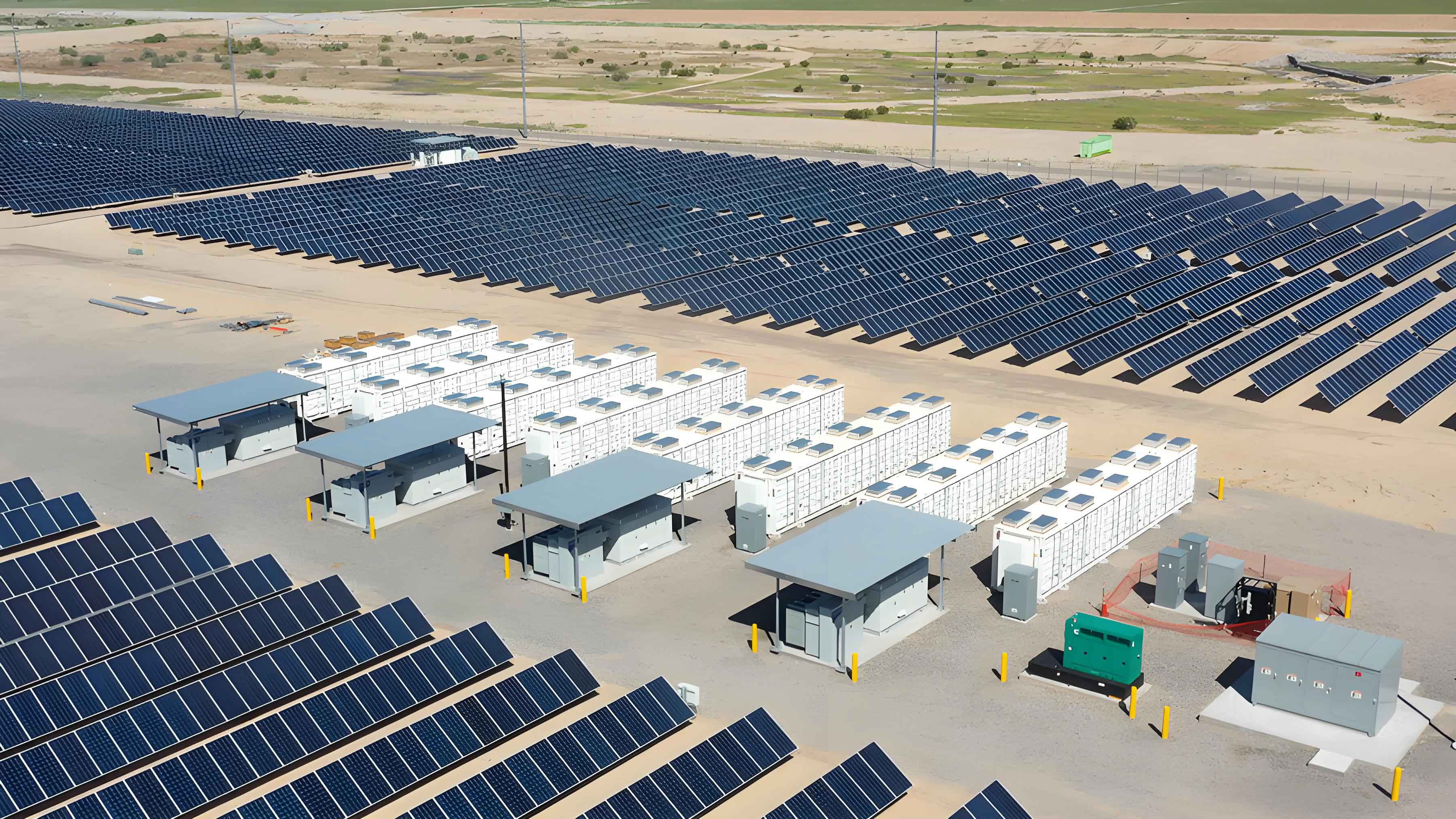
Another innovative approach is the solar updraft power system, often called a “solar chimney,” which harnesses aerodynamics to generate electricity. In this solar power system, a large greenhouse-like collector heats the air, causing it to rise through a central chimney and drive turbines. The system comprises a collector, chimney, thermal storage layer, and turbine generators. Solar radiation heats the air under the collector, reducing its density and creating a pressure differential that induces airflow. This solar power system can integrate with wind energy, forming a hybrid setup that maximizes resource use.
The power output $$ P $$ of a solar updraft power system can be derived from Bernoulli’s principle and continuity equation. For a chimney of height $$ H $$ and cross-sectional area $$ A $$, the theoretical power is:
$$ P = \eta_t \cdot \rho \cdot g \cdot H \cdot Q $$
where $$ \eta_t $$ is the turbine efficiency, $$ \rho $$ is the air density, $$ g $$ is gravitational acceleration, and $$ Q $$ is the volumetric flow rate. The flow rate depends on the temperature rise $$ \Delta T $$ under the collector:
$$ Q = A \cdot v = A \cdot \sqrt{2 \cdot g \cdot H \cdot \frac{\Delta T}{T_0}} $$
with $$ v $$ being the airflow velocity and $$ T_0 $$ the ambient temperature. This solar power system is simple and emission-free, but it requires careful design to address issues like dust accumulation on the collector and structural challenges for tall chimneys. Table 3 outlines key parameters for a typical solar updraft power system, illustrating the scale needed for practical implementation.
| Component | Parameter | Typical Value | Impact on Performance |
|---|---|---|---|
| Collector | Diameter | 100-1000 m | Larger area increases heat absorption and power output |
| Chimney | Height | 200-1000 m | Taller chimneys enhance draft and efficiency |
| Thermal Storage | Material | Water or gravel | Stores heat for continuous operation, reduces intermittency |
| Turbine | Efficiency | 80-90% | Higher efficiency maximizes energy conversion |
Lastly, the solar pond power system utilizes salinity gradients in a body of water to trap heat and generate electricity. In this solar power system, a saltwater pool has increasing salinity with depth, inhibiting convection and allowing the bottom layer to reach high temperatures. This heat is then extracted via a heat exchanger to drive a turbine. The solar pond power system is low-cost and operates under diffuse light conditions, but it demands large areas and precise construction to prevent leaks and environmental damage.
The temperature distribution in a solar pond power system can be modeled using Fourier’s law of heat conduction. For a steady-state condition, the heat flux $$ q $$ through the pond is:
$$ q = -k \frac{dT}{dz} $$
where $$ k $$ is the thermal conductivity and $$ \frac{dT}{dz} $$ is the temperature gradient with depth $$ z $$. The efficiency of energy extraction depends on the temperature difference between the bottom and top layers, often expressed as:
$$ \eta_{\text{pond}} = 1 – \frac{T_c}{T_h} $$
where $$ T_c $$ is the cold reservoir temperature (top) and $$ T_h $$ is the hot reservoir temperature (bottom), based on the Carnot cycle idealization for this solar power system. Table 4 compares the four solar power system technologies discussed, providing a holistic view of their attributes and suitability.
| Technology | Principle | Typical Scale | Efficiency Range (%) | Key Challenges |
|---|---|---|---|---|
| Photovoltaic | Direct conversion via PN junction | Small to large | 10-30 | Intermittency, material costs, production energy |
| Solar Thermal | Concentration and heat transfer | Medium to large | 10-30 | High capital cost, land use, water consumption |
| Solar Updraft | Aerodynamic flow and pressure | Large | 1-5 | Structural demands, low efficiency, dust issues |
| Solar Pond | Salinity gradient heat storage | Medium to large | 5-15 | Land intensity, leakage risks, environmental impact |
In reflecting on the development and prospects of solar power systems, I observe that photovoltaic technology has advanced significantly due to policy support and research investments. Despite drawbacks like low efficiency and variability, this solar power system remains pivotal for environmental conservation. Solar thermal power systems, with their stable output and grid compatibility, represent a growing segment with potential for hybridization. Meanwhile, solar updraft and solar pond power systems are still in experimental phases, requiring further innovation for widespread adoption. The future of solar power systems lies in multi-energy complementary approaches, such as integrating solar with fossil fuels or other renewables, to enhance efficiency and reduce emissions.
To quantify the potential of hybrid solar power systems, consider the overall system efficiency $$ \eta_{\text{hybrid}} $$ when combining solar with another source, such as natural gas:
$$ \eta_{\text{hybrid}} = \frac{W_{\text{solar}} + W_{\text{gas}}}{Q_{\text{solar}} + Q_{\text{gas}}} $$
where $$ W_{\text{solar}} $$ and $$ W_{\text{gas}} $$ are the work outputs from solar and gas components, and $$ Q_{\text{solar}} $$ and $$ Q_{\text{gas}} $$ are the respective heat inputs. This approach can optimize the solar power system performance, making it more reliable and cost-effective.
In conclusion, as global resource scarcity intensifies, the exploration of新能源 like solar energy becomes imperative. Solar power systems, despite limitations such as weather-dependent output and efficiency issues, offer a viable solution through complementary energy schemes. By leveraging technologies like solar-thermal hybrids or solar-wind integrations, we can refine energy structures, minimize harmful emissions, and bolster system efficacy. I am confident that solar power systems will play a transformative role in the energy landscape, supplementing traditional sources and driving socio-economic growth. The ongoing research and deployment of solar power systems underscore their potential to address pressing energy challenges, paving the way for a sustainable future.