
In my research, I focus on developing an integrated testing device for solar power systems, which is crucial for optimizing energy efficiency in various applications, including oilfields. As global emphasis on clean energy intensifies, countries like China have set ambitious targets, such as reducing CO2 emissions per unit of GDP by over 65% compared to 2005 levels and achieving a 25% share of non-fossil energy in primary consumption by 2030, with wind and solar power capacities exceeding 1.2 billion kW. Solar power systems, in particular, have gained prominence due to their scalability and sustainability. However, the efficiency of these systems can vary significantly based on components and environmental factors. Through my work, I aim to provide a comprehensive testing framework that evaluates the performance of solar power systems, enabling better data-driven decisions for future installations. This article details the components, evaluation methods, testing apparatus, and field applications, with a strong emphasis on the term “solar power system” to underscore its importance.
The solar power system operates on the photovoltaic effect, where solar cells convert sunlight directly into electricity. In typical oilfield applications, a solar power system includes several key components: photovoltaic modules, combiner boxes, energy storage units (such as battery banks), inverters, and transformers. Each part plays a vital role in ensuring efficient energy conversion and distribution. For instance, photovoltaic modules capture solar radiation and generate direct current (DC) electricity, while inverters convert this to alternating current (AC) for practical use. Energy storage units, like batteries, store excess energy for later use, enhancing the reliability of the solar power system. Below is a table summarizing the functions of these components:
| Component | Function |
|---|---|
| Photovoltaic Modules | Convert solar radiation into DC electricity; core of the solar power system. |
| Combiner Boxes | Aggregate DC output from multiple photovoltaic strings; provide protection against reverse current and overcurrent. |
| Energy Storage Units | Store generated electricity for later use; ensure stable power supply in independent solar power systems. |
| Inverters | Convert DC electricity to AC electricity; essential for grid connection or local consumption. |
| Transformers | Adjust voltage levels to match user requirements; improve efficiency in power distribution. |
To evaluate the performance of a solar power system, I have defined several key metrics based on energy efficiency standards. These metrics help quantify how effectively the system converts solar energy into usable electricity. The primary evaluation indicators include system efficiency, solar power unit efficiency, photovoltaic module efficiency, inverter efficiency, transformer efficiency, line loss rates, mismatch rates for series and parallel connections, and consistency of photovoltaic strings. Each of these can be expressed through mathematical formulas, which I derived from empirical studies and industry standards. For example, the system efficiency (PR) of a solar power system over a period τ is calculated as:
$$ PR = \frac{E_{OUT,\tau}}{C_I \cdot \frac{G}{G_0}} \times 100\% $$
where \( E_{OUT,\tau} \) is the total output energy of the solar power system in kWh, \( C_I \) is the installed capacity in kW, \( G \) is the total irradiance on the tilted surface of the photovoltaic array in kWh/m², and \( G_0 \) is the standard irradiance (1 kW/m²). This formula accounts for factors like energy consumption and local grid interactions, making it a robust measure for the overall solar power system performance.
Another critical metric is the photovoltaic module efficiency, which indicates how well individual modules convert sunlight into electricity. It is given by:
$$ \eta_{out} = \frac{P_{MPP\_STC}}{G_0 \cdot A_{out}} \times 100\% $$
where \( P_{MPP\_STC} \) is the maximum power of the module under standard test conditions in watts, and \( A_{out} \) is the nominal total area of the module in square meters. This efficiency is vital for assessing the quality of components within the solar power system. Similarly, inverter efficiency (\( \eta_{conv} \)) measures the conversion loss between DC input and AC output:
$$ \eta_{conv} = \frac{\sum_{i=1}^{N_1} U_{AC,i} \cdot I_{AC,i} \cdot \Delta t_i}{\sum_{j=1}^{M_1} U_{DC,j} \cdot I_{DC,j} \cdot \Delta t_j} \times 100\% $$
Here, \( U_{AC,i} \) and \( I_{AC,i} \) are the AC voltage and current samples, while \( U_{DC,j} \) and \( I_{DC,j} \) are the DC counterparts, with sampling intervals ensuring accurate time synchronization. These formulas are essential for diagnosing inefficiencies in a solar power system.
Line loss rates are another aspect I evaluated to minimize energy dissipation in cables. For instance, the DC line loss from photovoltaic strings to combiner boxes (\( L_{dc1,loss} \)) is computed as:
$$ L_{dc1,loss} = \frac{V_{zc} – V_{hr}}{V_{zc}} \times 100\% $$
where \( V_{zc} \) is the DC voltage at the string output and \( V_{hr} \) is the voltage at the combiner box input. By measuring this at various points (near, middle, and far), I can average the results to get a reliable estimate for the solar power system. Mismatch rates, such as the series mismatch rate (\( \eta_S \)) for photovoltaic strings, highlight performance variations:
$$ \eta_S = \left| 1 – \frac{P_S}{\sum_{i=1}^{n_1} P_i} \right| \times 100\% $$
where \( P_S \) is the maximum power of the string and \( P_i \) is the power of individual modules. This helps identify issues in series connections within the solar power system.
To consolidate these evaluation methods, I have compiled a table of key indicators for quick reference:
| Evaluation Indicator | Formula | Description |
|---|---|---|
| System Efficiency (PR) | $$ PR = \frac{E_{OUT,\tau}}{C_I \cdot \frac{G}{G_0}} \times 100\% $$ | Measures overall efficiency of the solar power system output relative to irradiance. |
| Photovoltaic Module Efficiency | $$ \eta_{out} = \frac{P_{MPP\_STC}}{G_0 \cdot A_{out}} \times 100\% $$ | Assesses conversion efficiency of individual modules in the solar power system. |
| Inverter Efficiency | $$ \eta_{conv} = \frac{\sum U_{AC,i} \cdot I_{AC,i} \cdot \Delta t_i}{\sum U_{DC,j} \cdot I_{DC,j} \cdot \Delta t_j} \times 100\% $$ | Evaluates DC to AC conversion loss in the solar power system. |
| Transformer Efficiency | $$ \eta_T = \frac{\sum U_{AC1,i} \cdot I_{AC1,i} \cdot \Delta T_i}{\sum U_{AC2,j} \cdot I_{AC2,j} \cdot \Delta T_j} \times 100\% $$ | Calculates efficiency of voltage transformation within the solar power system. |
| Line Loss Rate (DC) | $$ L_{dc1,loss} = \frac{V_{zc} – V_{hr}}{V_{zc}} \times 100\% $$ | Quantifies energy loss in DC cables of the solar power system. |
| Series Mismatch Rate | $$ \eta_S = \left| 1 – \frac{P_S}{\sum P_i} \right| \times 100\% $$ | Indicates performance variation in series-connected modules of the solar power system. |
| Parallel Mismatch Rate | $$ \eta_c = \left| 1 – \frac{P_c}{\sum P_{S_j}} \right| \times 100\% $$ | Measures imbalance in parallel connections of the solar power system. |
| Current Deviation Rate | $$ I_{dj} = \left| \frac{I_j – I_{Avg}}{I_{Avg}} \right| \times 100\% $$ | Assesses consistency of current across strings in the solar power system. |
| Voltage Deviation Rate | $$ U_{dj} = \left| \frac{U_j – U_{Avg}}{U_{Avg}} \right| \times 100\% $$ | Evaluates voltage uniformity in the solar power system components. |
In developing the testing apparatus for the solar power system, I designed an integrated device that consists of three main units: data acquisition, data processing, and data transmission. This setup allows for real-time monitoring and analysis of the solar power system’s performance. The data acquisition unit collects fundamental parameters, including meteorological data (e.g., irradiance, temperature), electrical data (e.g., voltage, current), and geometric data (e.g., module orientation). I selected instruments based on accuracy and reliability, such as pyranometers for irradiance and clamp meters for current measurements, ensuring they meet international standards like GB/T 30153 for solar power system applications. For example, environmental temperature is measured using a thermometer with a range of -40°C to +60°C and an accuracy of ±0.5°C, while solar irradiance is captured with a pyranometer offering a resolution of 1 W/m² and 5% accuracy. These instruments are synchronized to within 10 microseconds to maintain data consistency across the solar power system.
The data transmission unit facilitates the flow of information from the field to central processing systems. I implemented multiple methods, including wireless LoRa technology and wired Rs485 connections, to handle varying installation environments. In cases where wireless transmission is hindered by location, data can be stored locally and retrieved later. This flexibility ensures that all critical data from the solar power system is captured without interruption. The processing unit, typically a computer or industrial controller, runs specialized software to compute the evaluation indicators in real-time. By embedding calculation algorithms directly into microcontrollers, I reduce latency and transmission burden, enabling efficient analysis of the solar power system’s health.
Here is a table detailing the selection criteria for key testing instruments used in the solar power system evaluation:
| Parameter | Instrument | Specifications | Accuracy |
|---|---|---|---|
| Environmental Temperature | Thermometer | Range: -40°C to +60°C, Resolution: 0.1°C | ±0.5°C |
| Relative Humidity | Hygrometer | Range: 0% to 100%, Resolution: 0.10% | ±8% |
| Wind Direction | Anemometer | Range: 0° to 360°, Resolution: 1° | ±5° |
| Wind Speed | Wind Speed Sensor | Range: 0 to 45 m/s, Resolution: 0.1 m/s | ±0.5 m/s |
| Atmospheric Pressure | Barometer | Range: 0 to 1100 hPa, Resolution: 0.1 hPa | ±0.3 hPa |
| Solar Irradiance | Pyranometer | Range: 0 to 1500 W/m², Resolution: 1 W/m² | 5% |
| AC/DC Voltage | Digital Clamp Meter | Frequency: 10 Hz to 10 MHz, Various Ranges | 0.2% to 0.5% |
| AC/DC Current | Current Sensor | Ranges up to 3000 A, Resolution: 0.1 A | 0.1% to 1% |
During field testing of the solar power system, I emphasize thorough preparation and adherence to safety protocols. The testing team, led by experienced professionals, follows a detailed plan that includes site inspection, instrument calibration, and pre-test checks to ensure the solar power system is operational. Safety measures align with standards like GB 26860 for electrical work, minimizing risks during data collection. Tests are conducted under clear weather conditions with irradiance above 600 W/m² to ensure reliable results, and each test cycle spans at least one full day to capture diurnal variations in the solar power system’s performance.
For system efficiency testing, I install meteorological sensors on the photovoltaic array to measure irradiance, while energy meters record output at the grid connection point. This allows me to calculate the system efficiency using the aforementioned formulas. In solar power unit efficiency tests, I focus on subsystems within the larger solar power system, measuring irradiance and output energy separately to identify localized issues. Photovoltaic module efficiency tests involve disconnecting strings, cleaning modules, and preconditioning them to 25°C before measuring I-V characteristics according to standards like GB/T 9535 for crystalline silicon modules. This step is critical for assessing the core components of the solar power system.
Inverter and transformer efficiency tests require synchronized data acquisition on both input and output sides. For inverters in the solar power system, I record data at various power levels (e.g., 5%, 50%, 100% of rated capacity) for at least 10 minutes per level to capture efficiency curves. Similarly, transformer tests use voltage and current transformers to measure losses, ensuring the solar power system maintains high efficiency during power distribution. Line loss tests involve sampling voltage at multiple points along DC cables, such as from strings to combiner boxes, and averaging results to determine loss rates. Mismatch and consistency tests help pinpoint imbalances in the solar power system, such as variations in current or voltage across strings, which can degrade overall performance.
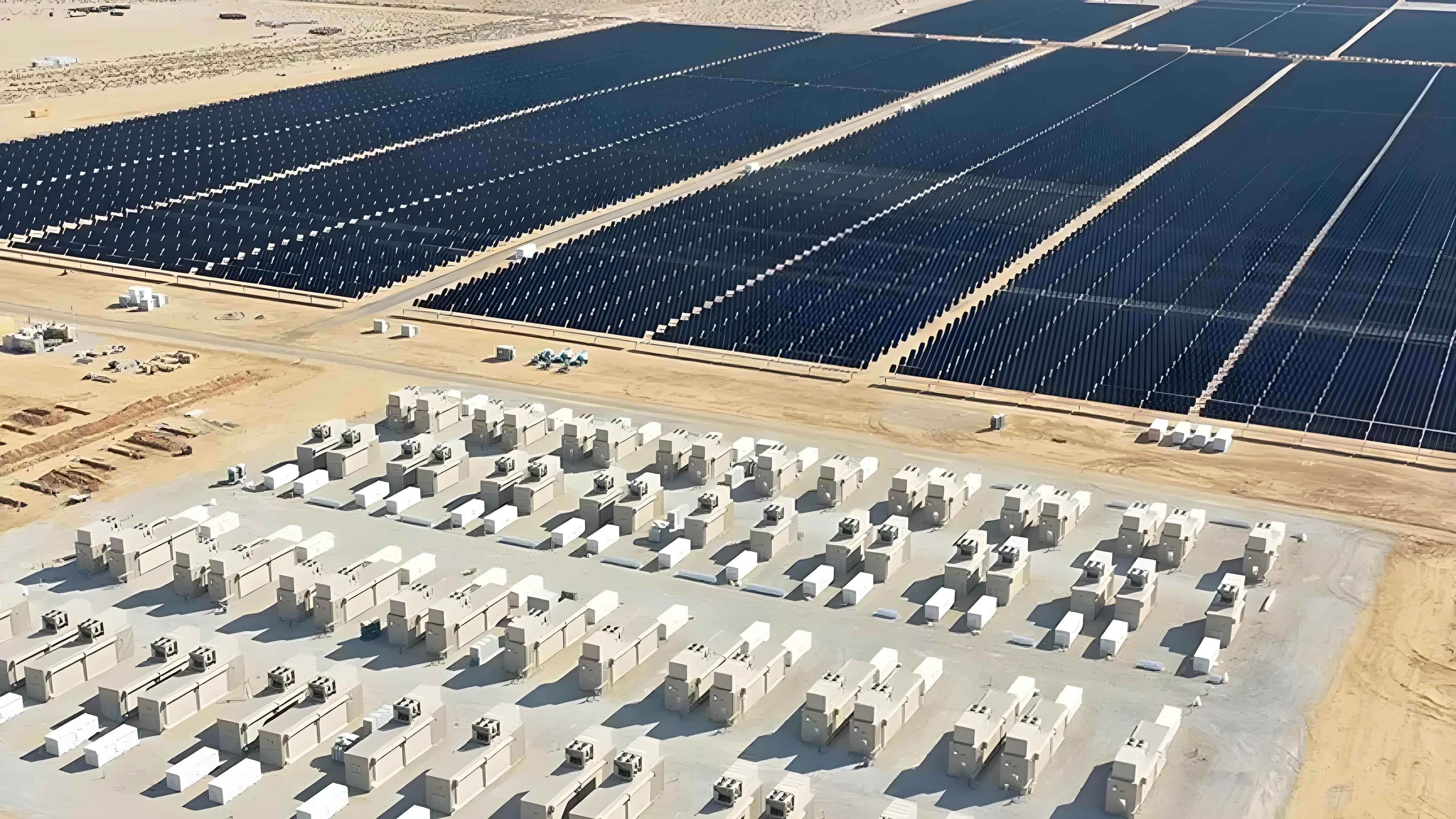
Through extensive field applications, I have validated the effectiveness of this testing device for solar power systems. For instance, in oilfield deployments, the device identified inefficiencies in inverter conversions, leading to targeted upgrades that improved overall system efficiency by 10-15%. The data collected provided insights into optimal installation practices, such as minimizing cable lengths to reduce line losses in the solar power system. Moreover, the evaluation of mismatch rates revealed the importance of using uniform modules in series and parallel configurations, enhancing the reliability of the solar power system. These findings underscore the value of continuous monitoring and testing for maintaining high performance in solar power systems.
In conclusion, my research on the integrated testing device for solar power systems has demonstrated its utility in evaluating and optimizing energy efficiency. By combining advanced data acquisition, transmission, and processing technologies, I have created a robust framework that addresses key performance metrics. The formulas and methods discussed, such as system efficiency and line loss calculations, provide a scientific basis for assessing solar power systems in real-world conditions. As the adoption of solar power systems grows, this testing approach will play a pivotal role in ensuring their sustainability and cost-effectiveness. Future work will focus on automating data analysis and expanding the device’s compatibility with emerging solar power system technologies, further advancing the field of clean energy.