
As I reflect on the global energy landscape, it becomes clear that the rapid development of economies and human progress has escalated the demand for reliable and sustainable energy sources. The quest for new energy solutions is now more critical than ever, driven by the limitations and environmental impacts of conventional power generation. Fossil fuel-based thermal power, for instance, relies on finite resources like coal and oil, which are depleting rapidly. Moreover, burning these fuels releases carbon dioxide and sulfur oxides, contributing to greenhouse effects and acid rain that degrade our planet’s environment. Hydropower, while renewable, often requires flooding vast areas of land, potentially disrupting ecosystems and posing risks of catastrophic dam failures. Nuclear power, though clean under normal operations, carries the terrifying threat of radiation leaks. These challenges compel me to advocate for alternative energy sources that are abundant, safe, and environmentally friendly. Among these, solar power systems stand out as a beacon of hope, harnessing the sun’s inexhaustible energy to meet our needs without harming the Earth.
In my analysis, solar power systems operate on the principle of converting sunlight directly into electricity, primarily through the photovoltaic effect. This process involves semiconductor materials, where light photons interact with electron-hole pairs in a p-n junction. When sunlight strikes the semiconductor, it generates electron-hole pairs; under the influence of the built-in electric field in the p-n junction, holes move toward the p-region and electrons toward the n-region, creating a flow of current when a circuit is connected. This fundamental mechanism can be described by the equation for photon energy: $$ E = h \nu $$ where \( E \) is the energy of a photon, \( h \) is Planck’s constant, and \( \nu \) is the frequency of the light. The resulting current and voltage in a solar cell can be modeled as: $$ I = I_L – I_0 \left( e^{\frac{qV}{nkT}} – 1 \right) $$ where \( I \) is the output current, \( I_L \) is the light-generated current, \( I_0 \) is the reverse saturation current, \( q \) is the electron charge, \( V \) is the voltage, \( n \) is the ideality factor, \( k \) is Boltzmann’s constant, and \( T \) is the temperature in Kelvin. This direct conversion method is highly efficient and forms the backbone of modern solar power systems.
| Conversion Method | Process Description | Efficiency Range | Cost Factors | Common Applications |
|---|---|---|---|---|
| Photothermal-Electric | Uses solar radiation to heat a working fluid, generating steam to drive turbines | 10-20% | High initial investment, 5-10 times more expensive than conventional plants | Large-scale power plants in sunny regions |
| Photovoltaic (Direct) | Direct conversion of sunlight to electricity via semiconductor materials | 15-25% for crystalline silicon | Lower costs due to mass production, economies of scale | Residential, commercial, and portable devices |
Delving deeper into the types of solar power systems, I find that photovoltaic technology relies on various materials, each with distinct properties. For example, monocrystalline silicon offers high efficiency and stability but at a higher cost, while polycrystalline silicon provides a balance of performance and affordability. Amorphous silicon is cheaper to produce but suffers from lower efficiency and faster degradation. The table below summarizes key characteristics of common solar cell materials, which are essential for optimizing solar power system designs.
| Material Type | Efficiency (%) | Cost per Watt ($) | Stability | Market Share (%) |
|---|---|---|---|---|
| Monocrystalline Silicon | 18-22 | 0.30-0.50 | High | ~40 |
| Polycrystalline Silicon | 15-18 | 0.20-0.40 | Moderate | ~40 |
| Amorphous Silicon | 6-10 | 0.10-0.30 | Low | ~10 |
| Cadmium Telluride (CdTe) | 10-12 | 0.25-0.45 | Moderate | ~5 |
| Copper Indium Gallium Selenide (CIGS) | 12-14 | 0.35-0.55 | Moderate | ~5 |
The heart of any solar power system lies in its components, which I have studied extensively. A typical setup includes solar panels, a charge controller, an inverter, and a battery bank. Solar panels, often arranged in arrays, capture sunlight and convert it into direct current (DC) electricity. The charge controller regulates the charging process to protect batteries from overcharging or deep discharge, thereby extending their lifespan. Inverters play a crucial role by converting DC power into alternating current (AC) for use with standard appliances or grid integration. Batteries store excess energy for use during periods of low sunlight, ensuring a reliable power supply. The efficiency of these components can be expressed mathematically; for instance, the overall system efficiency \( \eta_{\text{system}} \) is given by: $$ \eta_{\text{system}} = \eta_{\text{panel}} \times \eta_{\text{controller}} \times \eta_{\text{inverter}} \times \eta_{\text{battery}} $$ where each \( \eta \) represents the efficiency of the respective component. This holistic approach ensures that solar power systems operate optimally under varying conditions.
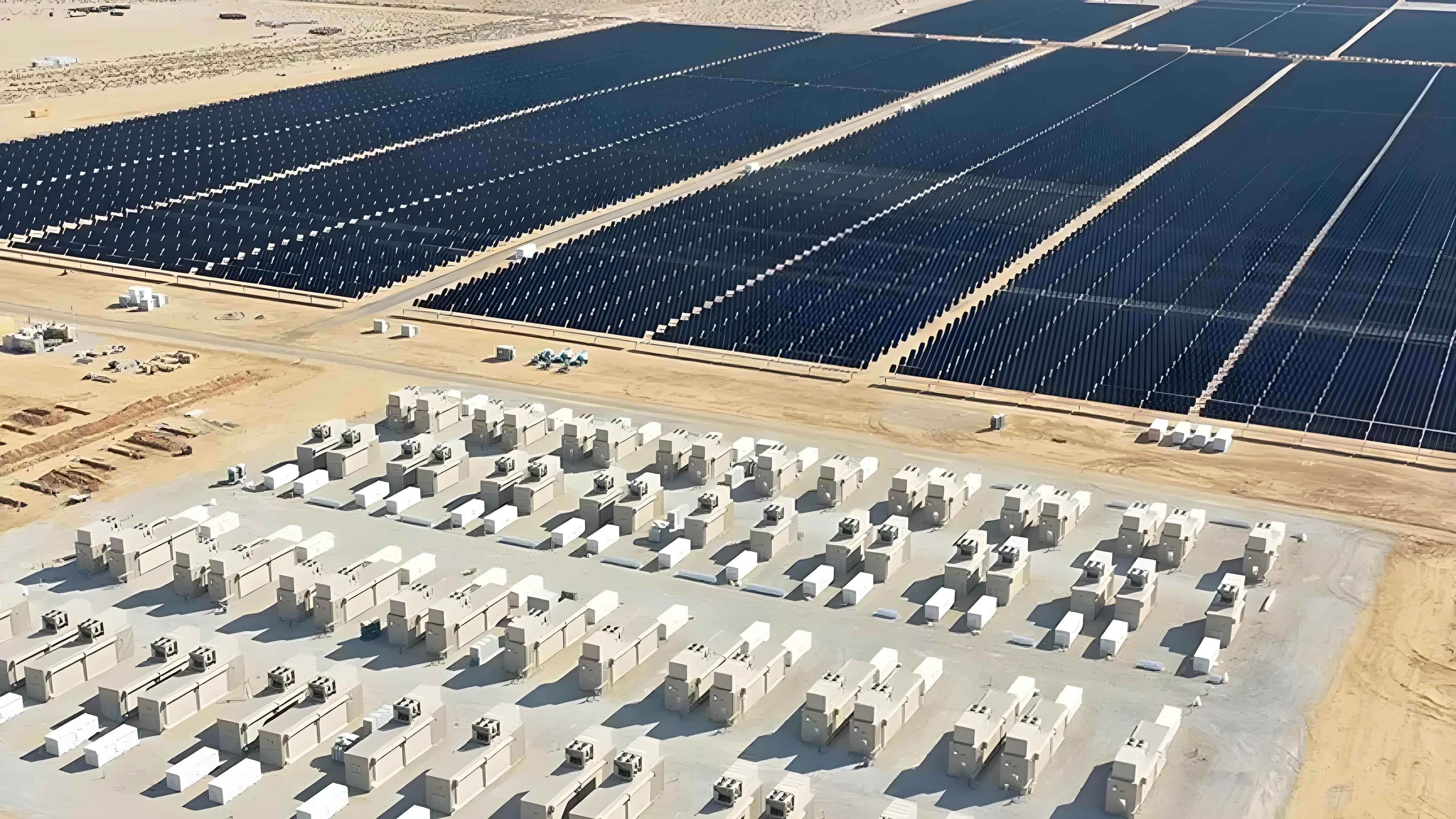
In my experience, the operational modes of solar power systems are diverse, catering to different needs and environments. DC power systems deliver electricity directly to DC loads, with surplus energy stored in batteries. AC power systems, on the other hand, use inverters to supply AC loads, making them suitable for household and industrial applications. Off-grid systems function independently of the main grid, relying on battery storage to provide power when solar generation is insufficient. Grid-tied systems, however, feed excess electricity directly into the utility grid, reducing reliance on fossil fuels and offering benefits like peak shaving. The power output of a solar array can be calculated using: $$ P = I \times V $$ where \( P \) is power in watts, \( I \) is current in amperes, and \( V \) is voltage in volts. For a series-connected array, the total voltage increases, while for parallel connections, the current adds up. This flexibility allows solar power systems to be scaled from small residential setups to large utility-scale installations.
| System Type | Description | Key Components | Advantages | Limitations |
|---|---|---|---|---|
| DC Power System | Direct supply to DC loads with battery storage | Solar panels, charge controller, batteries | Simple design, high efficiency for DC appliances | Limited to DC devices, requires conversion for AC use |
| AC Power System | Inverter converts DC to AC for loads and grid | Solar panels, inverter, batteries | Compatible with standard AC equipment, grid support | Higher cost due to inverter, efficiency losses |
| Off-Grid System | Independent operation with battery backup | Solar panels, charge controller, batteries, inverter | Energy autonomy, suitable for remote areas | Battery maintenance, higher initial investment |
| Grid-Tied System | Feeds excess power to the grid, no batteries | Solar panels, grid-tie inverter | Lower costs, revenue from feed-in tariffs | Dependent on grid availability, no backup during outages |
| Hybrid System | Combines solar with other sources like wind | Solar panels, wind turbines, controllers, batteries | Enhanced reliability, optimized resource use | Complex integration, higher upfront costs |
As I evaluate the characteristics of solar power systems, I am struck by their numerous advantages. Solar energy is virtually inexhaustible, with the sun providing enough energy in just 40 minutes to meet global annual consumption. This makes solar power systems a cornerstone of sustainable development. They are clean and eco-friendly, producing no greenhouse gases or pollutants during operation, which aligns with my commitment to environmental preservation. Additionally, solar power systems are highly flexible, allowing deployment in diverse locations without geographical constraints. Their long lifespan and scalability—from small household units to massive solar farms—ensure a high return on investment. The reliability and quality of energy from solar power systems are exceptional, with minimal downtime and rapid deployment capabilities. However, I must acknowledge the drawbacks: solar energy has a low energy density, requiring large areas for installation, and its intermittency due to weather, seasonal, and diurnal variations can pose challenges. To mitigate this, energy storage solutions and hybrid systems are often integrated into solar power systems.
The applications of solar power systems are vast and expanding, as I have observed in various sectors. Initially used in military and aerospace domains, solar technology now permeates industrial, commercial, agricultural, and residential fields. For instance, small-scale solar home systems provide electricity to off-grid communities, while large grid-connected plants contribute to national power supplies. Building-integrated photovoltaics, such as solar glass facades, merge energy generation with architecture. Solar street lights and hybrid wind-solar setups are common in public infrastructure, and specialized uses include water pumping, communication systems, and desalination. The versatility of solar power systems enables them to address energy poverty in remote regions while supporting urban sustainability. In my research, I have seen how these systems reduce transmission losses and costs by generating power close to the point of use, making them an integral part of modern energy strategies.
Looking at the global perspective, the progress in solar power systems is remarkable. Over 136 countries are actively promoting solar energy, with 95 engaged in large-scale development and production. By the late 1990s, global solar cell production reached gigawatt scales, and annual growth rates have consistently exceeded 30%. Nations like the United States and Japan have implemented ambitious plans, such as the U.S. Million Solar Roofs Initiative and Japan’s New Sunshine Program, aiming for cumulative installations of thousands of megawatts. Innovations continue to emerge; for example, flexible solar cells on aluminum foil offer low-cost, durable solutions, while grand visions like global solar grids or space-based power stations highlight the long-term potential. The efficiency of solar cells is constantly improving, with research focusing on materials like perovskite and multi-junction cells that promise higher performance. The economic viability of solar power systems is enhancing as costs decline, driven by technological advancements and economies of scale.
| Year | Global Installed Capacity (MW) | Annual Growth Rate (%) | Key Initiatives | Estimated Cost Reductions (%) |
|---|---|---|---|---|
| 1998 | 1,000 | ~40 | Early commercialization | 10-15 |
| 2000 | 4,600 | ~35 | Expansion in Europe and Asia | 15-20 |
| 2010 | ~40,000 | ~30 | U.S. and Japan national plans | 20-30 |
| 2020 | ~600,000 | ~25 | Global renewable energy targets | 30-50 |
| 2030 (Projected) | ~2,000,000 | ~20 | International climate agreements | 50-70 |
In China, the development of solar power systems has been rapid and strategic. Government programs, such as the Five-Year Solar Resource Development Plan, have invested billions to advance solar technology. Initiatives like the “Western Provinces Un-electrified Townships Electrification Plan” have brought solar power to remote areas, reducing dependence on traditional grids. The domestic market has grown at an average annual rate of over 30% since the early 2000s, with production capacity expanding to meet both local and global demand. By 2010, China had become a major manufacturer of solar products, and projections indicate a shift from off-grid to grid-connected systems, including desert power plants and urban rooftop installations. The potential for solar power systems in China is immense, supported by policies that prioritize renewable energy as part of the national energy security strategy. I believe that with continued innovation and investment, solar power systems will play a pivotal role in China’s energy transition.
To quantify the performance of solar power systems, I often use mathematical models. For instance, the capacity factor \( CF \) of a solar installation can be expressed as: $$ CF = \frac{\text{Actual Energy Output}}{\text{Maximum Possible Output}} \times 100\% $$ where the maximum output is based on peak sunlight hours. Similarly, the levelized cost of energy (LCOE) for a solar power system is given by: $$ LCOE = \frac{\sum_{t=1}^{n} \frac{I_t + M_t}{(1+r)^t}}{\sum_{t=1}^{n} \frac{E_t}{(1+r)^t}} $$ where \( I_t \) is the investment cost in year \( t \), \( M_t \) is the maintenance cost, \( E_t \) is the energy generated, \( r \) is the discount rate, and \( n \) is the system lifetime. These formulas help in evaluating the economic and operational feasibility of solar power systems, ensuring they meet long-term sustainability goals.
In conclusion, solar power systems represent a transformative force in the energy sector, with unparalleled potential for growth and innovation. As I see it, the key to unlocking this potential lies in scaling up production, enhancing technological efficiency, and achieving seamless grid integration. By addressing challenges such as energy storage and cost reduction, we can make solar power systems more accessible and reliable. The future of energy depends on our ability to harness renewable sources, and solar power systems, with their cleanliness and abundance, are poised to lead this charge. I am confident that continued research and global collaboration will drive the widespread adoption of solar power systems, paving the way for a sustainable and energy-secure world.