
In this article, I will explore the comprehensive design and application of solar power systems, drawing from extensive research and practical implementations. As the world shifts towards sustainable energy solutions, solar power systems have emerged as a pivotal technology for reducing carbon emissions and enhancing energy independence. I will delve into the fundamental components, design methodologies, and real-world applications of these systems, emphasizing key aspects such as solar cells, battery storage, controllers, inverters, and safety measures like lightning protection and grounding. Throughout this discussion, I will incorporate tables and mathematical formulas to summarize critical data and calculations, ensuring a thorough understanding of how to optimize solar power system performance. The term “solar power system” will be frequently highlighted to underscore its importance in modern energy infrastructure.
Solar power systems harness energy from the sun and convert it into electricity, providing a clean and renewable source of power. The core of any solar power system is the solar cell, which operates on the photovoltaic effect. When photons strike a semiconductor material, such as silicon, they dislodge electrons, generating an electric current. The output of a solar cell can be modeled using the diode equation, which describes the current-voltage (I-V) characteristics:
$$ I = I_L – I_0 \left( e^{\frac{qV}{nkT}} – 1 \right) $$
where \( I \) is the output current, \( I_L \) is the light-generated current, \( I_0 \) is the reverse saturation current, \( q \) is the electron charge, \( V \) is the voltage, \( n \) is the ideality factor, \( k \) is Boltzmann’s constant, and \( T \) is the temperature in Kelvin. This equation helps in predicting the performance of solar cells under varying conditions, which is essential for designing efficient solar power systems.
Solar cells are typically categorized into monocrystalline, polycrystalline, and thin-film types, each with distinct efficiencies and costs. Monocrystalline cells, made from single-crystal silicon, offer high efficiency (up to 22%) but are more expensive. Polycrystalline cells, with multiple silicon crystals, have efficiencies around 15-18% and are cost-effective. Thin-film cells, such as those made from cadmium telluride or copper indium gallium selenide, provide flexibility and lower efficiency (10-12%) but are suitable for large-scale applications. To illustrate, Table 1 compares the key parameters of these solar cell types, which is crucial for selecting the right component in a solar power system.
| Type | Efficiency Range (%) | Cost per Watt ($) | Lifespan (Years) | Applications |
|---|---|---|---|---|
| Monocrystalline | 18-22 | 0.30-0.50 | 25-30 | Residential, Commercial |
| Polycrystalline | 15-18 | 0.20-0.40 | 20-25 | Utility-scale, Off-grid |
| Thin-film | 10-12 | 0.15-0.30 | 15-20 | Building-integrated, Portable |
In a solar power system, energy storage is vital for ensuring a continuous power supply, especially during periods of low sunlight. Valve-regulated lead-acid (VRLA) batteries are commonly used due to their maintenance-free design and reliability. The capacity of a battery, measured in ampere-hours (Ah), determines how much energy it can store. The state of charge (SOC) of a battery indicates its remaining energy level and can be estimated using methods like the ampere-hour integral approach. For a solar power system, the SOC estimation is critical for battery management and can be expressed as:
$$ \text{SOC}(t) = \text{SOC}(0) – \frac{1}{C_n} \int_0^t I(\tau) \, d\tau $$
where \( \text{SOC}(t) \) is the state of charge at time \( t \), \( \text{SOC}(0) \) is the initial state of charge, \( C_n \) is the nominal capacity, and \( I(\tau) \) is the current at time \( \tau \). This integral method accounts for the cumulative charge and discharge cycles, but advanced algorithms, such as those based on Kalman filters, can improve accuracy in dynamic solar power system environments.
Controllers and inverters are essential components that regulate and convert energy in a solar power system. The charge controller manages the battery charging process to prevent overcharging or deep discharge, thereby extending battery life. Maximum power point tracking (MPPT) controllers are particularly efficient as they optimize the power extraction from solar panels under varying conditions. The power output of a solar panel can be maximized using the MPPT algorithm, which adjusts the operating point to the voltage and current where the product is highest:
$$ P_{\text{max}} = V_{\text{mp}} \times I_{\text{mp}} $$
where \( P_{\text{max}} \) is the maximum power, \( V_{\text{mp}} \) is the voltage at maximum power, and \( I_{\text{mp}} \) is the current at maximum power. Inverters, on the other hand, convert the direct current (DC) from solar panels or batteries into alternating current (AC) for use in household or grid applications. The efficiency of an inverter, typically between 90-98%, is a key factor in the overall performance of a solar power system. Table 2 summarizes the characteristics of common controller and inverter types used in solar power systems.
| Component Type | Efficiency (%) | Key Features | Typical Applications |
|---|---|---|---|
| PWM Controller | 85-95 | Simple, cost-effective | Small off-grid systems |
| MPPT Controller | 95-99 | High efficiency, adaptive | Large residential/commercial |
| String Inverter | 90-96 | Centralized, easy maintenance | Grid-tied systems |
| Microinverter | 94-98 | Module-level optimization | Shaded or complex roofs |
Designing a solar power system requires careful consideration of energy needs, location, and component compatibility. I will walk through a practical design example for a residential solar power system. Suppose we have a household with an average daily energy consumption of 10 kWh. The first step is to calculate the required solar panel capacity. Assuming an average of 5 peak sun hours per day and system losses of 20%, the total DC capacity needed is:
$$ P_{\text{dc}} = \frac{E_{\text{daily}}}{\text{Sun Hours} \times (1 – \text{Losses})} = \frac{10}{5 \times 0.8} = 2.5 \, \text{kW} $$
Thus, a 2.5 kW solar array is necessary. Next, battery storage must be sized to cover energy needs during nighttime or cloudy days. For a autonomy of 2 days and a depth of discharge (DOD) of 50% for VRLA batteries, the battery capacity in Ah can be calculated as:
$$ C_{\text{batt}} = \frac{E_{\text{daily}} \times \text{Autonomy}}{V_{\text{system}} \times \text{DOD}} = \frac{10 \times 2}{24 \times 0.5} = 1.67 \, \text{kAh} $$
where \( V_{\text{system}} \) is the system voltage, typically 24V or 48V for residential solar power systems. This translates to approximately 1670 Ah at 24V. Additionally, the charge controller and inverter must be selected based on the maximum current and power ratings. For instance, if the solar panels have a maximum power current of 8A, an MPPT controller rated for at least 8A is required. Similarly, an inverter with a capacity slightly above the peak load (e.g., 3 kW for a 2.5 kW system) ensures reliability.
Lightning protection and grounding are critical safety aspects in any solar power system. Lightning strikes can cause severe damage to components, so proper grounding and surge protection devices are essential. The grounding resistance should be minimized to safely dissipate fault currents. For a solar power system, the grounding electrode resistance \( R_g \) can be estimated using the formula:
$$ R_g = \frac{\rho}{2\pi L} \ln\left(\frac{4L}{d}\right) $$
where \( \rho \) is the soil resistivity, \( L \) is the length of the grounding rod, and \( d \) is its diameter. Typically, \( R_g \) should be less than 5 ohms for effective protection. Incorporating lightning arrestors and proper wiring practices further enhances the resilience of a solar power system against electrical surges.
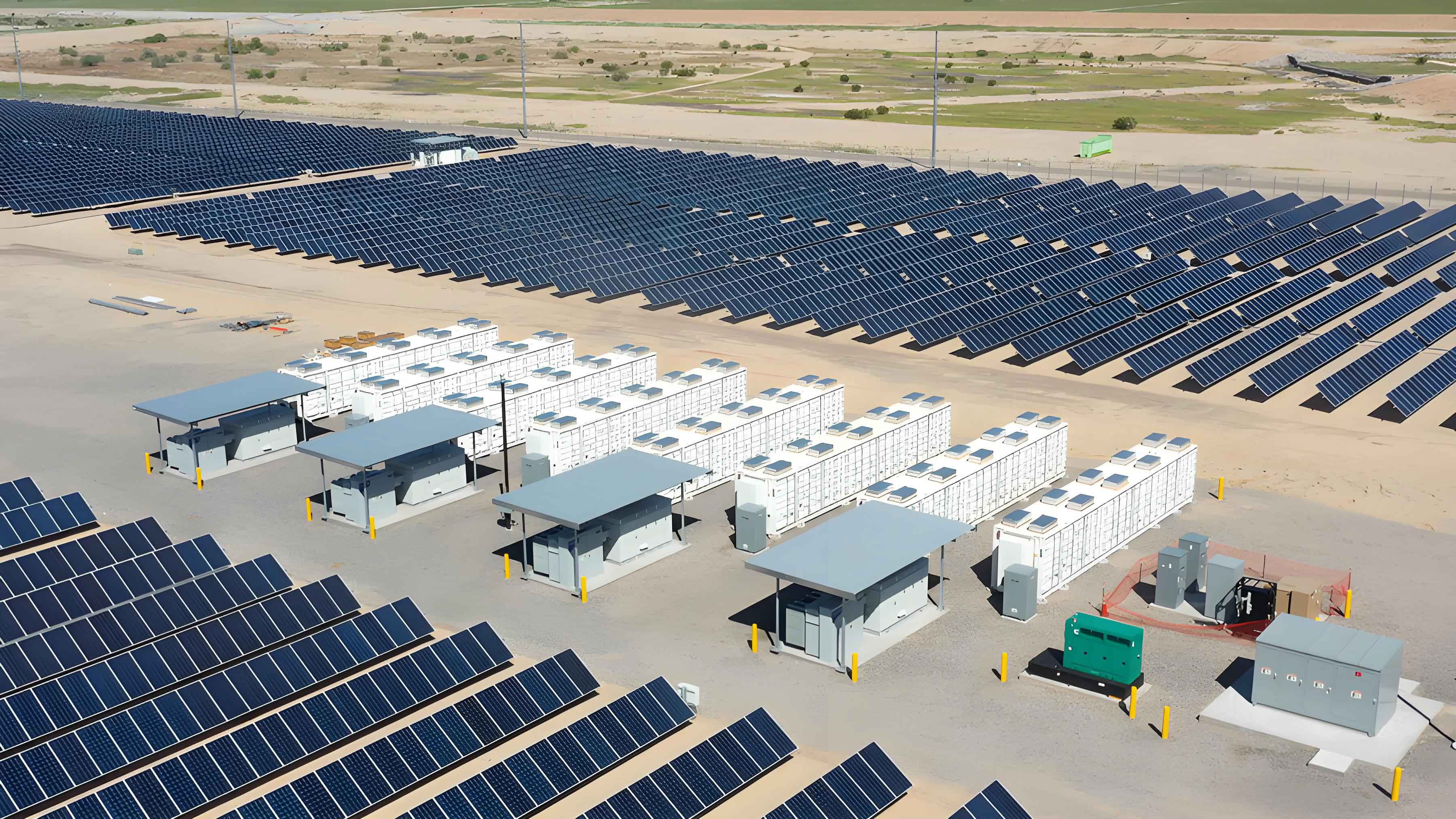
Real-world applications of solar power systems span across residential, commercial, and utility scales. In residential settings, solar power systems are often integrated with grid-tied inverters to allow net metering, where excess energy is fed back to the grid. For example, a typical home solar power system might include 20 solar panels, a 5 kWh battery bank, and a 4 kW inverter, reducing electricity bills by up to 80%. In commercial applications, larger solar power systems are deployed on rooftops or open fields to power offices or factories. A case study of a warehouse solar power system showed an installation of 100 kW capacity, with an annual energy production of 140 MWh, offsetting nearly all operational energy costs.
Utility-scale solar power systems, such as solar farms, involve massive arrays of panels connected to the grid. These systems can generate hundreds of megawatts and often incorporate advanced monitoring and control systems. For instance, a 50 MW solar farm might use thousands of panels, multiple inverters, and a centralized battery storage system for grid stabilization. The levelized cost of energy (LCOE) for such solar power systems has decreased significantly over the years, making them competitive with fossil fuels. The LCOE can be calculated as:
$$ \text{LCOE} = \frac{\sum_{t=1}^{n} \frac{I_t + M_t}{(1 + r)^t}}{\sum_{t=1}^{n} \frac{E_t}{(1 + r)^t}} $$
where \( I_t \) is the investment cost in year \( t \), \( M_t \) is the maintenance cost, \( E_t \) is the energy generated, \( r \) is the discount rate, and \( n \) is the system lifetime. For modern solar power systems, LCOE values range from $0.03 to $0.08 per kWh, depending on location and technology.
In addition to technical design, the integration of solar power systems with smart grids and Internet of Things (IoT) devices is becoming increasingly common. IoT sensors can monitor parameters like irradiance, temperature, and battery health in real-time, enabling predictive maintenance and optimizing energy flow. For a solar power system, this data can be used to adjust charging strategies or trigger alerts for component failures. The use of machine learning algorithms for SOC estimation and fault detection is also gaining traction, enhancing the reliability of solar power systems.
To further illustrate the design process, Table 3 provides a summary of key parameters for different solar power system scales, highlighting the variations in component sizes and costs. This table can serve as a quick reference for engineers and designers planning a solar power system project.
| System Scale | Typical Capacity (kW) | Battery Storage (kWh) | Estimated Cost ($) | Payback Period (Years) |
|---|---|---|---|---|
| Residential | 3-10 | 5-20 | 5,000-20,000 | 5-10 |
| Commercial | 50-500 | 50-500 | 50,000-500,000 | 4-8 |
| Utility | 1,000-100,000 | 100-10,000 | 1M-100M | 3-7 |
Another important aspect of solar power system design is the consideration of environmental factors, such as temperature and shading. Solar panel efficiency decreases with rising temperature, which can be modeled using the temperature coefficient. For most silicon-based panels, the efficiency drop is approximately 0.3-0.5% per degree Celsius above 25°C. The actual power output under temperature variations can be expressed as:
$$ P_{\text{actual}} = P_{\text{STC}} \times [1 + \beta (T_{\text{cell}} – T_{\text{STC}})] $$
where \( P_{\text{STC}} \) is the power under standard test conditions (STC), \( \beta \) is the temperature coefficient, \( T_{\text{cell}} \) is the cell temperature, and \( T_{\text{STC}} \) is 25°C. Similarly, shading from trees or buildings can significantly reduce output, so tools like solar pathfinders or software simulations are used during site assessment for a solar power system.
Battery technology continues to evolve, with lithium-ion batteries becoming more popular in solar power systems due to their higher energy density and longer cycle life compared to VRLA batteries. The cost of lithium-ion batteries has been declining, making them viable for residential and commercial solar power systems. The cycle life of a battery, which indicates how many charge-discharge cycles it can endure, is a key parameter. For lithium-ion batteries, it can exceed 3000 cycles at 80% DOD, whereas VRLA batteries typically manage 500-1000 cycles. The total cost of ownership for a solar power system should include battery replacement costs over its lifetime.
Inverter technology has also advanced, with hybrid inverters that can manage multiple energy sources, such as solar, wind, and grid power. These inverters are ideal for hybrid solar power systems that aim to maximize reliability. The harmonic distortion introduced by inverters must be minimized to ensure power quality. Total harmonic distortion (THD) should be below 5% for most applications, and it can be calculated as:
$$ \text{THD} = \frac{\sqrt{\sum_{h=2}^{\infty} V_h^2}}{V_1} \times 100\% $$
where \( V_h \) is the voltage of the h-th harmonic and \( V_1 \) is the fundamental voltage. Modern inverters in solar power systems often include features like anti-islanding protection to disconnect from the grid during outages, ensuring safety.
System monitoring and maintenance are crucial for the long-term performance of a solar power system. Remote monitoring platforms allow users to track energy production, consumption, and system health via smartphones or computers. For instance, a cloud-based dashboard for a solar power system might display real-time data on solar irradiance, battery SOC, and inverter efficiency. Regular maintenance, such as cleaning panels and checking connections, can prevent efficiency losses. I recommend inspecting a solar power system at least twice a year to ensure optimal operation.
In conclusion, designing and implementing a solar power system involves a multidisciplinary approach that balances technical, economic, and environmental factors. From selecting the right solar cells and batteries to integrating advanced controllers and inverters, each component plays a vital role in the overall efficiency and reliability of the solar power system. The use of mathematical models and tables, as demonstrated in this article, aids in making informed decisions. As technology progresses, innovations in energy storage and smart grid integration will further enhance the capabilities of solar power systems, making them an indispensable part of the global energy landscape. By adopting solar power systems, we can contribute to a sustainable future while enjoying economic benefits through reduced energy costs and increased energy independence.
Throughout this discussion, I have emphasized the importance of a holistic design process for solar power systems, incorporating safety measures like lightning protection and grounding. The examples and calculations provided should serve as a practical guide for anyone involved in the planning or implementation of a solar power system. As the demand for renewable energy grows, continuous research and development will drive further improvements in solar power system technologies, ensuring their scalability and affordability for diverse applications.