
In recent years, the integration of renewable energy sources into infrastructure projects has gained significant attention due to growing environmental concerns and policy directives promoting green transportation. The adoption of solar power systems is a key strategy for reducing carbon emissions and enhancing sustainability in maintenance work areas. This article explores the design and carbon emission benefits of a solar power system based on low-carbon principles, focusing on a case study of a maintenance work area. The solar power system is designed to harness solar energy efficiently, providing a reliable power supply for various operational needs while minimizing environmental impact. Through detailed analysis of system configuration, component selection, and energy output, this study demonstrates how solar power systems can contribute to green development in such facilities. The design process involves assessing solar resources, optimizing system layout, and evaluating carbon reduction potential, all of which are critical for achieving energy independence and sustainability goals.
The project is situated in a region characterized by a subtropical monsoon climate, with distinct seasons and ample solar irradiation. The maintenance work area covers approximately 8,534 square meters, including office spaces and storage facilities, and is responsible for routine maintenance tasks such as roadbed upkeep, surface repair, and emergency response. Given the operational energy demands, implementing a solar power system aligns with local policies encouraging the use of photovoltaic technology in transportation infrastructure. The area receives an average annual solar irradiation of 1,254.72 kWh/m², with about 1,285 hours of sunshine per year, making it highly suitable for solar energy exploitation. This favorable solar resource forms the basis for designing an efficient solar power system that can meet the energy needs of the work area while reducing reliance on conventional power sources.
The design of the solar power system is grounded in the photovoltaic effect, where semiconductor materials convert sunlight directly into electricity. When photons strike the semiconductor, they generate electron-hole pairs, which are separated by an internal electric field at the P-N junction, producing a current. This fundamental principle allows for the development of photovoltaic cells that can be integrated into building structures, such as roofs, to capture solar energy. The solar power system design process involves multiple steps, including site assessment, component selection, and system optimization, to ensure maximum efficiency and compatibility with existing infrastructure. Key considerations include solar panel orientation, tilt angle, shading avoidance, and the integration of power electronic devices like inverters. The overall goal is to create a system that not only generates sufficient electricity but also aligns with architectural and safety standards.
The solar power system configuration for the maintenance work area employs a grid-connected AC system, which allows for seamless interaction with the local power grid. The solar panels are installed at an optimal tilt angle of 28 degrees to maximize solar capture, and the location is chosen to avoid shading from surrounding structures. The system includes photovoltaic modules, inverters, and energy storage components to ensure reliability during periods of low sunlight. To determine the appropriate capacity, the daily energy consumption of the work area is estimated based on load profiles, which include lighting, charging stations for electric vehicles, and other equipment. The following table summarizes the load configuration and daily energy usage:
| Load Type | Load Power (W) | Quantity | Operating Hours (h) | Daily Energy Consumption (Wh) |
|---|---|---|---|---|
| Lighting Equipment | 30 | 100 | 6 | 18,000 |
| Energy-Saving Lamps | 15 | 8 | 6 | 720 |
| New EV Fast Charger | 60,000 | 1 | 4 | 240,000 |
| New EV Charger | 10,000 | 1 | 4 | 40,000 |
| Branch Shredder | 2,500 | 1 | 4 | 10,000 |
| Television | 95 | 1 | 4 | 380 |
| Fans | 100 | 20 | 4 | 8,000 |
| Air Conditioners | 2,200 | 26 | 4 | 228,800 |
| Computers | 150 | 10 | 8 | 12,000 |
| Total | 75,090 W | 341,900 Wh |
Based on this load analysis, the solar power system must support a daily energy demand of approximately 341,900 Wh. To account for intermittent weather conditions, such as three consecutive cloudy days, the energy storage system is designed with a minimum capacity of 590,000 Wh. This ensures uninterrupted power supply and enhances the reliability of the solar power system. The system’s overall design prioritizes efficiency and sustainability, incorporating high-performance components to maximize energy yield. The solar power system is integrated into the building’s roof using lightweight, corrosion-resistant zinc-aluminum-magnesium mounts, which provide stability without compromising the structural integrity. This approach not only optimizes space utilization but also reduces the environmental footprint of the installation.
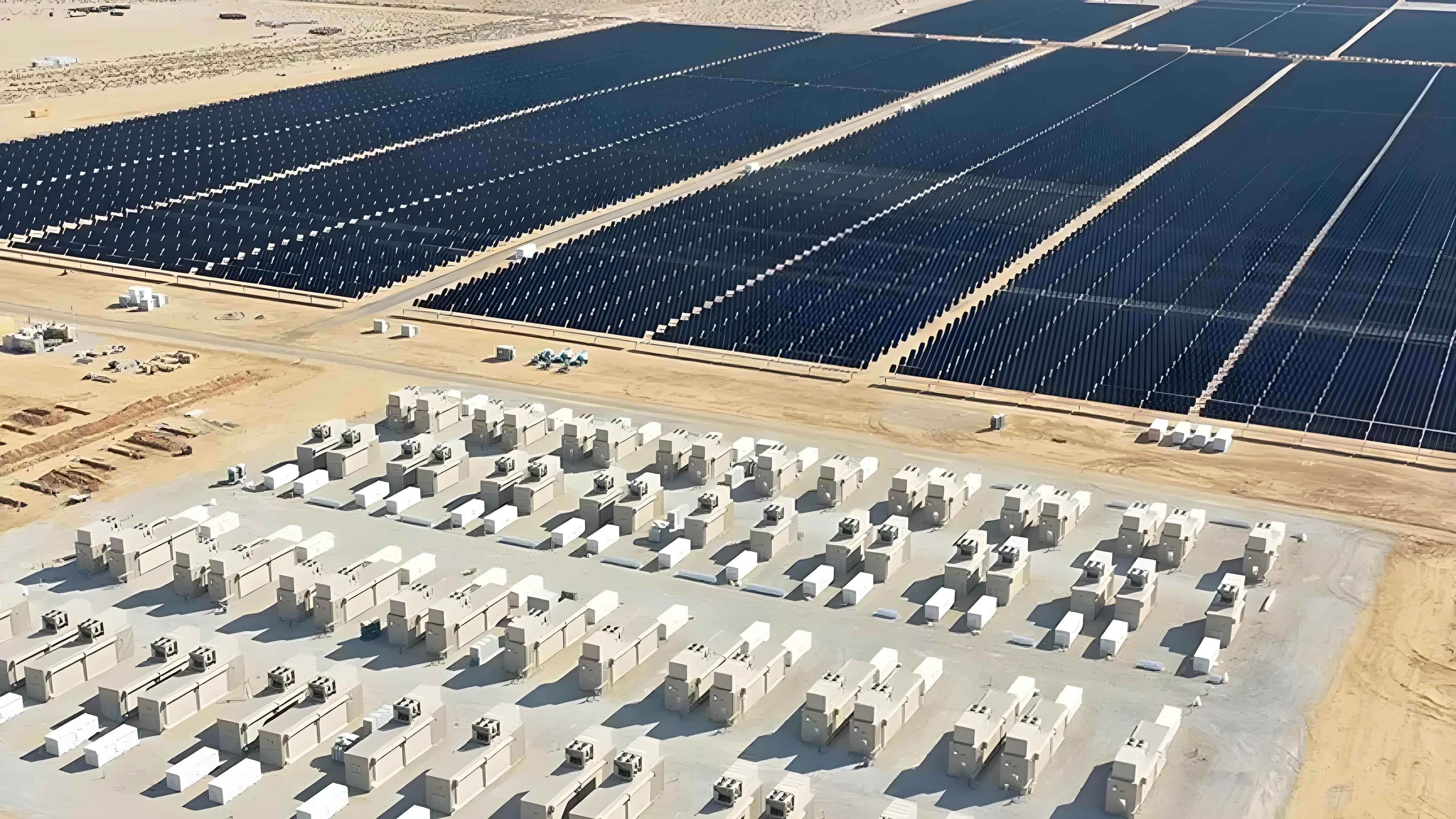
The selection of photovoltaic modules and inverters is crucial for the efficiency and longevity of the solar power system. Monocrystalline silicon panels are chosen for their high conversion efficiency, durability, and excellent performance under low-light conditions. These panels have a conversion efficiency of 21.5%, and a total of 28 panels are installed, each with a power rating of 580 W, resulting in a total installed capacity of 16.24 kW. The panels cover an area of 140 m² and are arranged to minimize losses due to shading or orientation. For the inverter, a 15 kW string inverter is selected due to its cost-effectiveness, ease of installation, and reliable performance in grid-connected applications. This inverter converts DC power from the panels to AC power with an output voltage of 400 V and frequency of 50 Hz, ensuring compatibility with the local grid and operational equipment. The combination of high-efficiency panels and robust inverters enhances the overall performance of the solar power system, making it a viable solution for long-term energy needs.
To evaluate the environmental benefits of the solar power system, the annual energy output and carbon emission reductions are calculated using standard formulas. The energy output of the solar power system, denoted as \( E_P \), is determined by the following equation: $$ E_P = H_A \times A \times \eta_j \times K $$ where \( H_A \) is the annual solar irradiation (kWh/m²), \( A \) is the area of the photovoltaic modules (m²), \( \eta_j \) is the module conversion efficiency, and \( K \) is the comprehensive efficiency coefficient, which accounts for losses due to temperature, wiring, and other factors. For this project, \( H_A = 1254.72 \text{kWh/m}^2 \), \( A = 140 \text{m}^2 \), \( \eta_j = 0.215 \), and \( K \) is estimated at 0.80 based on typical system losses. Thus, the first-year energy output is: $$ E_P = 1254.72 \times 140 \times 0.215 \times 0.80 = 3.02 \times 10^4 \text{kWh} $$ Over a 25-year lifespan, with a first-year degradation of 2% and an annual degradation rate of 0.55%, the total energy output is approximately \( 7.269 \times 10^5 \text{kWh} \), with an average annual output of \( 2.91 \times 10^4 \text{kWh} \).
The carbon emission reduction attributable to the solar power system is calculated using the formula: $$ C = \frac{E_P \times EF_i}{D} $$ where \( C \) is the annual carbon reduction per unit area (kgCO₂/m²/year), \( EF_i \) is the carbon emission factor (tCO₂/MWh), and \( D \) is the building area (m²). Using \( EF_i = 0.5810 \text{tCO}_2/\text{MWh} \) and \( D = 8534 \text{m}^2 \), and converting units for consistency (since \( 1 \text{tCO}_2 = 1000 \text{kgCO}_2 \) and \( 1 \text{MWh} = 1000 \text{kWh} \)), the carbon reduction per square meter is: $$ C = \frac{2.91 \times 10^4 \text{kWh} \times 0.5810 \text{tCO}_2/\text{MWh} \times 1000 \text{kg/t}}{8534 \text{m}^2 \times 1000} = \frac{2.91 \times 10^4 \times 0.5810}{8534} \text{kgCO}_2/\text{m}^2/\text{year} $$ Simplifying this gives: $$ C \approx 12.1 \text{kgCO}_2/\text{m}^2/\text{year} $$ This result highlights the significant carbon reduction potential of the solar power system, contributing to the low-carbon objectives of the maintenance work area.
In conclusion, the design and implementation of a solar power system in the maintenance work area demonstrate a practical approach to achieving energy sustainability and reducing carbon emissions. By leveraging local solar resources and advanced photovoltaic technology, the system provides a reliable and eco-friendly power solution. The careful selection of components, such as high-efficiency monocrystalline panels and string inverters, ensures optimal performance and longevity. The carbon emission analysis confirms that the solar power system can substantially lower the carbon footprint, with an average annual reduction of 12.1 kgCO₂ per square meter. This project serves as a model for integrating solar power systems into infrastructure projects, promoting green development and energy independence. Future efforts should focus on optimizing system designs and expanding renewable energy applications to further enhance environmental benefits.