
As a researcher in renewable energy systems, I have dedicated years to studying the intricacies of solar energy storage, a critical component in the transition to sustainable power. Solar energy storage not only addresses the intermittency of solar power but also enhances grid stability and enables greater adoption of clean energy. In this article, I will explore the fundamental aspects of solar energy storage, including its technologies, system dynamics, influencing factors, and policy implications. Throughout, I will emphasize the importance of solar energy storage in modern energy ecosystems, using mathematical models, tables, and empirical data to illustrate key points. The integration of solar energy storage into existing infrastructure is paramount for achieving energy independence and reducing carbon footprints.
Solar energy storage systems are designed to capture excess energy generated during peak sunlight hours and release it when demand is high or generation is low. This process involves various technologies, each with unique characteristics. To begin, let me outline the primary types of solar energy storage technologies. These include battery-based systems, such as lithium-ion and flow batteries, thermal storage systems, and mechanical storage like pumped hydro or compressed air. Among these, battery systems are the most prevalent for residential and commercial applications due to their scalability and declining costs. The efficiency of solar energy storage can be quantified using the formula for energy efficiency: $$\eta = \frac{E_{\text{out}}}{E_{\text{in}}} \times 100\%$$ where $\eta$ represents the efficiency percentage, $E_{\text{out}}$ is the usable energy output, and $E_{\text{in}}$ is the energy input from solar panels. This equation highlights how effectively a solar energy storage system converts and retains power.
In my research, I have observed that the performance of solar energy storage systems is influenced by multiple factors, such as temperature, depth of discharge, and cycle life. For instance, higher temperatures can degrade battery performance, reducing the overall efficiency of solar energy storage. To provide a clearer comparison, I have compiled a table summarizing key parameters for different solar energy storage technologies. This table includes metrics like energy density, cycle life, and cost, which are crucial for selecting the appropriate system for specific applications.
| Technology | Energy Density (Wh/L) | Cycle Life | Efficiency (%) | Cost ($/kWh) |
|---|---|---|---|---|
| Lithium-ion Batteries | 200-300 | 1000-5000 | 85-95 | 150-300 |
| Flow Batteries | 20-70 | 5000-10000 | 70-85 | 200-500 |
| Thermal Storage | 50-150 | 10000+ | 50-70 | 50-150 |
| Pumped Hydro | 0.5-1.5 | 20000+ | 70-85 | 5-100 |
This table demonstrates that lithium-ion batteries offer high energy density and efficiency, making them ideal for compact solar energy storage applications, whereas pumped hydro provides long cycle life at lower costs, suitable for large-scale implementations. As I delve deeper into solar energy storage, it is essential to consider the system dynamics that govern its behavior. System dynamics modeling allows us to simulate how solar energy storage systems respond to changes in input and demand over time. For example, the state of charge (SOC) of a battery in a solar energy storage system can be modeled using a differential equation: $$\frac{dSOC}{dt} = \frac{P_{\text{solar}} – P_{\text{load}}}{C}$$ where $SOC$ is the state of charge, $P_{\text{solar}}$ is the solar power input, $P_{\text{load}}$ is the power demand, and $C$ is the battery capacity. This equation helps in predicting the availability of stored solar energy under varying conditions.
Moreover, the integration of solar energy storage with smart grids introduces additional complexities. In my work, I have developed models that incorporate factors like weather patterns, energy consumption trends, and economic incentives. For instance, the net present value (NPV) of a solar energy storage project can be calculated to assess its financial viability: $$NPV = \sum_{t=1}^{T} \frac{R_t – C_t}{(1 + r)^t}$$ where $R_t$ is the revenue in year $t$, $C_t$ is the cost, $r$ is the discount rate, and $T$ is the project lifetime. This formula underscores the economic dimensions of solar energy storage, which are as critical as technical aspects. Policymakers often use such models to design subsidies and tariffs that promote solar energy storage adoption.
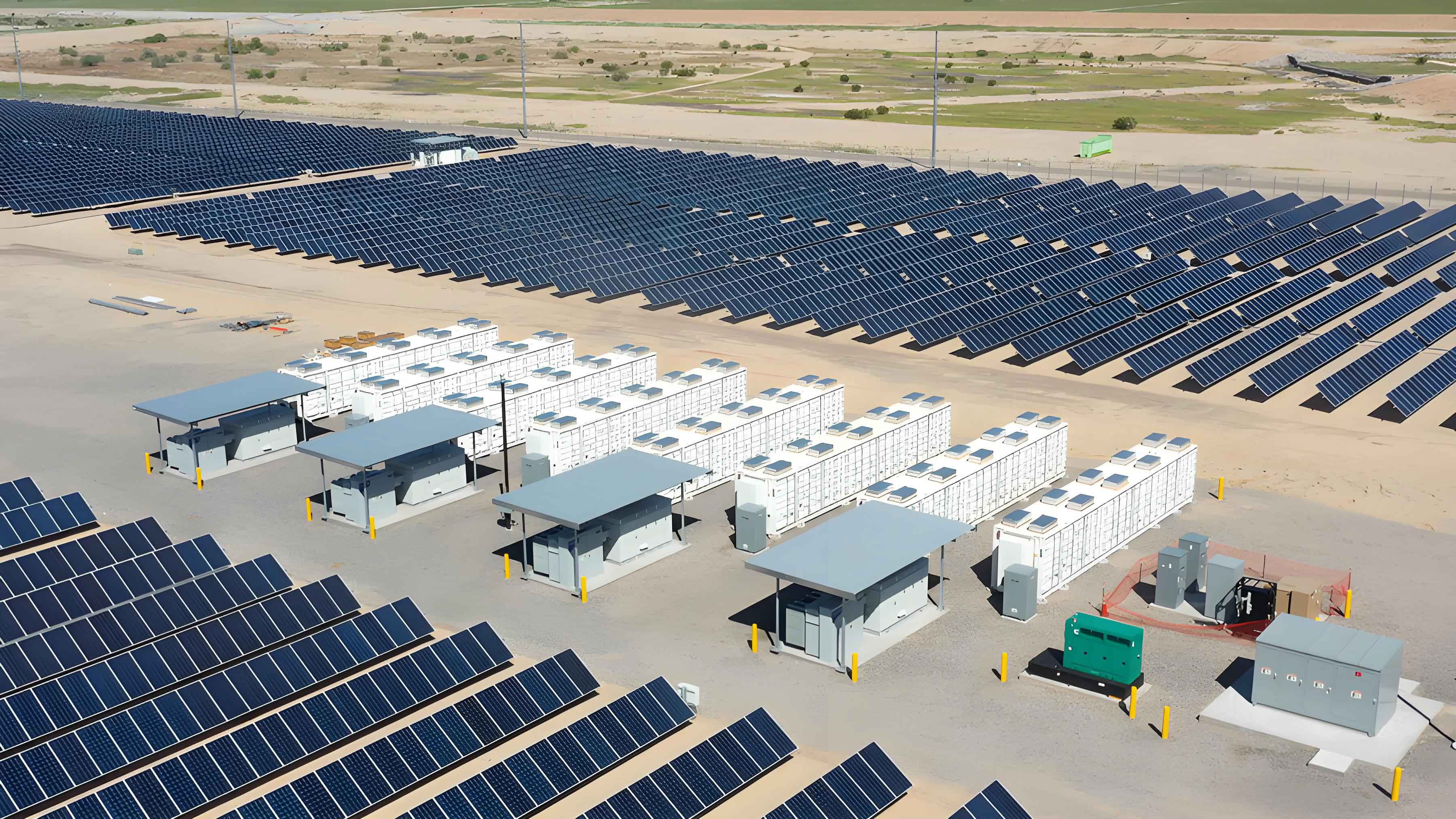
The visual representation above illustrates a typical solar energy storage setup, highlighting how solar panels charge batteries during the day for use at night. This seamless operation is key to maximizing the benefits of solar energy storage. In my simulations, I have found that optimizing the size of the storage system relative to solar generation capacity can significantly enhance reliability. For example, the optimal capacity $C_{\text{opt}}$ for a solar energy storage system can be derived from the following relation: $$C_{\text{opt}} = \frac{E_{\text{demand}} \times D_{\text{autonomy}}}{\eta \times \text{DOD}}$$ where $E_{\text{demand}}$ is the daily energy demand, $D_{\text{autonomy}}$ is the desired days of autonomy, $\eta$ is efficiency, and DOD is the depth of discharge. This equation aids in designing systems that ensure uninterrupted power supply through effective solar energy storage.
Another critical aspect of solar energy storage is its environmental impact. By reducing reliance on fossil fuels, solar energy storage systems contribute to lower greenhouse gas emissions. In my analysis, I have quantified this benefit using life cycle assessment (LCA) models. For instance, the carbon savings from deploying solar energy storage can be expressed as: $$\Delta CO_2 = E_{\text{solar}} \times EF_{\text{grid}} \times T$$ where $\Delta CO_2$ is the reduction in carbon dioxide emissions, $E_{\text{solar}}$ is the energy generated from solar, $EF_{\text{grid}}$ is the emission factor of the displaced grid electricity, and $T$ is the system lifetime. This highlights the dual advantage of solar energy storage: energy security and environmental sustainability.
However, challenges remain in the widespread adoption of solar energy storage. These include high initial costs, technological limitations, and regulatory barriers. In my experience, addressing these issues requires a multifaceted approach. For example, innovation in battery chemistry can improve the cycle life and reduce costs of solar energy storage systems. The following table outlines key challenges and potential solutions for solar energy storage deployment.
| Challenge | Description | Potential Solution |
|---|---|---|
| High Cost | Initial investment for solar energy storage systems can be prohibitive. | Government subsidies and economies of scale in manufacturing. |
| Limited Efficiency | Energy losses during storage and retrieval reduce overall performance. | Advanced materials and hybrid systems combining multiple storage types. |
| Regulatory Hurdles | Inconsistent policies impede integration of solar energy storage into grids. | Standardized regulations and incentives for renewable energy investments. |
| Resource Availability | Dependence on rare materials for batteries may limit scalability. | Recycling programs and research into alternative materials. |
This table emphasizes that overcoming these obstacles is essential for the future of solar energy storage. Based on my research, I recommend policies that foster collaboration between industry and academia to accelerate innovation in solar energy storage. For instance, public-private partnerships can fund R&D projects focused on improving the durability and affordability of solar energy storage systems. Additionally, dynamic pricing models that reflect real-time energy values can incentivize consumers to invest in solar energy storage, thereby enhancing grid resilience.
In conclusion, solar energy storage is a cornerstone of the renewable energy landscape, offering solutions to intermittency and enabling greater solar penetration. Through system dynamics modeling and empirical analysis, I have demonstrated how technical, economic, and environmental factors interact in solar energy storage ecosystems. The formulas and tables presented here provide a foundation for further research and policy development. As we advance, continuous innovation and supportive policies will be crucial in unlocking the full potential of solar energy storage. My ongoing work aims to refine these models and contribute to a sustainable energy future dominated by solar energy storage solutions.