
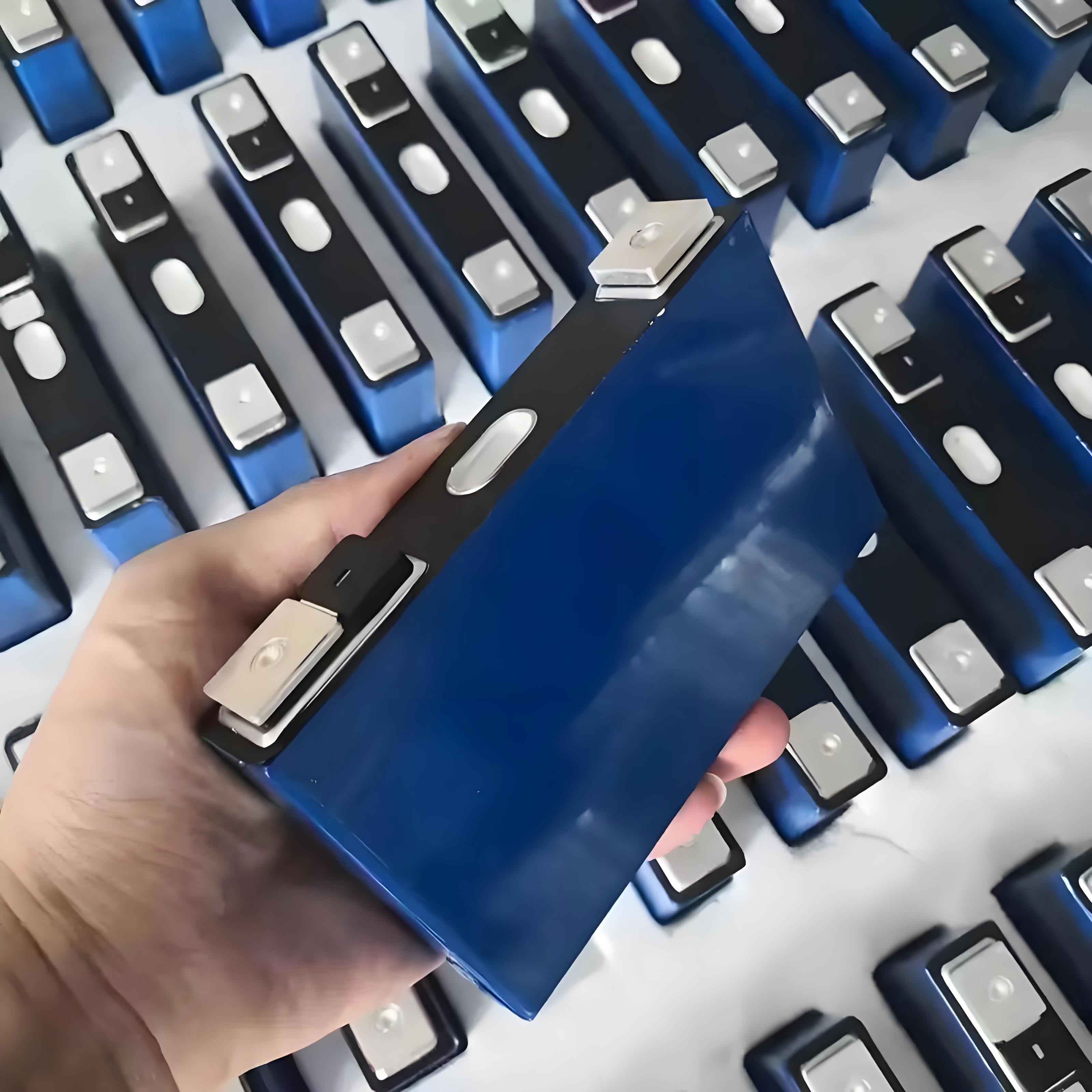
Lithium iron phosphate (LiFePO4) batteries have emerged as a dominant player in the energy storage market due to their inherent safety, environmental compatibility, long cycle life, and cost-effectiveness. However, challenges such as low ionic diffusion rates and poor electronic conductivity hinder their performance in high-rate and low-temperature applications. This article synthesizes recent breakthroughs in LiFePO4 modification strategies, including ion doping, surface coating, morphology optimization, and lithium supplementation, while providing critical insights into future research directions.
1. Ion Doping Strategies
Ionic doping modifies the LiFePO4 lattice structure by substituting host ions with foreign elements, creating lattice defects that enhance ionic mobility. The diffusion coefficient ($D_{Li^+}$) can be expressed as:
$$ D_{Li^+} = \frac{k_B T \lambda^2}{6h} e^{-\frac{E_a}{RT}} $$
where $k_B$ is Boltzmann’s constant, $T$ is temperature, $\lambda$ is hopping distance, and $E_a$ is activation energy. Doping reduces $E_a$ through structural modifications.
| Doping Element | Site Occupation | Conductivity Improvement | Capacity Retention (1C/500 cycles) |
|---|---|---|---|
| Cu+ | Fe-site | 4.2×10⁻² S/cm | 94.5% |
| Mg2+/F– | Fe/O-sites | 2.8×10⁻² S/cm | 96.1% |
| V5+ | P-site | 3.5×10⁻² S/cm | 92.8% |
2. Surface Engineering Approaches
Surface coating techniques significantly improve electronic conductivity while maintaining structural integrity. Carbon-based coatings demonstrate exceptional performance:
$$ \sigma_{composite} = \phi_c \sigma_c + (1-\phi_c)\sigma_{LiFePO_4} $$
where $\phi_c$ is carbon volume fraction and $\sigma$ represents conductivity. Advanced coatings include:
| Coating Material | Thickness (nm) | Rate Performance (10C) | Low-Temp (-20°C) Capacity |
|---|---|---|---|
| Graphene | 2-5 | 122 mAh/g | 89 mAh/g |
| Carbon Nanotubes | 10-20 | 135 mAh/g | 78 mAh/g |
| Li3V2(PO4)3 | 50-100 | 143 mAh/g | 95 mAh/g |
3. Morphological Optimization
Nanostructuring reduces lithium-ion diffusion paths according to:
$$ \tau = \frac{L^2}{D_{Li^+}} $$
where $\tau$ is diffusion time and $L$ is particle size. Controlled synthesis yields:
| Morphology | Particle Size (nm) | Specific Surface Area (m2/g) | Capacity at 5C (mAh/g) |
|---|---|---|---|
| Spherical | 150-200 | 25-30 | 148 |
| Plate-like | 50-80 | 40-45 | 156 |
| Porous | 300-500 | 60-70 | 162 |
4. Lithium Compensation Techniques
Pre-lithiation additives counteract irreversible lithium loss:
$$ Q_{total} = Q_{LiFePO_4} + \Delta Q_{additive} $$
Common additives include:
| Additive | Compensation Efficiency | Initial Coulombic Efficiency | Cycle Life Improvement |
|---|---|---|---|
| Li2O | 18-22% | 92-94% | +300 cycles |
| Li3N | 15-18% | 90-92% | +250 cycles |
| Li2S | 20-25% | 93-95% | +350 cycles |
5. Future Perspectives
The development of LiFePO4 battery technology requires multi-scale optimization:
$$ \text{Performance} = f(\text{Doping}, \text{Coating}, \text{Morphology}, \text{Lithium Balance}) $$
Emerging trends include hybrid coating architectures, machine learning-guided doping combinations, and in-situ characterization of lithium-ion transport mechanisms. Continued innovation in LiFePO4 battery design promises to bridge the performance gap with ternary cathode systems while maintaining inherent safety advantages.