
With the exponential growth of retired lithium-ion batteries in the next 3-5 years, this study presents an intelligent large-flux integrated equipment system for charged crushing and pyrolysis of LiFePO4 batteries. The system achieves 98.5% overall recovery rate with processing costs below $210/ton, providing technical and economic references for battery recycling industrialization.
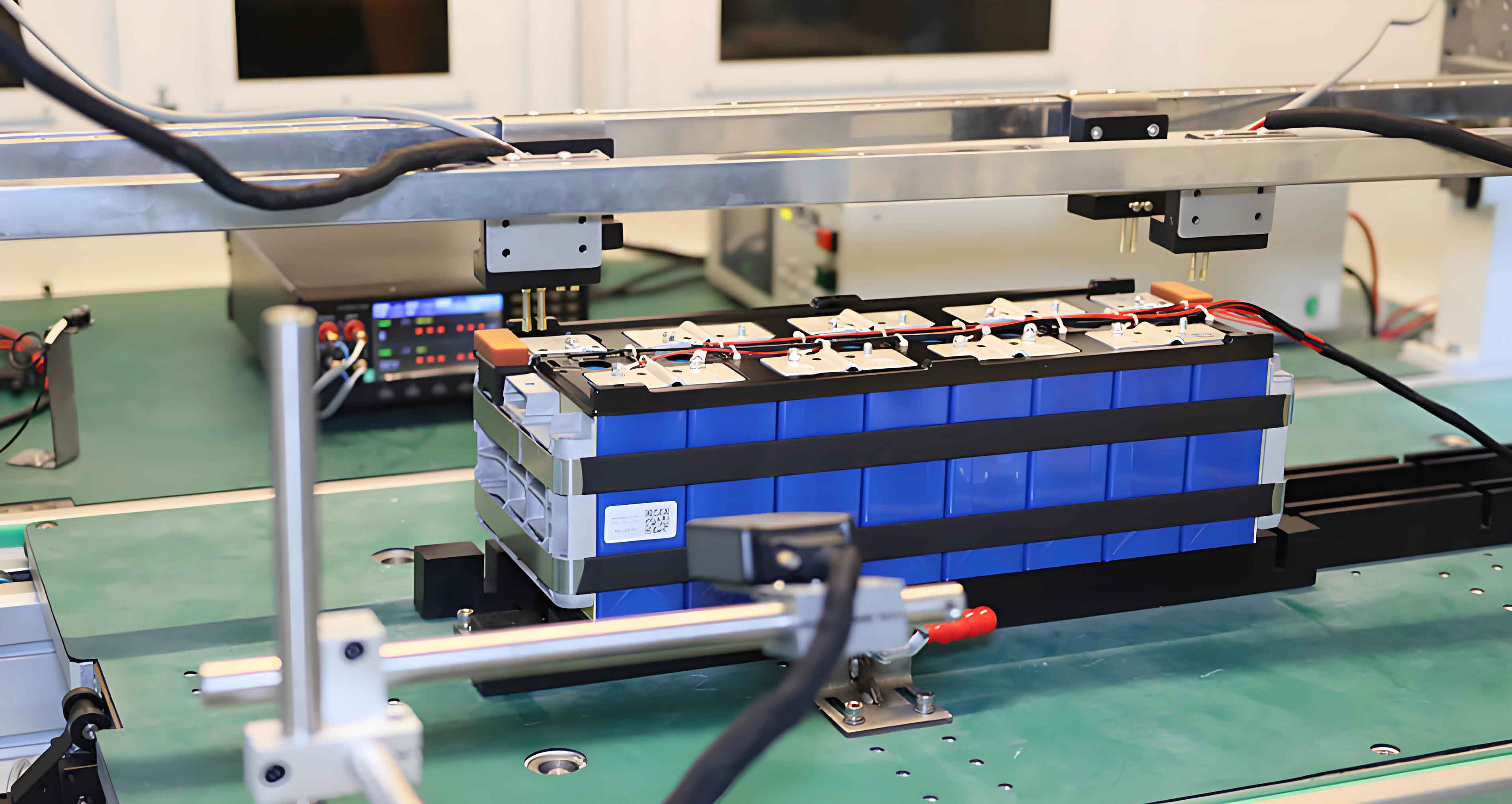
1. Charged Discharge Mechanism and Puncture Discharge Efficiency
The puncture discharge mechanism for LiFePO4 batteries follows first-order kinetics:
$$V(t) = V_0 \cdot e^{-t/\tau}$$
Where τ represents the time constant determined by internal resistance and capacitance. Experimental data shows 95.15% discharge efficiency within 30 minutes (initial voltage 3.325V → 0.15V). Key parameters include:
| Parameter | Value |
|---|---|
| Initial Voltage (V₀) | 3.325 V |
| Discharge Time Constant (τ) | 18.2 min |
| Residual Voltage after 30min | 0.15 V |
| Energy Recovery Rate | 92.4% |
2. Thermal Decomposition System Optimization
The rotary pyrolysis furnace achieves ±4°C temperature uniformity through multi-zone heating design. The energy balance equation governs system operation:
$$Q_{total} = Q_{heating} + Q_{reaction} + Q_{loss}$$
Where thermal efficiency reaches 68.3% through optimized insulation and heat recovery. Typical operating parameters for LiFePO4 battery processing:
| Parameter | Value |
|---|---|
| Processing Capacity | 2.5 t/h |
| Pyrolysis Temperature | 450°C |
| Residence Time | 45 min |
| Energy Consumption | 185 kWh/t |
3. Material Recovery and Economic Analysis
The recovery system separates components through multi-stage crushing and sorting:
$$R_i = \frac{m_{recovered,i}}{m_{input,i}} \times 100\%$$
Typical recovery rates for LiFePO4 battery components:
| Component | Recovery Rate | Purity |
|---|---|---|
| Copper | 98.7% | 99.4% |
| Aluminum | 97.2% | 99.1% |
| LiFePO4 Powder | 95.6% | 93.8% |
| Graphite | 91.3% | 88.5% |
Economic analysis for processing 10,000 tons LiFePO4 batteries annually:
| Cost Item | Value ($/ton) |
|---|---|
| Equipment Depreciation | 45 |
| Energy Consumption | 32 |
| Labor Cost | 28 |
| Maintenance | 15 |
| Total Processing Cost | 120 |
| Revenue from Products | 580 |
| Net Profit | 460 |
4. Environmental Impact Assessment
The system achieves 99.7% harmful gas treatment efficiency through integrated scrubbing and catalytic oxidation:
$$\eta_{treatment} = \left(1 – \frac{C_{out}}{C_{in}}\right) \times 100\%$$
Emission levels meet EU BAT standards for battery recycling:
| Pollutant | Concentration |
|---|---|
| HF | <0.5 mg/m³ |
| CO | <50 mg/m³ |
| VOCs | <20 mg/m³ |
| Dust | <10 mg/m³ |
This technical solution demonstrates significant advantages in processing retired LiFePO4 batteries, combining high recovery efficiency with economic viability and environmental compliance. The integrated equipment system provides a reliable foundation for large-scale battery recycling operations.