
This study systematically evaluates the impact of conductive agents on the electrochemical performance and manufacturing stability of lithium iron phosphate (LiFePO₄) batteries. By comparing single-component (conductive carbon black, SP) and composite conductive systems (SP&CNTs, SP&GN), we establish a framework for optimizing electrode kinetics and long-term durability in energy storage applications.
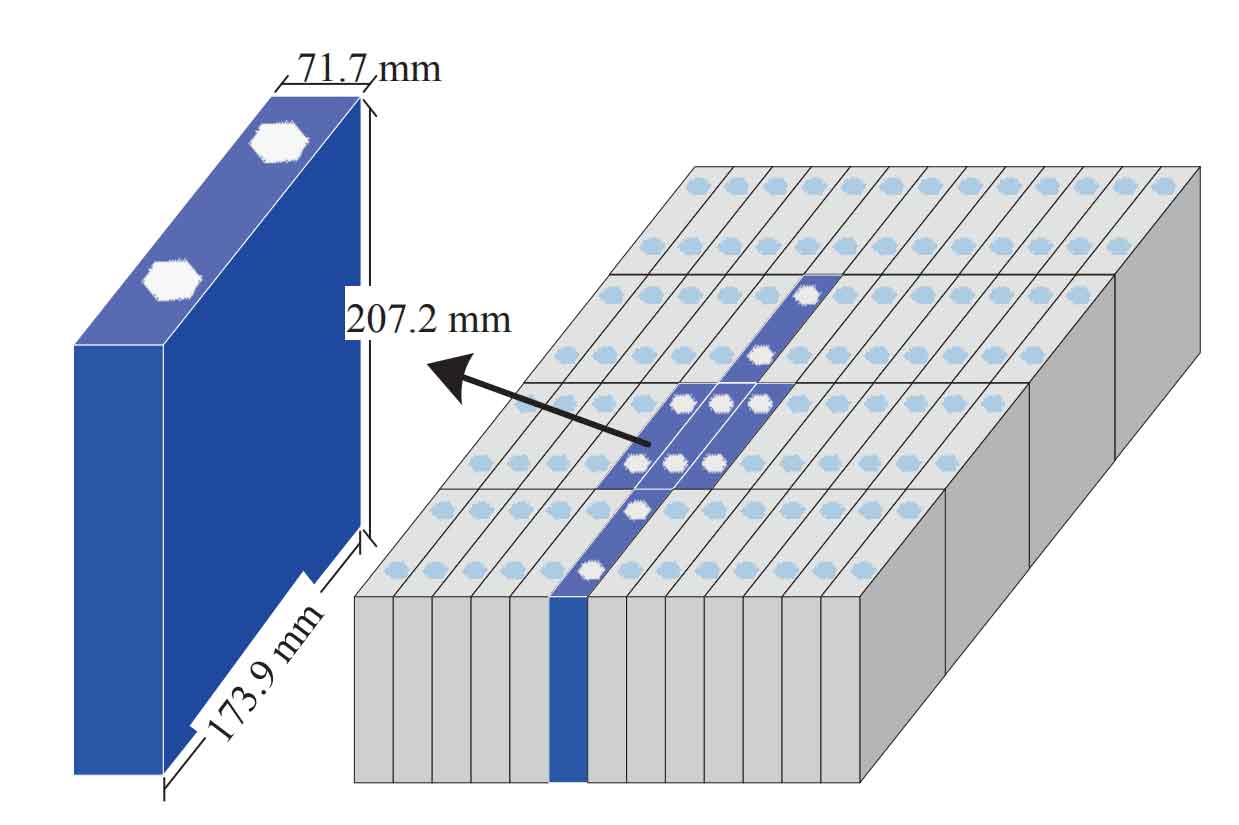
1. Electrode Fabrication Parameters
| Conductive System | Solid Content (%) | Calendering Density (g/cm³) | Post-Drying Rebound (%) |
|---|---|---|---|
| 1.5% SP | 52.3 ± 0.5 | 2.50 ± 0.02 | 3.12 |
| 0.5% SP + 1.0% CNTs | 54.1 ± 0.4 | 2.53 ± 0.03 | 4.85 |
| 1.5% CNTs | 55.8 ± 0.6 | 2.55 ± 0.02 | 6.72 |
| 0.5% SP + 1.0% GN | 53.7 ± 0.3 | 2.51 ± 0.01 | 2.98 |
The thickness rebound rate after calendering and drying follows:
$$ \text{Rebound} = \frac{H_{\text{final}} – H_{\text{initial}}}{H_{\text{initial}}} \times 100\% $$
where CNTs-based electrodes show higher elastic recovery due to their fibrous structure.
2. Electrochemical Performance Analysis
| Conductive System | RΩ (mΩ) | Rct (mΩ) | 5C Capacity Retention (%) |
|---|---|---|---|
| 1.5% SP | 39.9 | 8.2 | 89.3 |
| 0.5% SP + 1.0% CNTs | 33.7 | 8.9 | 93.5 |
| 1.5% CNTs | 32.0 | 9.3 | 91.8 |
| 0.5% SP + 1.0% GN | 28.2 | 10.1 | 87.6 |
The charge transfer resistance can be modeled using:
$$ R_{ct} = \frac{RT}{nFj_0} $$
where $j_0$ represents the exchange current density, confirming the superior catalytic activity of SP-containing systems.
3. Long-Term Cycling Performance
| Conductive System | Cycle 500 Capacity (%) | Capacity Fade Rate (%/cycle) |
|---|---|---|
| 1.5% SP | 92.4 | 0.015 |
| 0.5% SP + 1.0% CNTs | 95.8 | 0.008 |
| 1.5% CNTs | 90.1 | 0.020 |
The capacity retention follows pseudo-second-order kinetics:
$$ \frac{1}{Q_t} = \frac{1}{k_2Q_e^2} + \frac{t}{Q_e} $$
where $k_2$ represents the degradation rate constant, demonstrating enhanced stability in hybrid systems.
4. Thermal Stability and Self-Discharge
| Conductive System | 45°C Storage Recovery (%) | dQ/dV Drift (mV/day) |
|---|---|---|
| 1.5% SP | 96.8 | 0.32 |
| 0.5% SP + 1.0% CNTs | 95.4 | 0.41 |
| 1.5% CNTs | 93.7 | 0.58 |
The lithium iron phosphate battery with hybrid conductive agents achieves optimal balance between electronic conductivity ($\sigma_e$) and ionic conductivity ($\sigma_i$):
$$ \sigma_{\text{total}} = \sqrt{\sigma_e^2 + \sigma_i^2} $$
5. Multi-Scale Modeling of Conductive Networks
The percolation threshold for effective conduction follows:
$$ \phi_c = \frac{1}{1 + (L/d)^{1/3}} $$
where $L$ and $d$ represent length and diameter of conductive additives, explaining the superior performance of CNTs-based systems at lower loading percentages.
This comprehensive investigation demonstrates that lithium iron phosphate batteries with optimized conductive agent formulations can achieve both high energy density (>160 Wh/kg) and extended cycle life (>4000 cycles at 80% capacity retention), making them ideal candidates for large-scale energy storage systems.