
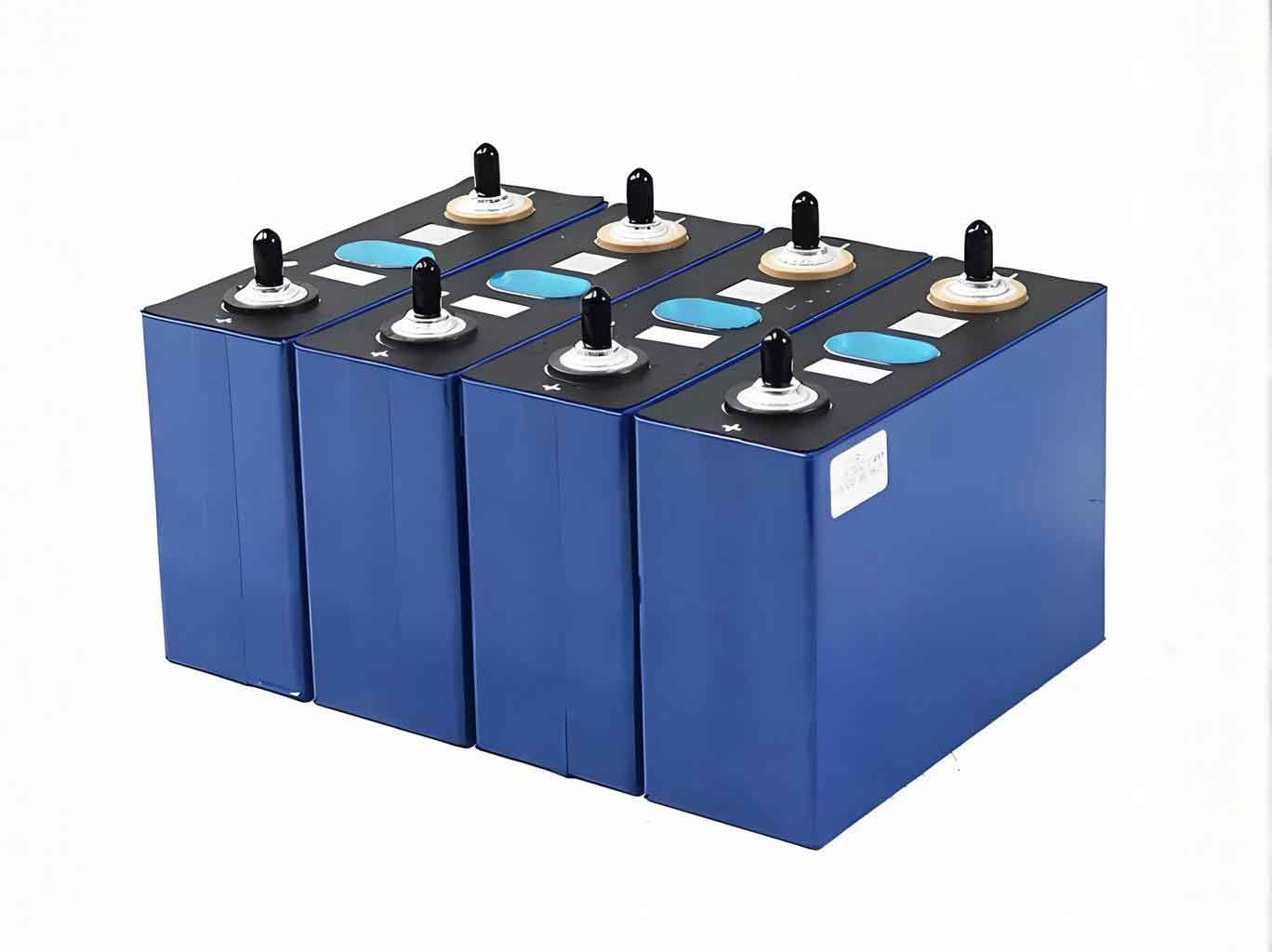
The recycling of spent lithium iron phosphate (LiFePO4) batteries has garnered significant attention due to their widespread use in energy storage and electric vehicles. Unlike traditional hydrometallurgical or pyrometallurgical methods focused on metal extraction, direct regeneration of cathode materials offers shorter processes, lower energy consumption, and reduced environmental impact. This article reviews advancements in pretreatment and regeneration technologies, emphasizing their technical feasibility and challenges.
1. Pretreatment Methods
Effective pretreatment is critical for separating active materials (LiFePO4) from aluminum foil, binders, and carbon residues. Key methods include:
| Method | Conditions | Efficiency | Limitations |
|---|---|---|---|
| Mechanical Separation | Crushing, sieving, ultrasonic washing | Moderate (70–85% purity) | Incomplete binder removal |
| Chemical Dissolution | NaOH (10 mol/L), organic solvents (DMAC) | High (90–95% purity) | Chemical waste generation |
| Thermal Treatment | 400–650°C, inert/O2 atmosphere | High (95–98% purity) | Energy-intensive, HF emissions |
For instance, thermal treatment under N2 at 600°C for 1 hour effectively removes polyvinylidene fluoride (PVDF) binders while preserving Fe2+ oxidation states:
$$ \text{PVDF} \xrightarrow{\Delta} \text{HF} + \text{C}_x\text{H}_y\text{F}_z \uparrow $$
2. Regeneration Techniques
2.1 High-Temperature Solid-State Regeneration
This method involves supplementing Li, Fe, or P sources to spent LiFePO4 followed by sintering. A typical process includes:
- Mixing spent cathode powder with Li2CO3 (5–10 wt%), FeC2O4, and carbon.
- Ball-milling for homogeneity.
- Sintering at 650–750°C under Ar/N2 for 10–24 hours.
The reaction can be expressed as:
$$ \text{FePO}_4 + \text{Li}_2\text{CO}_3 + \text{C} \xrightarrow{\Delta} \text{LiFePO}_4 + \text{CO}_2 \uparrow $$
| Additive | Sintering Temp. (°C) | Capacity (mAh/g) | Cycle Stability |
|---|---|---|---|
| Li2CO3 (5%) | 700 | 148 (0.1C) | 98.9% after 50 cycles |
| V2O5 (3 mol%) | 700 | 134.3 (1C) | 99.1% after 200 cycles |
2.2 Hydrothermal Synthesis
Hydrothermal methods enable low-temperature regeneration with controlled morphology. A standard procedure involves:
- Dissolving spent LiFePO4 in H3PO4/H2SO4.
- Adding reductants (e.g., Na2SO3) and Li+ sources.
- Heating at 160–200°C for 3–8 hours.
The redox reaction is:
$$ \text{Fe}^{3+} + \text{Li}^+ + \text{PO}_4^{3-} \xrightarrow{\text{Hydrothermal}} \text{LiFePO}_4 $$
| Reductant | Temperature (°C) | Capacity (mAh/g) | Capacity Retention |
|---|---|---|---|
| N2H4·H2O | 200 | 146.2 (0.2C) | 98.6% after 200 cycles |
| Na2SO3 | 180 | 145.1 (0.1C) | 99% after 100 cycles |
2.3 Electrochemical Relithiation
Electrochemical methods replenish Li+ via external circuits. A half-cell configuration is often used:
$$ \text{Li}_x\text{FePO}_4 + (1-x)\text{Li}^+ + (1-x)e^- \rightarrow \text{LiFePO}_4 $$
Key parameters include current density (0.1–0.5 mA/cm2) and cycle numbers (50–200). Regenerated cathodes achieve 133 mAh/g at 0.1C but face scalability challenges.
3. Challenges and Perspectives
Despite progress, critical issues remain:
- Impurity Control: Residual Al, Cu, or electrolytes degrade performance.
- Structural Integrity: Severe lattice distortion hinders Li+ diffusion.
- Economic Viability: High-purity separation and energy costs limit industrial adoption.
Future research should focus on:
- Developing low-cost, scalable pretreatment technologies.
- Optimizing dopants (e.g., V, Mn) to enhance conductivity.
- Integrating AI for real-time monitoring of crystal structure recovery.
In summary, direct regeneration of lithium iron phosphate battery cathode materials offers a sustainable pathway for resource circularity. Advances in hybrid methods (e.g., mechanochemical-hydrothermal) and green reductants will drive commercialization, supporting the global transition to carbon neutrality.