
Accurate estimation of lithium-ion battery State of Health (SOH) remains critical for ensuring operational safety and reliability in energy storage systems. This paper presents a novel hybrid approach combining Egret Swarm Optimization Algorithm (ESOA) with Gaussian Process Regression (GPR) to address limitations in existing data-driven methods, particularly regarding uncertainty quantification and training-test data decoupling.
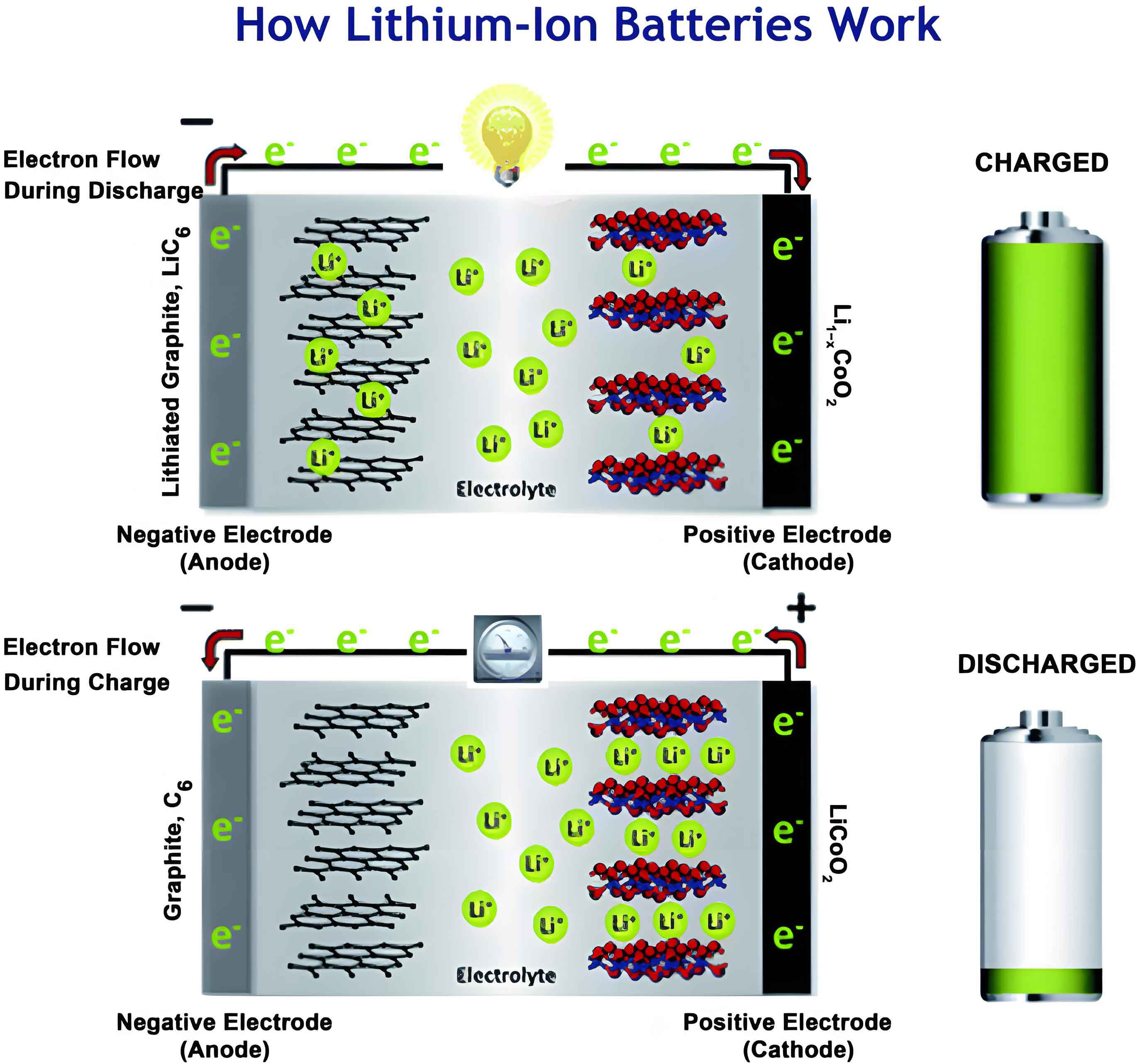
1. Health Feature Extraction and Selection
For lithium-ion battery aging characterization, four health features (HFs) demonstrate strong Pearson correlation with capacity degradation:
| Feature | Description | Correlation Range |
|---|---|---|
| HF1 | CC phase duration (3.5-3.95V) | 0.9928-0.9987 |
| HF2 | CV phase duration (2000-1250mA) | 0.9973-0.9998 |
| HF3 | Relaxation voltage maximum | 0.9680-0.9978 |
| HF4 | Voltage drop (0-120s relaxation) | 0.9834-0.9978 |
The Pearson correlation coefficient between capacity $C$ and feature $X$ is calculated as:
$$ \rho_{X,Y} = \frac{E(XY) – E(X)E(Y)}{\sqrt{E(X^2)-(E(X))^2}\sqrt{E(Y^2)-(E(Y))^2}} $$
2. ESOA-Optimized GPR Framework
The proposed lithium-ion battery SOH estimation framework employs:
2.1 Gaussian Process Regression
Given training data $\mathcal{D} = \{(\mathbf{x}_i,y_i)\}_{i=1}^n$, the GPR model with squared exponential kernel:
$$ k(\mathbf{x}_i,\mathbf{x}_j) = \sigma_f^2 \exp\left(-\frac{\|\mathbf{x}_i – \mathbf{x}_j\|^2}{2\ell^2}\right) $$
where hyperparameters $\theta = (\sigma_f, \ell)$ are optimized through ESOA.
2.2 Egret Swarm Optimization
The ESOA algorithm implements three search strategies for hyperparameter optimization:
| Strategy | Update Rule |
|---|---|
| Ambush | $\mathbf{x}_a = \mathbf{x} + 0.1\ell_{hop}e^{-t/(0.1t_{max})}\mathbf{g}$ |
| Random | $\mathbf{x}_b = \mathbf{x} + \tan(r_b)\ell_{hop}/(1+t)$ |
| Encirclement | $\mathbf{x}_c = (1-r_h-r_g)\mathbf{x} + r_h\mathbf{D}_h + r_g\mathbf{D}_g$ |
Where $r_h,r_g \in [0,0.5)$ control exploration-exploitation balance.
3. Experimental Validation
Testing on 8 lithium-ion batteries (4 NCA, 4 NCM) shows significant improvements:
| Model | MAE (%) | RMSE | Training Time (ms) |
|---|---|---|---|
| LSTM | 0.65 | 0.0078 | 12.1 |
| GPR | 0.35 | 0.0050 | 15.3 |
| ESOA-GPR | 0.16 | 0.0028 | 16.8 |
The prediction error distribution demonstrates superior performance:
$$ \text{MAE} = \frac{1}{n}\sum_{i=1}^n |\text{SOH}_i – \widehat{\text{SOH}_i}| $$
$$ \text{RMSE} = \sqrt{\frac{1}{n}\sum_{i=1}^n (\text{SOH}_i – \widehat{\text{SOH}_i})^2} $$
4. Uncertainty Quantification
The ESOA-GPR framework provides 95% confidence intervals through Gaussian process posterior:
$$ p(f^*|\mathbf{X},\mathbf{y},\mathbf{x}^*) = \mathcal{N}(\mu^*, (\sigma^*)^2) $$
Where:
$$ \mu^* = \mathbf{k}^\top(\mathbf{K} + \sigma_n^2\mathbf{I})^{-1}\mathbf{y} $$
$$ (\sigma^*)^2 = k(\mathbf{x}^*,\mathbf{x}^*) – \mathbf{k}^\top(\mathbf{K} + \sigma_n^2\mathbf{I})^{-1}\mathbf{k} $$
5. Conclusion
This research establishes that the ESOA-GPR hybrid model significantly enhances lithium-ion battery SOH estimation accuracy while providing crucial uncertainty bounds. Key advantages include:
- 58.82% RMSE reduction compared to conventional GPR
- Full lifecycle prediction capability through cross-battery training
- Computational efficiency (16.8ms prediction time)
The methodology demonstrates particular effectiveness for lithium-ion battery applications requiring high-reliability health monitoring, with potential extensions to other energy storage technologies.