
The first half of 2024 witnessed remarkable advancements in China’s battery industry, with power battery installations surging to 203.3 GWh, a 33.7% year-over-year (YoY) increase. This growth mirrors the rapid expansion of the new energy vehicle (NEV) market, where consumer preferences increasingly favor electrified transportation. Meanwhile, the solar energy storage sector has emerged as a critical driver of demand, reshaping the competitive landscape.
Market Dynamics: Power Batteries
NEV production and sales reached 4.929 million and 4.944 million units, respectively, in H1 2024, with a market penetration rate of 35.2%. This growth propelled lithium iron phosphate (LFP) batteries to dominate 69.32% of total installations (141.0 GWh), while ternary lithium batteries accounted for 30.63% (62.3 GWh). The narrowing growth gap between LFP (35.7% YoY) and ternary (29.7% YoY) reflects shifting technological priorities.
| Battery Type | H1 2024 Installations (GWh) | Market Share | YoY Growth |
|---|---|---|---|
| LFP | 141.0 | 69.32% | 35.7% |
| Ternary | 62.3 | 30.63% | 29.7% |
Notably, sodium-ion and semi-solid-state batteries achieved initial commercialization, with installations of 1.5 MWh and 2,154.7 MWh, respectively. These innovations signal future diversification in energy storage solutions, particularly for solar energy storage applications.
Segmentation by Vehicle Type
Battery demand varied significantly across vehicle segments:
$$ \text{BEV Share} = \frac{\text{BEV Installations}}{\text{Total Installations}} \times 100\% = \frac{135.4}{203.3} \times 100\% \approx 66.6\% $$
Plug-in hybrid electric vehicles (PHEVs) saw explosive growth, with battery installations rising 88.8% YoY. This contrasts with battery electric vehicles (BEVs), which grew at 16.3% YoY. The shift underscores the rising appeal of hybrid solutions in balancing range and cost.
Competitive Landscape
Market concentration slightly declined, with the top 3, 5, and 10 firms holding 77.5%, 85.2%, and 96.1% shares, respectively. CATL maintained its lead (46.38% share), while BYD secured 25.1% through vertical integration.
| Rank | Company | Installations (GWh) | Market Share |
|---|---|---|---|
| 1 | CATL | 93.31 | 46.38% |
| 2 | BYD | 50.51 | 25.10% |
| 3 | CALB | 13.83 | 6.87% |
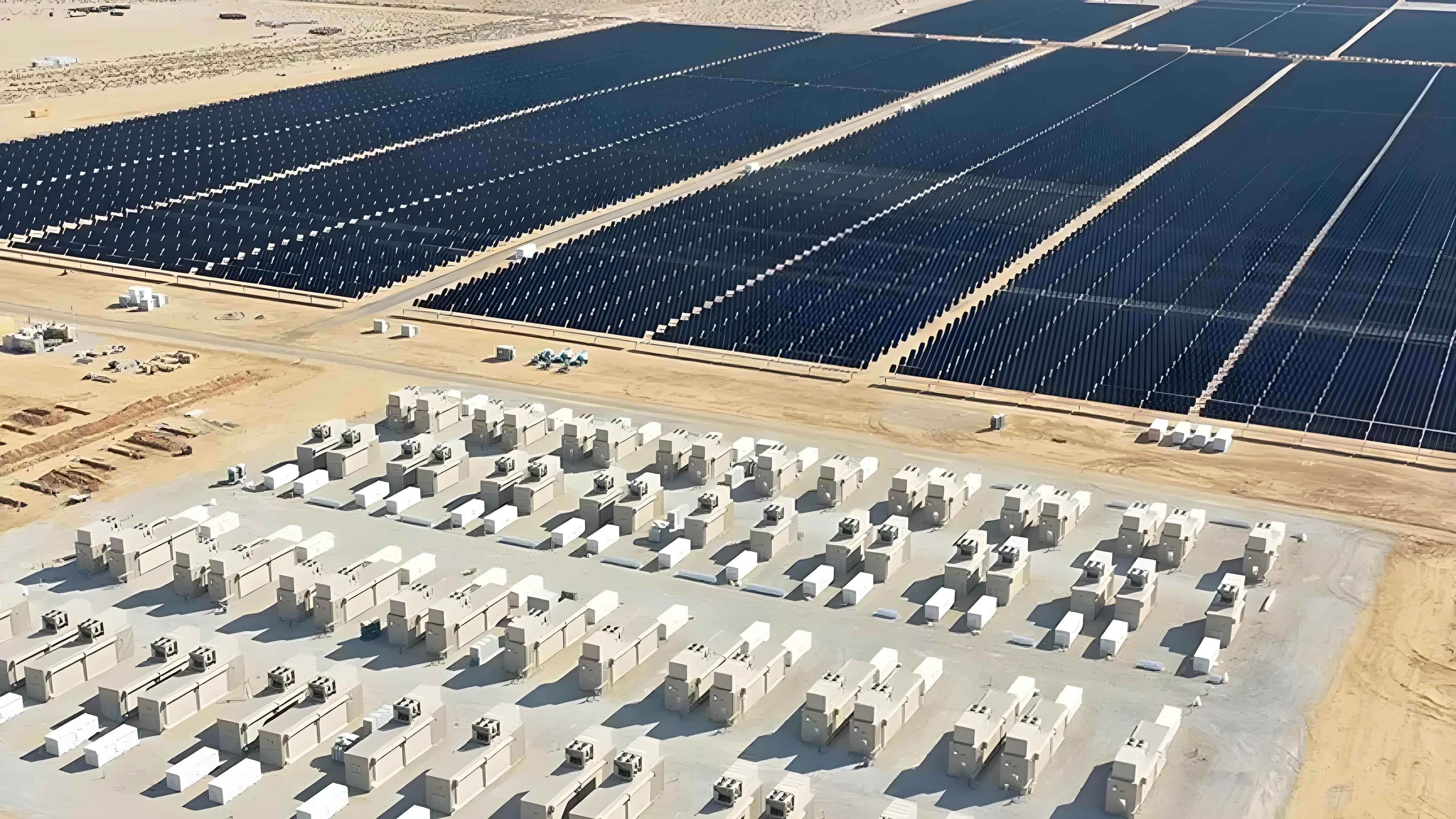
Solar Energy Storage: The New Frontier
The “other batteries” category—primarily solar energy storage systems—surged 137.3% YoY to 84.5 GWh. This aligns with global renewable energy trends, where solar energy storage capacity is projected to grow at a compound annual rate of 25% through 2030.
$$ \text{Storage Demand} = P_{\text{solar}} \times t_{\text{discharge}} \times \eta_{\text{system}} $$
Where:
\( P_{\text{solar}} \) = Solar power output (kW)
\( t_{\text{discharge}} \) = Required discharge duration (h)
\( \eta_{\text{system}} \) = System efficiency (%)
Export markets amplified this growth, with overseas shipments of solar energy storage batteries jumping 106.7% YoY. Major players like CATL and Eve Energy have secured multi-gigawatt-hour contracts for grid-scale solar storage projects.
Technological Synergies
The convergence of power and solar energy storage technologies is accelerating. LFP chemistry dominates both sectors due to its lifecycle advantages:
$$ \text{Cycle Life}_{\text{LFP}} = 6,000+ \text{ cycles at 80\% DoD} $$
This durability makes LFP ideal for daily solar cycling, creating economies of scale that benefit NEV and renewable storage markets simultaneously.
Future Projections
By 2025, China’s solar energy storage capacity is expected to exceed 200 GWh, driven by:
- Falling battery costs: $75/kWh by 2025
- Policy mandates: 4-hour storage for new solar farms
- Export demand: 40% of production shipped overseas
The symbiotic growth of power and solar energy storage batteries will continue redefining energy infrastructure, enabling a faster transition to sustainable transportation and grid systems.