
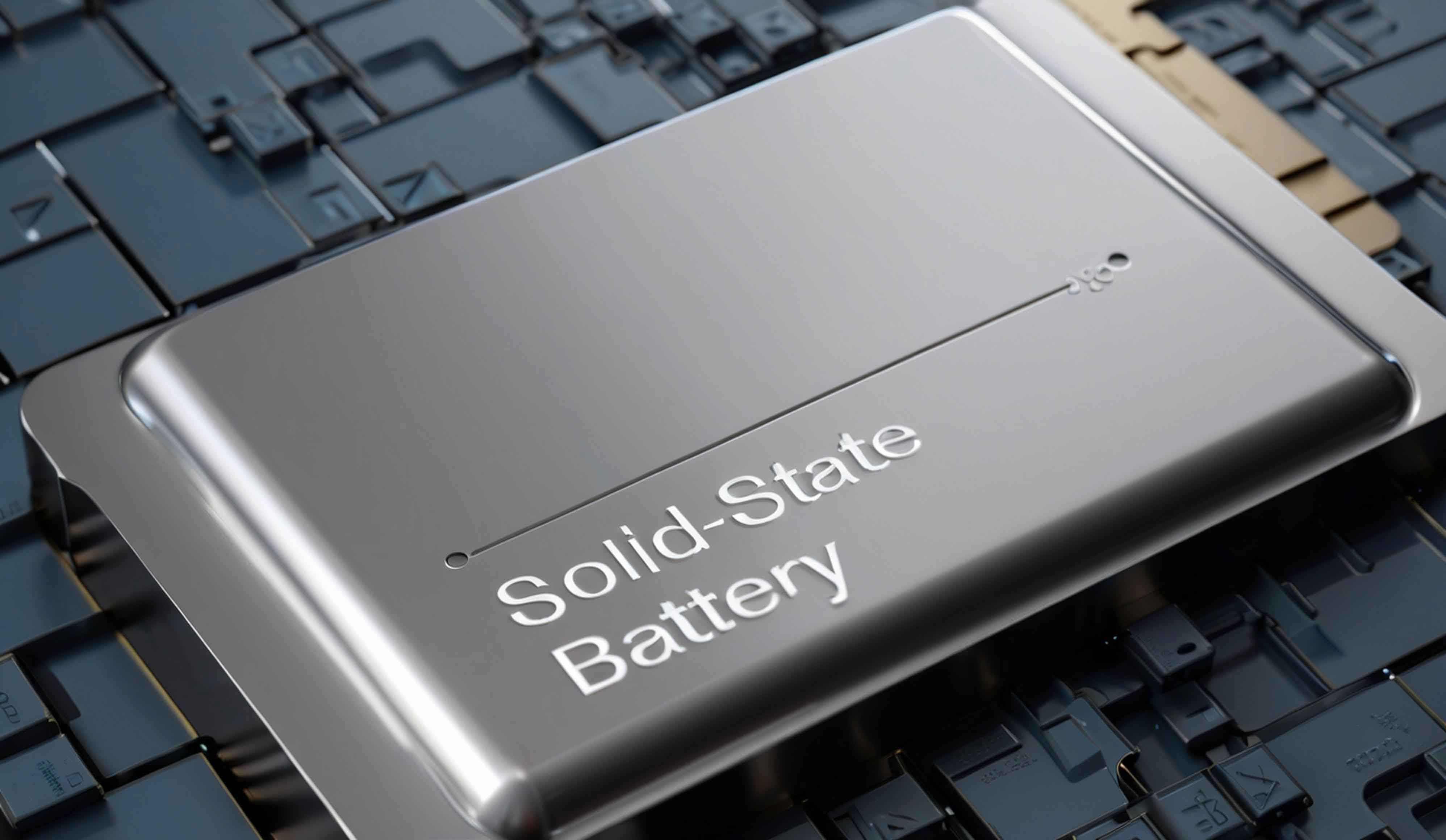
Solid-state batteries, with their superior energy density and safety advantages, are poised to redefine electric vehicle performance. Global enterprises and research institutions are now accelerating commercialization efforts, targeting small-scale production by 2027. This article explores the technological advancements, challenges, and collaborative strategies driving this revolution.
Industry Landscape and Strategic Roadmaps
Automakers and battery suppliers have established aggressive timelines for solid-state battery deployment:
| Company | Technology Focus | Milestone | Energy Density Target |
|---|---|---|---|
| Toyota | Sulfide electrolyte | Mass production by 2026 | ≥1200 km range |
| BYD | Hybrid polymer-sulfide | Pilot deployment by 2027 | 400 Wh/kg |
| CATL | Condensed polymer-sulfide | Pilot production by 2027 | 500 Wh/kg |
| FAW Group | High-nickel NMC/Si-C system | Vehicle integration by 2027 | 350 Wh/kg |
Technical Pathways and Material Innovation
Three primary electrolyte systems dominate solid-state battery research:
$$ \text{Energy Density (Wh/L)} = \frac{\text{Cell Voltage (V)} \times \text{Capacity (Ah)}}{\text{Volume (L)}} $$
| Electrolyte Type | Conductivity (S/cm) | Stability | Commercial Readiness |
|---|---|---|---|
| Polymer | 10-4–10-3 | Moderate | 2025–2027 |
| Oxide | 10-5–10-4 | High | 2028–2030 |
| Sulfide | 10-3–10-2 | Low | 2027–2030 |
Critical Challenges and Solutions
The development of solid-state batteries faces fundamental material science hurdles:
$$ \text{Cycle Life} = f\left(\frac{\Delta V_{\text{interface}}}{R_{\text{SEI}}}\right) $$
| Challenge | Current Status | 2030 Target |
|---|---|---|
| Electrolyte cost | $7,000–8,000/kg (2024) | $500/kg |
| Si anode expansion | 320% volume change | <200% |
| Cathode compatibility | NMC622 with Li6PS5Cl | NMC811/LMFP integration |
| Manufacturing yield | 65–70% (pilot) | >90% |
Collaborative Innovation Framework
The China Solid-State Battery Collaborative Innovation Platform has established a three-phase development model:
$$ \text{Technology Readiness Level (TRL)} = \sum_{i=1}^{9} \frac{C_i}{t_i} $$
- 2025–2027: Graphite/low-Si systems (200–300 Wh/kg)
- 2027–2030: High-Si systems (400 Wh/kg)
- 2030–2035: Lithium metal systems (500 Wh/kg)
Market Projections and Cost Reduction
Sulfide electrolyte pricing demonstrates exponential cost reduction potential:
$$ C(t) = C_0 \times e^{-kt} $$
| Year | Electrolyte Price ($/kg) | Battery Pack Cost ($/kWh) |
|---|---|---|
| 2024 | 7,000–8,000 | 280–320 |
| 2026 | 1,000–2,000 | 180–220 |
| 2030 | 300–500 | 90–120 |
As solid-state battery technology matures, the global market is projected to grow at a CAGR of 68.3% from 2025 to 2035. This revolution in energy storage will ultimately enable electric vehicles with 1,000 km ranges and 10-minute charging capabilities, fundamentally transforming sustainable transportation.