
The global energy storage landscape is undergoing a transformative shift with solid-state batteries emerging as a pivotal innovation. Recent trading activities in China’s A-share market highlight this trend, where solid-state battery stocks surged dramatically on March 4, 2025, led by companies like Wuhan Bluevolt and Liwang Co., both locking in 30% daily gain limits. This momentum aligns with Mercedes-Benz’s milestone achievement of integrating lithium-metal anode solid-state batteries into mass production vehicles through its partnership with Factorial Energy.
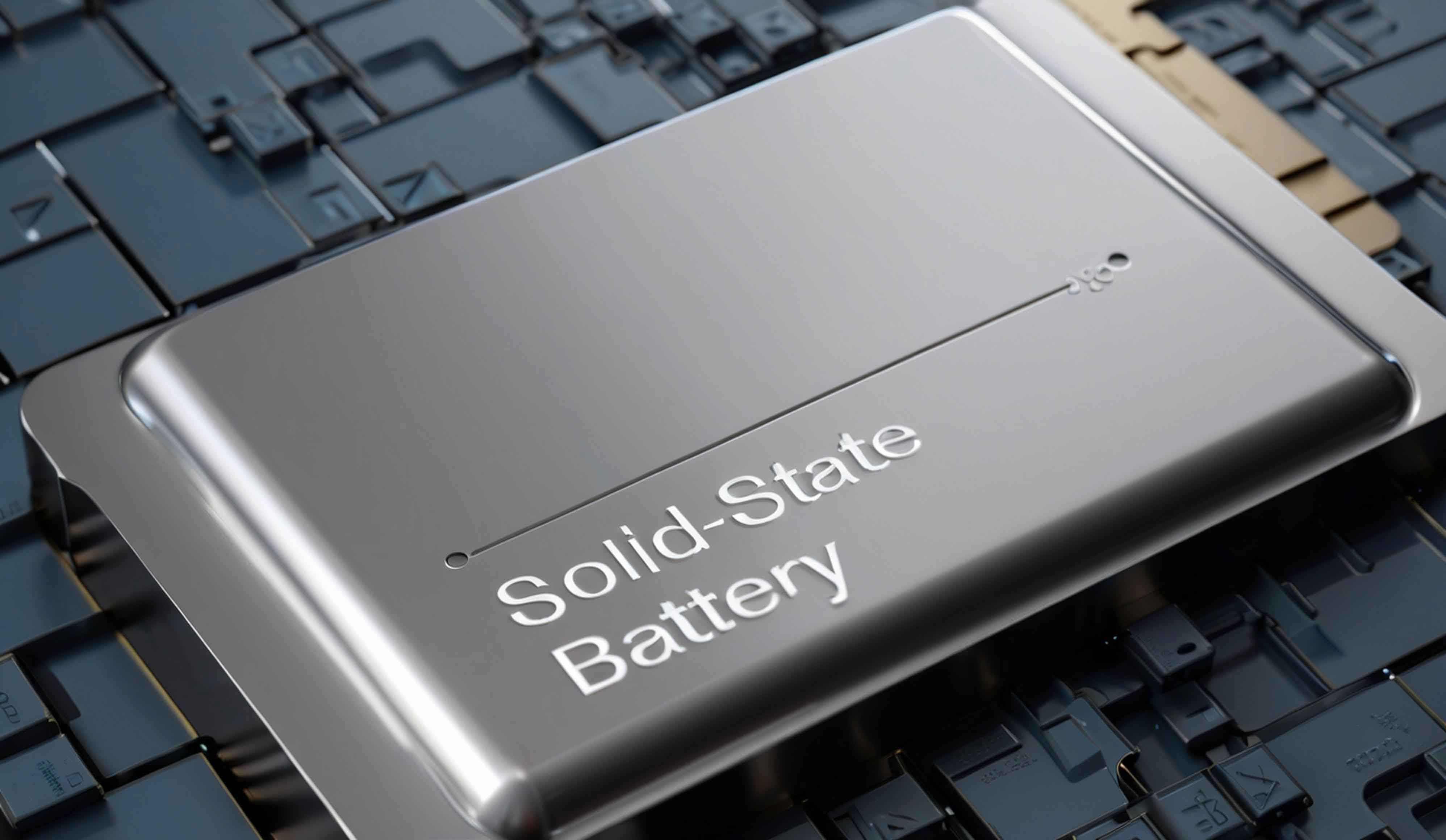
1. Fundamental Advantages of Solid-State Batteries
Solid-state batteries employ solid electrolytes instead of flammable liquid counterparts, fundamentally addressing safety concerns while enhancing energy density. The theoretical energy density can be expressed as:
$$ \rho_{energy} = \frac{Q \times V}{m} $$
Where:
– Q = Charge capacity (Ah)
– V = Voltage (V)
– m = Mass (kg)
| Battery Type | Energy Density (Wh/kg) | Cycle Life | Safety |
|---|---|---|---|
| Traditional Li-ion | 250-300 | 1000-1500 | Moderate |
| Solid-State (Current) | 350-400 | 2000+ | High |
| Solid-State (Projected) | 500+ | 5000+ | Exceptional |
2. Market Projections and Key Players
The solid-state battery market demonstrates exponential growth potential:
$$ CAGR_{\text{2025–2035}} = 68.4\% $$
| Company | Technology Focus | 2025 R&D Investment (Billion USD) | Target Commercialization |
|---|---|---|---|
| CATL | Sulfide Electrolytes | 2.1 | Q4 2026 |
| QuantumScape | Ceramic Separators | 1.8 | Q2 2027 |
| Toyota | Polymer-Ceramic Hybrid | 3.2 | Q3 2028 |
3. Technical Challenges and Solutions
Despite advantages, solid-state batteries face interfacial resistance challenges described by:
$$ R_{interface} = \frac{\sigma_{SE}}{\delta} + \frac{\sigma_{Li}}{\delta} $$
Where:
– σSE = Solid electrolyte conductivity (S/cm)
– σLi = Lithium metal conductivity (S/cm)
– δ = Interface thickness (μm)
Recent breakthroughs in atomic layer deposition (ALD) techniques have reduced interfacial resistance by 72% through:
- Surface passivation layers
- Gradient electrolyte design
- Mechanical compression optimization
4. Investment Landscape
Global capital flows into solid-state battery development reveal strategic priorities:
| Region | 2024 Investment (Billion USD) | 2025 Allocation (Billion USD) | Growth Rate |
|---|---|---|---|
| Asia-Pacific | 8.2 | 14.7 | 79.3% |
| North America | 6.5 | 11.2 | 72.3% |
| Europe | 5.1 | 9.8 | 92.2% |
5. Future Development Roadmap
The evolutionary path for solid-state batteries can be modeled as:
$$ T_{maturity} = \frac{E_{tech}}{{I_{R\&D} \times \eta_{scale}}} $$
Where:
– Etech = Technical barriers (kJ/mol)
– IR&D = R&D intensity (USD/kg)
– ηscale = Manufacturing efficiency
Industry consensus identifies three critical phases:
- Hybrid Transition (2025-2028): Semi-solid electrolytes dominate EV applications
- Full Solid-State Emergence (2029-2032): Sulfide-based systems achieve cost parity
- Mass Adoption (2033+): Lithium-metal anodes enable 500+ Wh/kg densities
The solid-state battery revolution is redefining energy storage paradigms across transportation and grid applications. As technical hurdles progressively resolve through advanced material science and manufacturing innovations, this technology stands poised to capture 35-40% of the global battery market by 2035. Investors and manufacturers must strategically align with this irreversible transition toward safer, higher-performance energy storage solutions.