
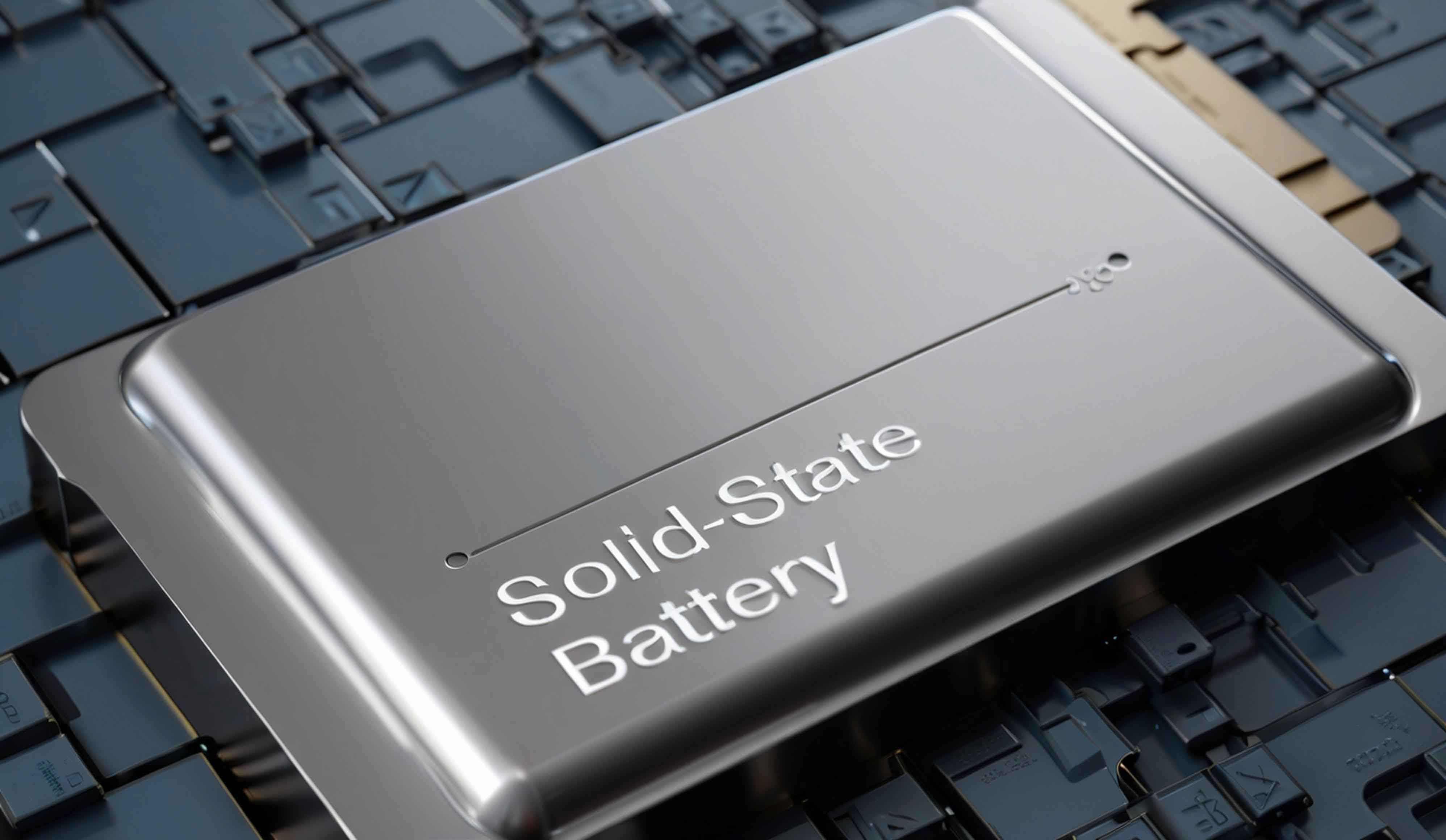
The evolution of solid-state batteries has reached unprecedented heights in 2024, driven by global demand for safer, higher-performance energy storage solutions. With advantages such as superior energy density, enhanced safety, and extended lifecycle, solid-state batteries are redefining the future of electric vehicles (EVs), consumer electronics, and aerospace applications. This article explores the technological breakthroughs, key players, and challenges shaping this transformative industry.
Key Technological Advancements
Solid-state batteries replace liquid electrolytes with solid alternatives, eliminating flammability risks and enabling higher energy densities. The energy density of a battery can be expressed as:
$$ \text{Energy Density (Wh/kg)} = \frac{\text{Voltage (V)} \times \text{Capacity (Ah)}}{\text{Mass (kg)}} $$
Leading companies like BYD and GAC Hyper have achieved energy densities exceeding 400 Wh/kg, a 50% improvement over conventional lithium-ion batteries. For instance, GAC Hyper’s third-gen silicon anode technology enables:
$$ \text{Volume Energy Density Improvement} \geq 52\% $$
$$ \text{Mass Energy Density Improvement} \geq 50\% $$
| Parameter | Solid-State Battery | Liquid Electrolyte Battery |
|---|---|---|
| Energy Density (Wh/kg) | 300–500 | 150–250 |
| Cycle Life | >2000 cycles | 1000–1500 cycles |
| Operating Temperature | -40°C to 200°C | -20°C to 60°C |
Leading Innovators and Their Contributions
The competitive landscape features over 50 Chinese companies advancing solid-state battery technologies. Below highlights key players:
| Company | Core Innovation | Status |
|---|---|---|
| BYD | Ceramic-reinforced all-solid-state battery architecture | Patents filed |
| GAC Hyper | 100% solid electrolyte with 1000km EV range | Planned 2026 mass production |
| Tailan New Energy | Separator-free lithium battery design | Jointly released with Changan Auto |
| CATL | All-solid-state R&D team expansion (>1000 researchers) | Prototype testing |
| Sunwoda | Second-gen semi-solid-state battery pilot production | Mid-trial phase |
Material Science Breakthroughs
The ionic conductivity ($\sigma$) of solid electrolytes remains critical, governed by:
$$ \sigma = n \cdot q \cdot \mu $$
where $n$ = charge carrier concentration, $q$ = charge per ion, and $\mu$ = ion mobility. Companies like Blue World HT and Dongfang Zirconium are pioneering sulfide and zirconia-based electrolytes, achieving conductivities over 10 mS/cm at 25°C.
Manufacturing Challenges
Despite progress, interfacial resistance ($R_{\text{interface}}$) between electrodes and electrolytes persists as a bottleneck:
$$ R_{\text{interface}} = R_{\text{SEI}} + R_{\text{contact}} $$
Where $R_{\text{SEI}}$ represents solid electrolyte interphase resistance and $R_{\text{contact}}$ denotes physical contact resistance. Production costs also remain prohibitive:
$$ \text{Cost}_{\text{solid-state}} \approx 3.2 \times \text{Cost}_{\text{liquid}} $$
| Component | Cost Multiplier |
|---|---|
| Solid Electrolyte Materials | 4–6× liquid electrolyte |
| Precision Manufacturing | 2–3× conventional process |
| Quality Control | 1.5–2× industry average |
Future Outlook
The Arrhenius equation predicts temperature-dependent performance improvements:
$$ \sigma(T) = \sigma_0 \cdot e^{-\frac{E_a}{k_B T}} $$
Where $E_a$ = activation energy, $k_B$ = Boltzmann constant, and $T$ = temperature. With sustained R&D investment, industry analysts project solid-state batteries to capture 15–20% of the global EV battery market by 2030.
From silicon-carbon composites to dry electrode coating technologies, China’s solid-state battery ecosystem demonstrates remarkable vertical integration. As manufacturing scales and novel materials like lithium lanthanum zirconium oxide (LLZO) mature, this technology will ultimately fulfill its promise of safer, longer-lasting energy storage for a decarbonized future.