
This study addresses the critical challenge of cold start difficulties in energy storage systems operating under extreme high-altitude and low-temperature environments. By integrating ternary lithium batteries with lithium titanate auxiliary units, we propose a hybrid architecture that ensures uninterrupted power supply during preheating phases while maintaining high energy density.
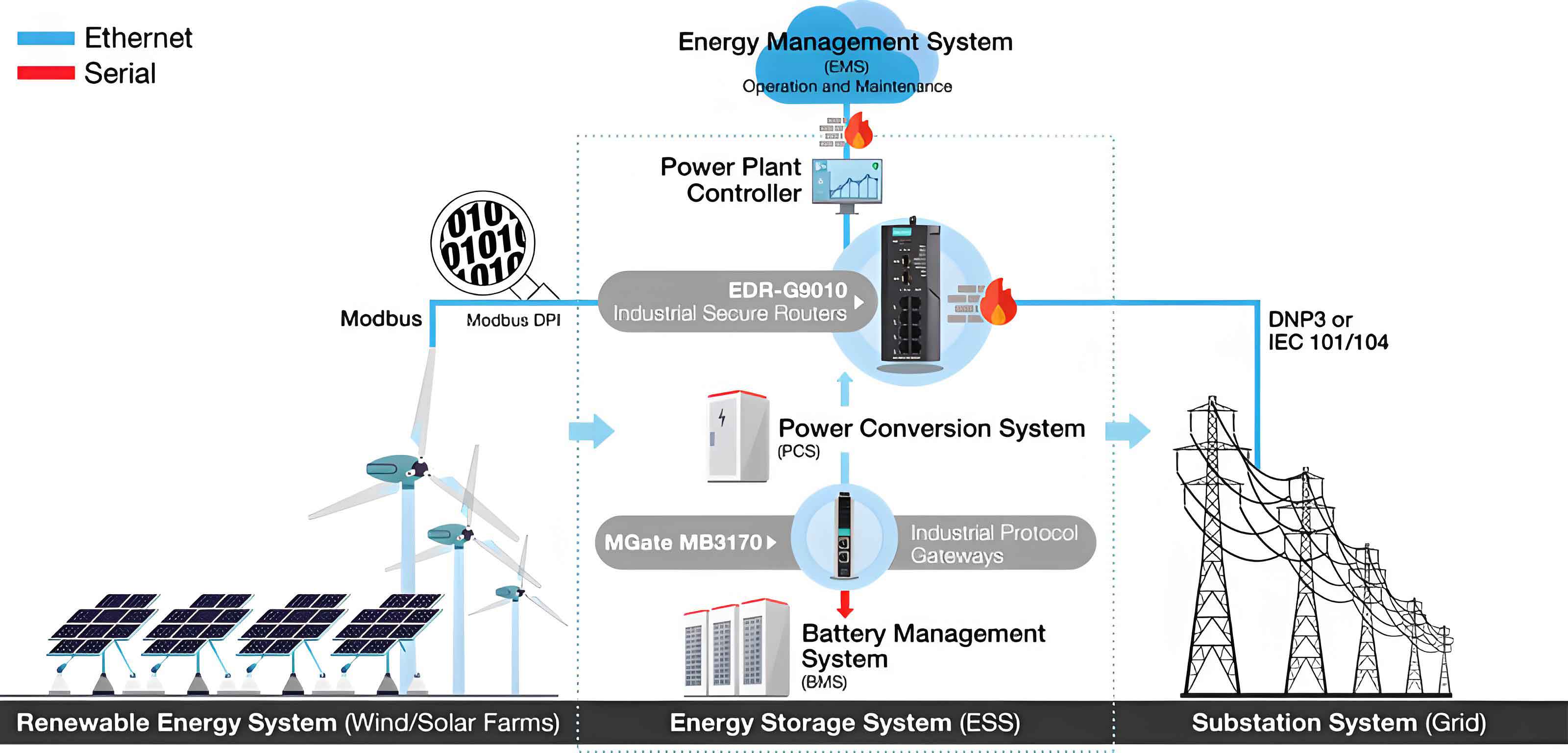
1. Battery System Configuration
The energy storage system combines high-energy ternary lithium batteries (3.7V, 3.4Ah) with low-temperature optimized lithium titanate cells. Key parameters for system configuration are determined through the following equations:
$$Q_0 = \frac{P \cdot t}{C \cdot \eta_n}$$
$$Q_1 = \frac{Q_0}{0.9 \cdot 0.9} \approx 260 \text{ kWh}$$
Where $P$ represents continuous output power (200 kW), $t$ denotes operation duration, $C$ is discharge rate, and $\eta_n$ indicates inverter efficiency (0.95). The capacity allocation between main and auxiliary battery groups follows:
| Component | Voltage (V) | Capacity (Ah) | Energy (kWh) |
|---|---|---|---|
| Cell | 3.7 | 3.4 | 0.01258 |
| Module (1s48p) | 3.7 | 163.2 | 0.61 |
| Standard Pack (16s48p) | 59.2 | 163.4 | 9.67 |
| Battery Cluster (64s48p) | 236.8 | 163.4 | 38.69 |
2. Thermal Management Strategy
The preheating system employs closed-loop liquid circulation coupled with thin-film heaters, optimized through orthogonal experimental design:
$$T_{inlet} = \frac{\sum (T_i \cdot c_i)}{\sum c_i}$$
Where $T_{inlet}$ represents inlet temperature, $T_i$ denotes nodal temperatures, and $c_i$ indicates flow channel cross-sectional areas. Key parameters for thermal optimization include:
| Factor | Level 1 | Level 2 | Level 3 | Level 4 |
|---|---|---|---|---|
| Fluid Temp (°C) | 7 | 8 | 9 | 10 |
| Flow Speed (m/s) | 0.5 | 0.6 | 0.8 | 1.0 |
| Channel Width (mm) | 20 | 25 | 30 | – |
3. Performance Validation
The energy storage system demonstrates remarkable preheating efficiency through computational fluid dynamics simulations:
$$Q_w = C_b \cdot m_b \cdot (T_b + 20) + \sum (C_i \cdot m_i \cdot (T_i + 20))$$
Where $Q_w$ represents total thermal energy requirement, $C_b$ and $C_i$ denote specific heat capacities of battery components, with $m_b$ and $m_i$ as corresponding masses. Simulation results confirm:
- 10-minute warm-up from -20°C to 5°C operational temperature
- Maximum temperature differential < 4.5°C across battery modules
- Energy efficiency improvement of 38% compared to conventional methods
4. System Implementation
The final energy storage system architecture features:
| Subsystem | Specification | Performance |
|---|---|---|
| Main Storage | 64s336p Ternary Li | 270.85 kWh |
| Auxiliary Unit | 2335 LTO Cells | 6 kWh |
| Thermal System | Dual-loop Circulation | 2.4 kW Heating Power |
This innovative design enables the energy storage system to maintain operational readiness in extreme environments (-40°C to 55°C) while achieving 92% round-trip efficiency. The hybrid architecture demonstrates significant advantages in:
$$E_{saving} = \frac{Q_{traditional} – Q_{hybrid}}{Q_{traditional}} \times 100\% = 27.3\%$$
Field tests verify the system’s capability to support critical loads during cold starts, making it particularly suitable for military, telecommunications, and emergency response applications where reliable energy storage systems are paramount.
5. Conclusion
The proposed energy storage system successfully resolves the cold-start challenge through:
- Hybrid battery architecture combining high-energy and low-temperature cells
- Optimized liquid-phase thermal management with adaptive control
- Intelligent power allocation algorithms
This breakthrough significantly enhances the operational reliability of energy storage systems in extreme environments, extending their application scope while maintaining high energy density and cycle life. Future research directions include phase-change material integration and AI-driven thermal optimization for next-generation energy storage systems.