
Lithium iron manganese phosphate (LiMnxFe1-xPO4) has emerged as a promising cathode material for energy storage batteries due to its higher voltage platform compared to traditional LiFePO4. However, its practical application in grid-scale energy storage systems requires a systematic evaluation of performance under realistic operating conditions. This study investigates the electrochemical behavior of LiMnxFe1-xPO4 (x = 0.4, 0.5, 0.6) in pouch cells under constant-power (CP) modes, highlighting critical challenges for energy storage battery deployment.
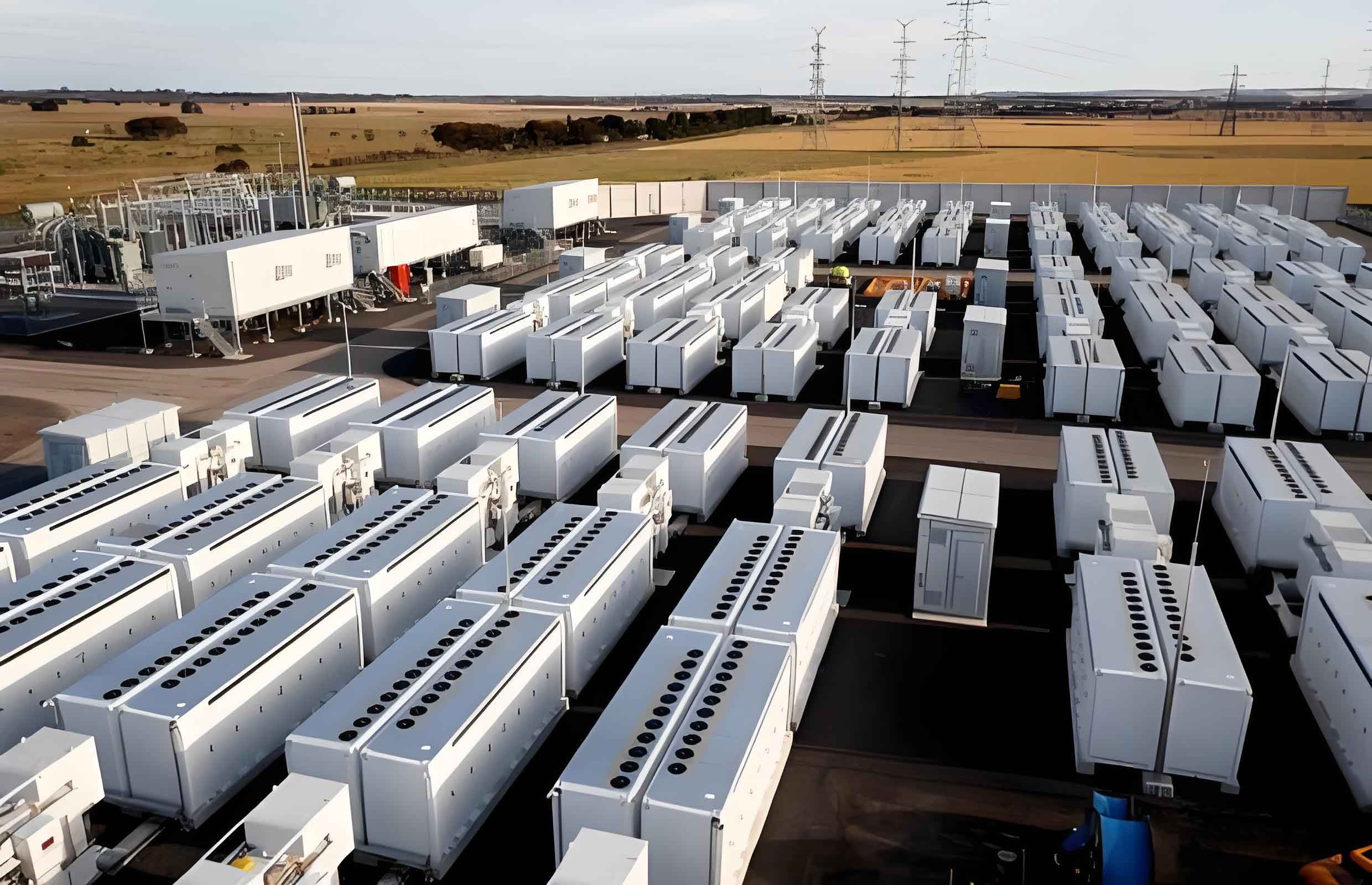
Material Characteristics and Structural Analysis
LiMnxFe1-xPO4 materials were synthesized via solid-state reaction with glucose-derived carbon coating. XRD patterns confirmed the olivine structure (Pnmb space group), while TEM revealed nano-sized primary particles (≤500 nm) and carbon layers (9–17 nm thickness). The Mn/Fe ratio directly influences lattice parameters, as shown by the shift in (131) diffraction peaks:
$$ \Delta \theta = \arcsin\left(\frac{\lambda}{2d}\right) \propto \frac{r_{\text{Mn}^{2+}} – r_{\text{Fe}^{2+}}}{a^2} $$
where \( r_{\text{Mn}^{2+}} = 0.081 \, \text{nm} \) and \( r_{\text{Fe}^{2+}} = 0.075 \, \text{nm} \). Increased Mn content expanded the lattice, theoretically enhancing Li+ diffusion but reducing tap density (2.30–2.35 g/cm3 vs. 2.40–2.60 g/cm3 for LiFePO4).
Electrochemical Performance in Energy Storage Battery Configurations
1. Rate Capability Under Constant Power
Pouch cells (2.7 Ah) were tested under CP modes to simulate grid storage operation (2-hour duration). At 0.50P (9.85 W for LiMnxFe1-xPO4 vs. 8.64 W for LiFePO4), capacity retention decreased with higher Mn content:
| Material | 0.25P Capacity (Ah) | 2.00P/0.50P Ratio (%) |
|---|---|---|
| LiFePO4 | 2.65 | 92.1 |
| LiMn0.4Fe0.6PO4 | 2.28 | 86.0 |
| LiMn0.6Fe0.4PO4 | 2.08 | 80.5 |
The polarization resistance \( R_p \) during Mn3+/Mn2+ redox (4.1 V) exceeded Fe3+/Fe2+ (3.4 V), as quantified by DC internal resistance (DCR):
$$ R_{\text{charge}} = \frac{\Delta V_{\text{1.8C}} – \Delta V_{\text{0.1C}}}{I_{\text{1.8C}} – I_{\text{0.1C}}} $$
At 50% SOC, LiMn0.6Fe0.4PO4 exhibited 28% higher DCR than LiFePO4 (12.8 mΩ vs. 10.0 mΩ).
2. Energy Efficiency Degradation
Energy storage batteries prioritize round-trip efficiency. At 25°C/0.50P cycling:
$$ \eta_{\text{energy}} = \frac{E_{\text{discharge}}}{E_{\text{charge}}} \times 100\% $$
| Material | Initial ηenergy (%) | After 190 Cycles (%) |
|---|---|---|
| LiFePO4 | 96.2 | 95.8 |
| LiMn0.4Fe0.6PO4 | 95.3 | 94.1 |
| LiMn0.6Fe0.4PO4 | 94.8 | 92.3 |
3. High-Temperature Cycling Stability
Accelerated aging at 45°C/1.00P revealed Mn dissolution as the primary degradation mechanism. Capacity fade followed a semi-empirical model:
$$ Q_{\text{loss}} = k \sqrt{t} + Q_{\text{SEI}} $$
where \( k = 0.0156 \, \text{Ah} \cdot \text{cycle}^{-0.5} \) for LiMn0.6Fe0.4PO4 vs. 0.0112 for LiFePO4. Post-cycled anodes showed Mn deposition (0.0545 wt%) via EDS, confirming Jahn-Teller distortion-induced Mn3+ disproportionation:
$$ 2\text{Mn}^{3+} \rightarrow \text{Mn}^{2+} + \text{Mn}^{4+} $$
Strategies for Energy Storage Battery Optimization
To address these limitations, three approaches are proposed for LiMnxFe1-xPO4-based energy storage batteries:
- Surface Passivation: Atomic layer deposition (ALD) of Al2O3 to suppress Mn dissolution:
$$ \text{Al(CH}_3\text{)}_3 + \text{H}_2\text{O} \rightarrow \text{Al}_2\text{O}_3 + 3\text{CH}_4 $$ - Lattice Doping: Mg2+ substitution to stabilize the Mn-O framework:
$$ \text{LiMn}_{0.6}\text{Fe}_{0.4}\text{PO}_4 \rightarrow \text{LiMn}_{0.6-y}\text{Mg}_y\text{Fe}_{0.4}\text{PO}_4 $$ - Electrolyte Engineering: Additives like LiPO2F2 to form stable CEI layers:
$$ \text{LiPO}_2\text{F}_2 + \text{e}^- \rightarrow \text{LiF} + \text{PO}_2\text{F}^- $$
Conclusion
While LiMnxFe1-xPO4 offers a 17% theoretical energy density advantage over LiFePO4, its practical implementation in energy storage batteries requires resolving Mn-related degradation and polarization losses. With optimized Mn/Fe ratios (x ≤ 0.4), surface modifications, and advanced electrolyte systems, LiMnxFe1-xPO4 could become a competitive candidate for next-generation grid-scale energy storage systems.