
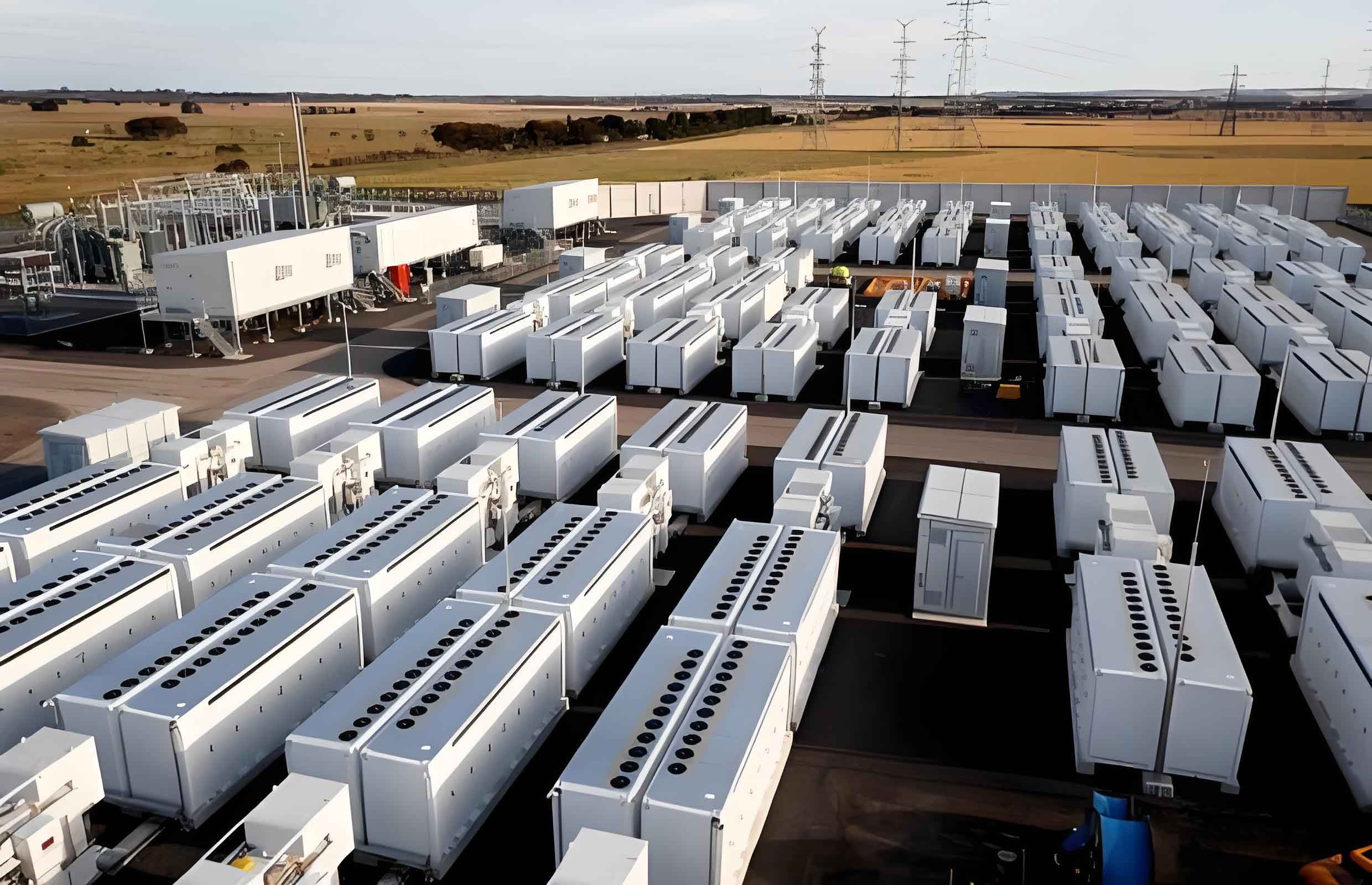
Batteries, composed of cathodes, anodes, and electrolytes, enable energy storage and release through the interconversion of chemical and electrical energy. With the global energy transition and rapid growth of new energy vehicles, power batteries (emphasizing high energy density and safety) and energy storage batteries (prioritizing cost-effectiveness and environmental sustainability) have become pivotal technologies for future energy systems. This article synthesizes recent advancements in materials design, electrolyte innovation, and mechanistic studies across multiple battery systems, including lithium-ion, sodium-ion, aqueous zinc-ion, and flow batteries.
Cathode Material Innovations
Recent breakthroughs in oxygen redox chemistry have enabled high-capacity cathode materials. For lithium-rich layered oxides, the anionic charge compensation mechanism can be expressed as:
$$ Li_{1.2}Ni_{0.13}Co_{0.13}Mn_{0.54}O_2 \leftrightarrow Li_{1.2-x}Ni_{0.13}Co_{0.13}Mn_{0.54}O_{2-x} + xLi^+ + xe^- $$
This reversible oxygen redox process enables capacities exceeding 300 mAh/g. Comparative performance metrics for various cathode materials are summarized below:
| Material Type | Capacity (mAh/g) | Voltage (V) | Cycle Life |
|---|---|---|---|
| Li-rich Layered Oxide | 320 | 3.6 | 500 |
| Sodium Layered Oxide | 220 | 3.3 | 1000 |
| Organic Sulfides | 450 | 2.8 | 200 |
Electrolyte Engineering Strategies
Advanced electrolyte formulations significantly enhance energy storage battery performance. For low-temperature sodium metal batteries, the optimized electrolyte composition achieves 98% Coulombic efficiency at -40°C through electrostatic shielding effects:
$$ \eta = \frac{C_{LiClO_4}}{C_{NaPF_6}} \cdot \frac{\varepsilon_r}{\sigma} $$
where \( \eta \) represents shielding efficiency, \( C \) denotes concentration, \( \varepsilon_r \) dielectric constant, and \( \sigma \) ionic conductivity. Key electrolyte developments include:
| Electrolyte Type | Conductivity (mS/cm) | Voltage Window (V) | Operating Temp. Range (°C) |
|---|---|---|---|
| Ethylammonium Iodide | 12.3 | 2.5-4.3 | -20~60 |
| Hybrid Solid-Liquid | 8.7 | 1.8-5.0 | -40~150 |
| Oxide Solid-State | 3.2 | 0-5.5 | -30~300 |
Emerging Battery Systems
Aqueous copper batteries demonstrate exceptional potential for energy storage applications, with the cathode reaction:
$$ Cu^{2+} + 2e^- \leftrightarrow Cu \quad (E^0 = 0.34V) $$
Combined with zinc anodes, these systems achieve energy densities >200 Wh/kg while maintaining inherent safety. Flow battery technologies for long-duration energy storage exhibit scalable capacity through tank size adjustment:
$$ Q = nFCV $$
where \( Q \) is total charge capacity, \( n \) electron transfer number, \( F \) Faraday constant, \( C \) active species concentration, and \( V \) electrolyte volume.
Advanced Characterization Techniques
Phase-field modeling enables precise analysis of microstructure evolution in energy storage battery materials:
$$ \frac{\partial c}{\partial t} = \nabla \cdot \left(M\nabla\frac{\delta F}{\delta c}\right) $$
where \( c \) is lithium concentration, \( M \) mobility tensor, and \( F \) free energy functional. This approach successfully predicts dendrite growth patterns in metal anodes with 92% correlation to experimental observations.
Future Perspectives
The development roadmap for next-generation energy storage batteries prioritizes three key parameters:
$$ \text{Figure of Merit} = \frac{\text{Energy Density} \times \text{Cycle Life}}{\text{Cost} \times \sqrt{\text{Safety Risk}}} $$
Current research focuses on overcoming interfacial instability challenges through artificial SEI engineering and potential-dependent electrolyte decomposition control. Multiscale modeling combining DFT calculations and continuum models accelerates materials discovery, reducing development cycles by 40-60% compared with traditional trial-and-error approaches.
The continuous innovation in energy storage battery technologies will fundamentally transform global energy infrastructure, enabling high penetration of renewable energy sources while meeting diverse application requirements from grid-scale storage to portable electronics. Cross-disciplinary collaboration between materials science, electrochemistry, and advanced manufacturing remains crucial for achieving commercially viable solutions within the next decade.