
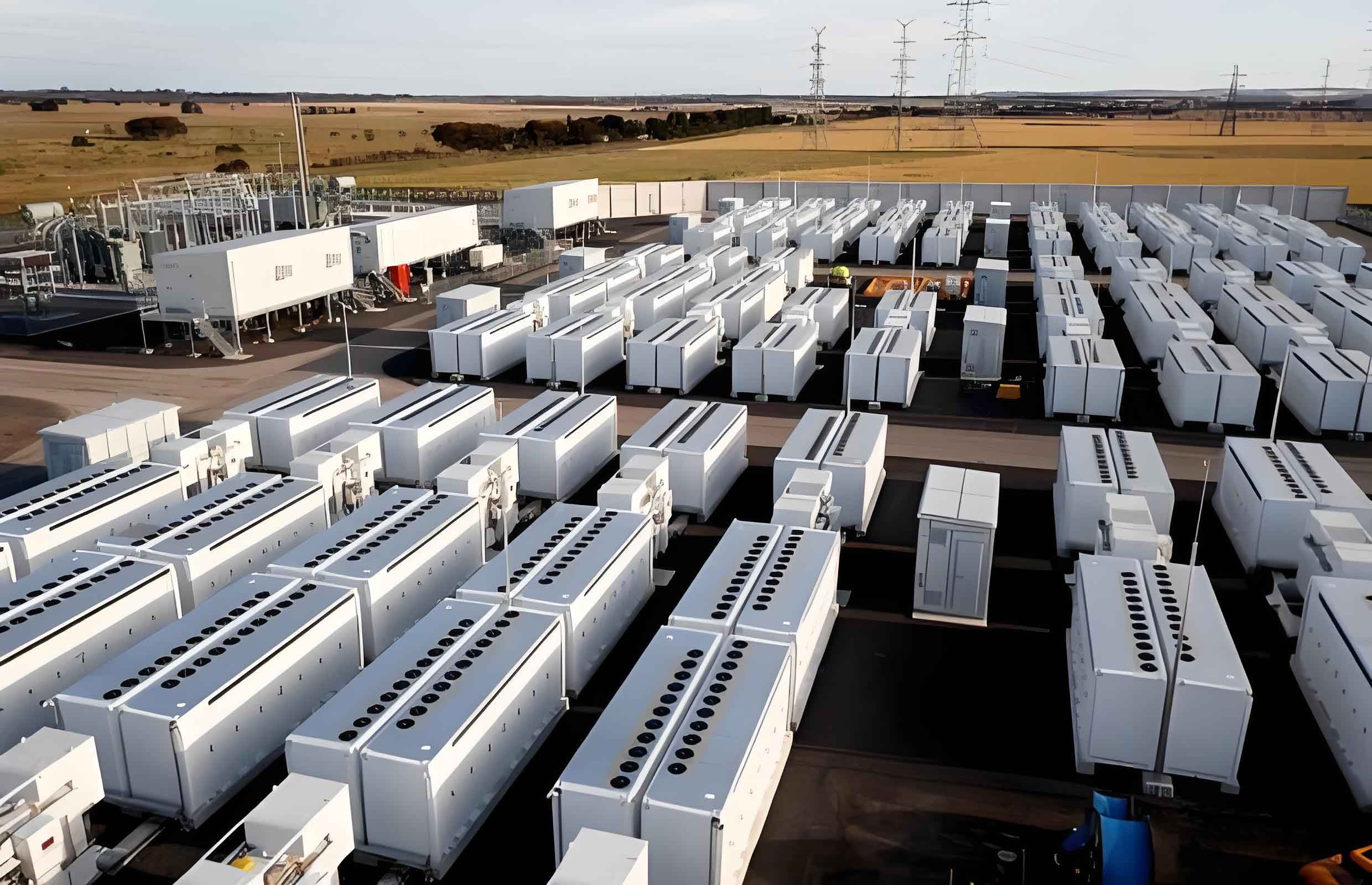
The rapid growth of modern industrial economies has intensified demand for energy storage solutions. Energy storage batteries play a pivotal role in bridging the gap between energy production and consumption patterns. This article systematically examines reliability enhancement strategies and multidimensional applications of energy storage technology.
1. Critical Factors Influencing Energy Storage System Reliability
Energy storage battery reliability depends on multiple internal and external factors:
| External Factors | Internal Factors |
|---|---|
|
|
2. Multidimensional Applications of Energy Storage Batteries
2.1 Power System Applications
Energy storage batteries enable grid stability through:
$$ P_{regulation} = \frac{E_{storage} \cdot \eta}{t_{response}} $$
Where:
- $E_{storage}$ = Available energy capacity (kWh)
- $\eta$ = Round-trip efficiency (typically 85-95%)
- $t_{response}$ = Response time (seconds)
2.2 Transportation Sector Implementation
EV battery systems require advanced thermal management:
| Parameter | Current Benchmark | 2025 Target |
|---|---|---|
| Energy Density | 250 Wh/kg | 400 Wh/kg |
| Fast Charge Rate | 1C-2C | 4C-6C |
| Cycle Life | 3,000 cycles | 8,000 cycles |
2.3 Industrial Energy Management
Peak shaving applications demonstrate:
$$ C_{savings} = P_{peak} \cdot (R_{grid} – R_{storage}) \cdot t_{discharge} $$
Typical industrial users achieve 18-25% demand charge reduction through energy storage battery deployment.
3. Reliability Enhancement Strategies
Key approaches for improving energy storage battery reliability:
3.1 Cell-Level Optimization
Electrode material stability improvements:
$$ \frac{dQ}{dV} = \frac{nF}{RT} \cdot \frac{C}{1 + e^{\frac{F}{RT}(E – E^0)}} $$
Advanced doping techniques reduce capacity fade to <0.1%/cycle.
3.2 System-Level Protection
| Failure Mode | Detection Method | Mitigation Strategy |
|---|---|---|
| Thermal Runaway | ΔT/Δt >2°C/s | Phase change materials + liquid cooling |
| Insulation Failure | IR <500 MΩ | Double-layer encapsulation |
| Voltage Imbalance | ΔV >50 mV | Active balancing circuits |
4. Emerging Technologies in Energy Storage
Next-generation energy storage battery technologies show promising characteristics:
| Technology | Energy Density (Wh/L) | Cycle Life | Cost ($/kWh) |
|---|---|---|---|
| Solid-State Li-ion | 900-1,200 | >10,000 | 80-120 |
| Lithium-Sulfur | 500-600 | 2,000-3,000 | 60-90 |
| Sodium-Ion | 200-300 | 4,000-5,000 | 40-70 |
5. Future Development Trends
The energy storage battery industry is evolving toward:
- Ultra-long cycle life: >20,000 cycles at 80% DoD
- Intelligent management: AI-driven SOC estimation with <1% error
- Multi-energy integration: Hybrid systems combining batteries with supercapacitors
Advanced safety features will incorporate:
$$ \tau_{response} = \frac{C_{thermal} \cdot ΔT}{P_{fault}} < 100ms $$
Where rapid thermal management response prevents cascading failures.
6. Conclusion
Energy storage battery technology continues to demonstrate critical importance across multiple sectors. Through material innovations, intelligent management systems, and advanced safety mechanisms, modern energy storage solutions achieve unprecedented reliability levels while driving sustainable energy transitions. Future developments will further enhance energy density, reduce costs, and expand application scenarios, solidifying the position of energy storage batteries as essential components in global energy infrastructure.