
The global energy storage landscape is undergoing a transformative shift, driven by the urgent need for safer, higher-capacity, and sustainable battery technologies. Among the most promising candidates, solid-state battery and sodium-ion batteries have emerged as frontrunners, poised to address critical challenges in electric vehicles (EVs), renewable energy integration, and portable electronics. This article explores the technical advancements, market trajectories, and scientific breakthroughs underpinning these technologies, with a focus on their competitive advantages over conventional lithium-ion systems.
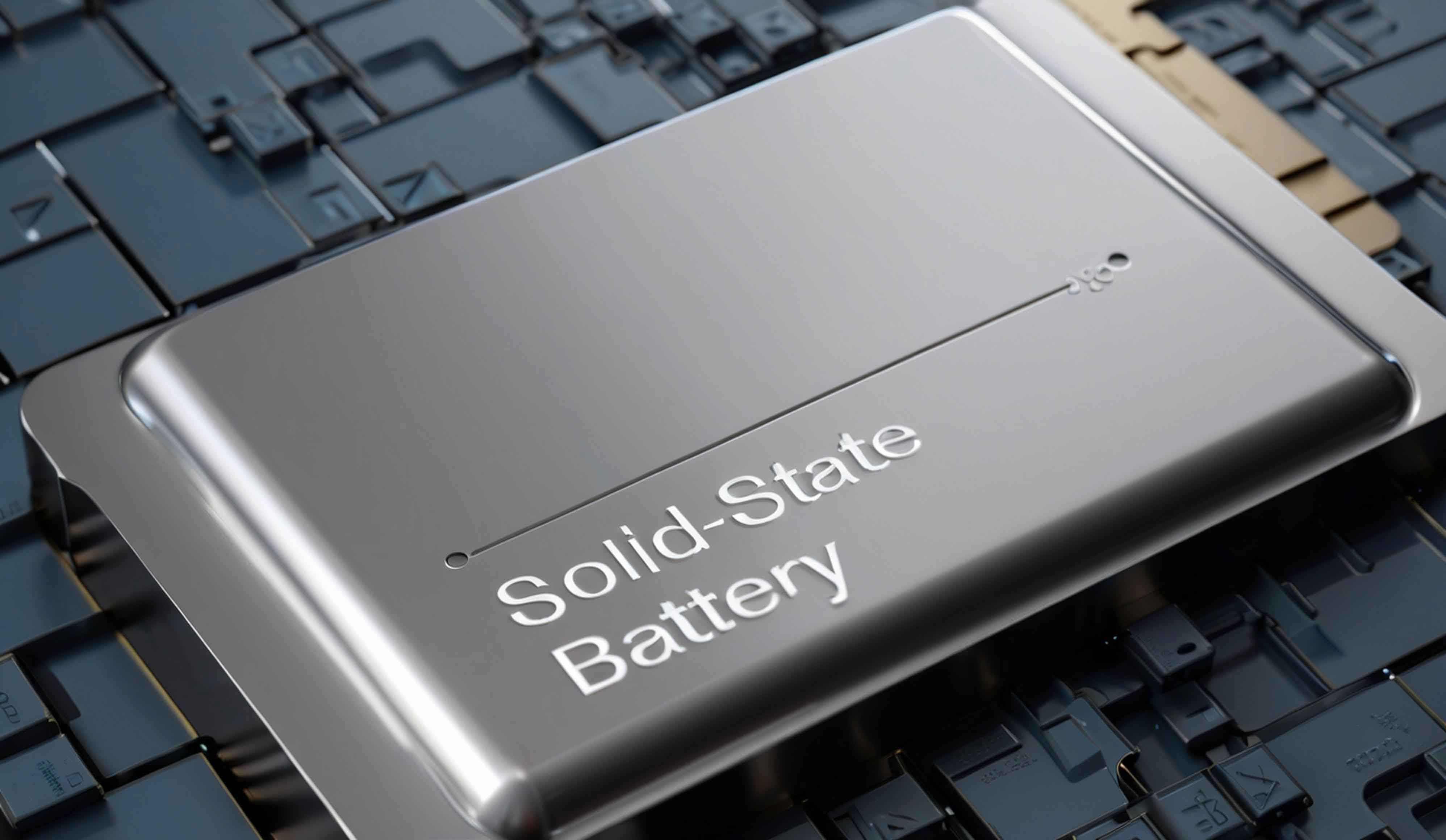
1. Solid-State Battery: The Paradigm of Energy Density and Safety
Solid-state battery replace the flammable liquid electrolyte in traditional lithium-ion batteries with a solid electrolyte, enabling unprecedented improvements in energy density and safety. According to industry roadmaps, major milestones are anticipated by 2025–2027, including the commercialization of cells exceeding 400 Wh/kg—a 50% increase over current lithium-ion benchmarks.
Key Advantages
- Safety: Elimination of dendrite formation and thermal runaway risks.
- Energy Density: Theoretical limits surpass 500 Wh/kg due to compact layered architectures.
- Cycle Life: Enhanced stability with >80% capacity retention after 1,000 cycles.
Technical Challenges
- Interfacial Resistance: Solid-solid electrode-electrolyte interfaces impede ion mobility.
- Manufacturing Costs: Scalability hurdles persist, with current production costs 5–10× higher than lithium-ion.
2. Sodium-Ion Battery: The Cost-Effective Alternative
Sodium-ion batteries leverage abundant sodium resources to deliver a low-cost, sustainable solution for grid storage and mid-range EVs. While their energy density (~150–200 Wh/kg) lags behind lithium-ion and solid-state battery, recent innovations in cathode materials (e.g., layered oxides) have narrowed this gap.
Market Projections
- Cost Reduction: Sodium-ion systems are projected to achieve $50/kWh by 2027, 30% cheaper than lithium-ion.
- Applications: Ideal for stationary storage and urban mobility due to moderate energy requirements.
3. Comparative Analysis: Solid-State vs. Sodium-Ion Batteries
The table below summarizes critical performance metrics:
| Parameter | Solid-State Battery | Sodium-Ion Battery | Lithium-Ion Battery |
|---|---|---|---|
| Energy Density (Wh/kg) | 300–400 | 150–200 | 200–300 |
| Cycle Life | >1,000 | 2,000–5,000 | 500–1,000 |
| Cost (USD/kWh) | 150–200 (2027 est.) | 50–70 (2027 est.) | 100–120 |
| Safety | Excellent | Good | Moderate |
4. Breakthrough Innovations in Solid-State Battery
Material Science Advancements
- Solid Electrolytes: Sulfide-based (e.g., Li22S-P22S55) and oxide-based (e.g., LLZO) electrolytes achieve ionic conductivities >1 mS/cm.
- Anode Materials: Lithium-metal anodes paired with solid electrolytes enable ultra-thin designs, boosting energy density.
QuantumScape’s Milestones
QuantumScape, a leader in solid-state battery development, has demonstrated prototype cells with:
- 80% capacity retention after 800 cycles.
- 15-minute fast-charging capability at >400 Wh/kg.
5. Mathematical Modeling of Energy Density
The energy density (EE) of a solid-state battery can be expressed as:E=V⋅CmE=mV⋅C
Where:
- VV = Average discharge voltage (V)
- CC = Capacity (Ah)
- mm = Mass of the cell (kg)
For a solid-state battery with V=3.7 VV=3.7V, C=100 AhC=100Ah, and m=1 kgm=1kg:E=3.7×1001=370 Wh/kgE=13.7×100=370Wh/kg
6. Roadmap to Commercialization
Solid-State Battery Timeline
- 2024: Pilot production lines operational (e.g., Toyota).
- 2027: Mass-market EVs adopt solid-state battery with 400 Wh/kg.
- 2030: Cost parity with lithium-ion anticipated.
Sodium-Ion Battery Timeline
- 2025: Large-scale grid storage deployments.
- 2027: Cost leadership established at <$70/kWh.
7. Policy and Investment Drivers
Governments and corporations are accelerating R&D funding:
- EU Battery 2030+ Initiative: €3.2 billion allocated for solid-state battery research.
- China’s 14th Five-Year Plan: Sodium-ion battery subsidies to reduce lithium dependency.
8. Conclusion
Solid-state battery and sodium-ion batteries represent divergent yet complementary pathways to decarbonization. While solid-state battery dominate high-performance applications, sodium-ion technology offers an economical bridge for mass adoption. The synergy between these innovations will redefine energy storage economics, safety, and sustainability by 2030.