
As the global energy structure rapidly transitions toward renewable energy, lithium-ion energy storage systems have emerged as critical enablers of power system flexibility due to their high energy density, rapid response capabilities, and modular deployment advantages. However, in practical engineering applications, the energy efficiency of energy storage battery cabinets often falls below theoretical expectations, posing a significant bottleneck to their economic viability and large-scale adoption. This study investigates the impact of environmental temperature, charge-discharge voltage range, and thermal management strategies on the energy efficiency of energy storage battery cabinets, aiming to establish a thermoelectric cooperative optimization framework for enhanced performance.
1. Experimental Setup and Methodology
1.1 Test Equipment and Parameters
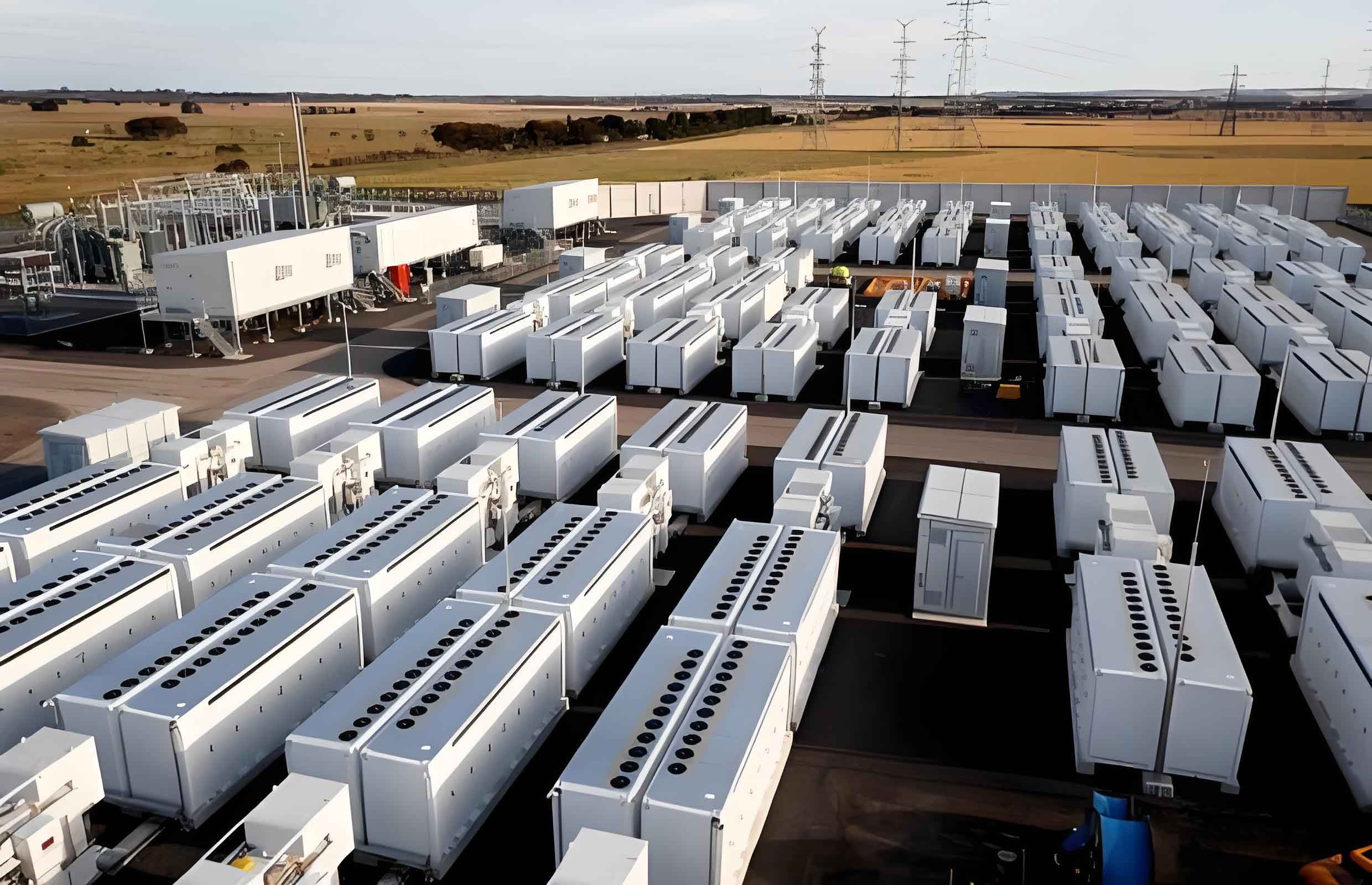
The experiments utilized a 372.736 kWh outdoor liquid-cooled energy storage battery cabinet with a 1500V system. The cabinet comprised 1P52S modular configurations, integrating eight battery packs and one high-voltage box. Each pack employed LiFePO₄ batteries with a nominal capacity of 280Ah and a working voltage range of 2.6V–3.6V. Key experimental equipment included:
| No. | Equipment | Brand | Model | Key Parameters |
|---|---|---|---|---|
| 1 | Energy Storage Converter | TBEA | TE186K-HV | Rated Power: 187 kW |
| 2 | Walk-in Temperature Chamber | Jiangsu Ruilan | RLH-30MW-L55H85-ICE | Temperature Range: -55°C–85°C |
| 3 | Dry-type Transformer | TBEA | XCS500-0.4-0.69 | Input/Output Voltage: 400V/690V |
| 4 | Soft Starter Cabinet | TBEA | GGD | Rated Power: 500 kVA |
| 5 | Liquid Chiller | Envicool | EMW600HCNC1B | Cooling Capacity: 8 kW |
1.2 Test Procedures
1.2.1 Initial Charge-Discharge Energy Test
- Place the battery cabinet in the temperature chamber and connect it to the converter, transformer, and soft starter.
- Set the chamber temperature to T1±2∘CT1±2∘C.
- Stabilize the system for 5 hours.
- Charge at a constant power Pcharge=186.368 kWPcharge=186.368kW until reaching the upper voltage limit U1U1.
- Discharge at Pdischarge=186.368 kWPdischarge=186.368kW until reaching the lower voltage limit U2U2.
- Repeat steps 4–5 to eliminate residual charge effects.
- Calculate energy efficiency (ηη):
η=EdischargeEcharge×100%η=EchargeEdischarge×100%
where EchargeEcharge and EdischargeEdischarge are measured at the DC side.
1.2.2 DC Internal Resistance Test
- Charge/discharge the battery to 50% state of charge (SOC).
- Measure open-circuit voltage UOCUOC.
- Apply a 10-second constant current pulse (Ipulse=280 AIpulse=280A) and record the voltage UpulseUpulse.
- Compute DC internal resistance (RR):
R=Upulse−UOCIpulseR=IpulseUpulse−UOC
1.2.3 Thermal Management Strategies
The liquid cooling system operated under four modes (Table 1):
- Cooling Mode: Activated when Tmax≥25∘CTmax≥25∘C and Tavg≥24∘CTavg≥24∘C.
- Heating Mode: Activated when 14∘C≤Tmin<17∘C14∘C≤Tmin<17∘C.
- Self-Circulation Mode: Enabled for temperature uniformity.
- Shutdown Mode: Default state.
| Mode | Activation Logic | Exit Condition |
|---|---|---|
| Cooling | Tmax≥25∘CTmax≥25∘C, Tavg≥24∘CTavg≥24∘C | Tmax<22∘CTmax<22∘C, Tavg<21∘CTavg<21∘C |
| Heating | 14∘C≤Tmin<17∘C14∘C≤Tmin<17∘C | Tmin≥21∘CTmin≥21∘C |
| Self-Circulation | Temperature gradient ≥5∘C≥5∘C | — |
| Shutdown | No active thermal demands | — |
2. Key Findings and Analysis
2.1 Impact of Ambient Temperature
Energy storage battery cabinets exhibited a strong correlation between ambient temperature (TT) and energy efficiency (ηη) (Figure 1). The relationship was modeled as:η=0.86129+0.00779T−2.91487×10⁻⁴T2+8.03825×10⁻⁶T3−1.63113×10⁻⁷T4+2.12115×10⁻⁹T5−1.25571×10⁻¹¹T6η=0.86129+0.00779T−2.91487×10⁻⁴T2+8.03825×10⁻⁶T3−1.63113×10⁻⁷T4+2.12115×10⁻⁹T5−1.25571×10⁻¹¹T6
with R2=0.99606R2=0.99606.
Observations:
- 5°C–50°C: ηη increased with TT, driven by accelerated ion mobility and reduced ohmic resistance.
- >50°C: ηη declined due to electrolyte decomposition, SEI layer degradation, and accelerated aging.
DC internal resistance (RR) decreased with rising TT up to 50°C but surged beyond this threshold (Figure 2), aligning with electrode expansion and electrolyte loss.
2.2 Impact of Charge-Discharge Voltage Range
Adjusting the voltage window significantly influenced energy efficiency and discharge capacity (Table 2).
| Voltage Range (V) | Energy Efficiency (%) | Discharge Energy (kWh) |
|---|---|---|
| 2.6–3.6 | 93.36 | 375.2 |
| 2.7–3.6 | 94.31 | 374.6 |
| 2.8–3.6 | 95.24 | 373.6 |
| 2.85–3.6 | 95.85 | 372.8 |
Optimal Range: 2.8V–3.6V balanced energy efficiency (η≥95%η≥95%) and discharge capacity (≥372.736 kWh≥372.736kWh). Lower discharge cutoffs increased polarization losses, while higher cutoffs reduced usable energy.
2.3 Impact of Thermal Management
Five thermal strategies (Table 3) were evaluated to optimize ηη and battery lifespan.
| Strategy | Heating Outlet Temp (T1T1, °C) | Max Battery Temp (TmaxTmax, °C) | ηη (%) |
|---|---|---|---|
| 1 | 32 | 43 | 94.7 |
| 2 | 30 | 40 | 95.2 |
| 3 | 28 | 38 | 94.9 |
| 4 | 26 | 36 | 94.5 |
| 5 | 24 | 34 | 94.1 |
Optimal Strategy: T1=30∘CT1=30∘C limited TmaxTmax to 40°C, avoiding accelerated aging while maximizing ηη.
3. Multiparameter Synergistic Optimization
Combining the optimal parameters—ambient temperature ≤50∘C≤50∘C, voltage range 2.8V–3.6V, and T1=30∘CT1=30∘C—achieved a system-level energy efficiency of 95.29%. This framework ensures:
- Minimized polarization losses.
- Suppressed electrolyte side reactions.
- Enhanced thermal uniformity and cycle life.
4. Conclusion
This study establishes a thermoelectric optimization model for energy storage battery cabinets, addressing the interplay between energy efficiency, environmental conditions, and operational parameters. Key recommendations include:
- Temperature Control: Maintain T≤50∘CT≤50∘C to avoid efficiency decay.
- Voltage Window: Optimize to 2.8V–3.6V for balanced energy output and efficiency.
- Thermal Management: Set heating outlet temperature to 30°C to cap TmaxTmax at 40°C.
These findings provide actionable insights for designing high-efficiency energy storage systems, critical for stabilizing grids with high renewable penetration. Future work will explore dynamic parameter calibration under fluctuating loads and transient thermal conditions.