
To elucidate the coupling mechanisms of heat generation and propagation during thermal runaway in high-capacity LiFePO4 (LFP) battery modules, our research team conducted experimental and numerical investigations on a 230 Ah LiFePO4 battery module. This study aims to establish a predictive model for thermal runaway dynamics, analyze temperature distribution patterns, and evaluate the impact of module configuration and thermal triggering positions on propagation behavior. The findings provide critical insights for designing safer large-scale LiFePO4 battery systems.
1. Introduction
LiFePO4 batteries are widely adopted for energy storage due to their stability and longevity. However, thermal runaway—triggered by thermal, electrical, or mechanical abuse—remains a critical safety concern. During thermal runaway, exothermic reactions within the battery exceed its heat dissipation capacity, leading to catastrophic failure. While prior studies have focused on small-format ternary lithium batteries, research on large-capacity LiFePO4 modules remains limited. This work bridges this gap by analyzing thermal propagation mechanisms in LiFePO4 modules under varied configurations and triggering scenarios.
Key challenges include:
- Heat accumulation dynamics during sequential vs. reverse-sequential propagation.
- Thermal coupling effects between adjacent cells in multi-column modules.
- Timing discrepancies between internal and external thermal runaway triggers.
2. Experimental Methodology
2.1 Battery Specifications
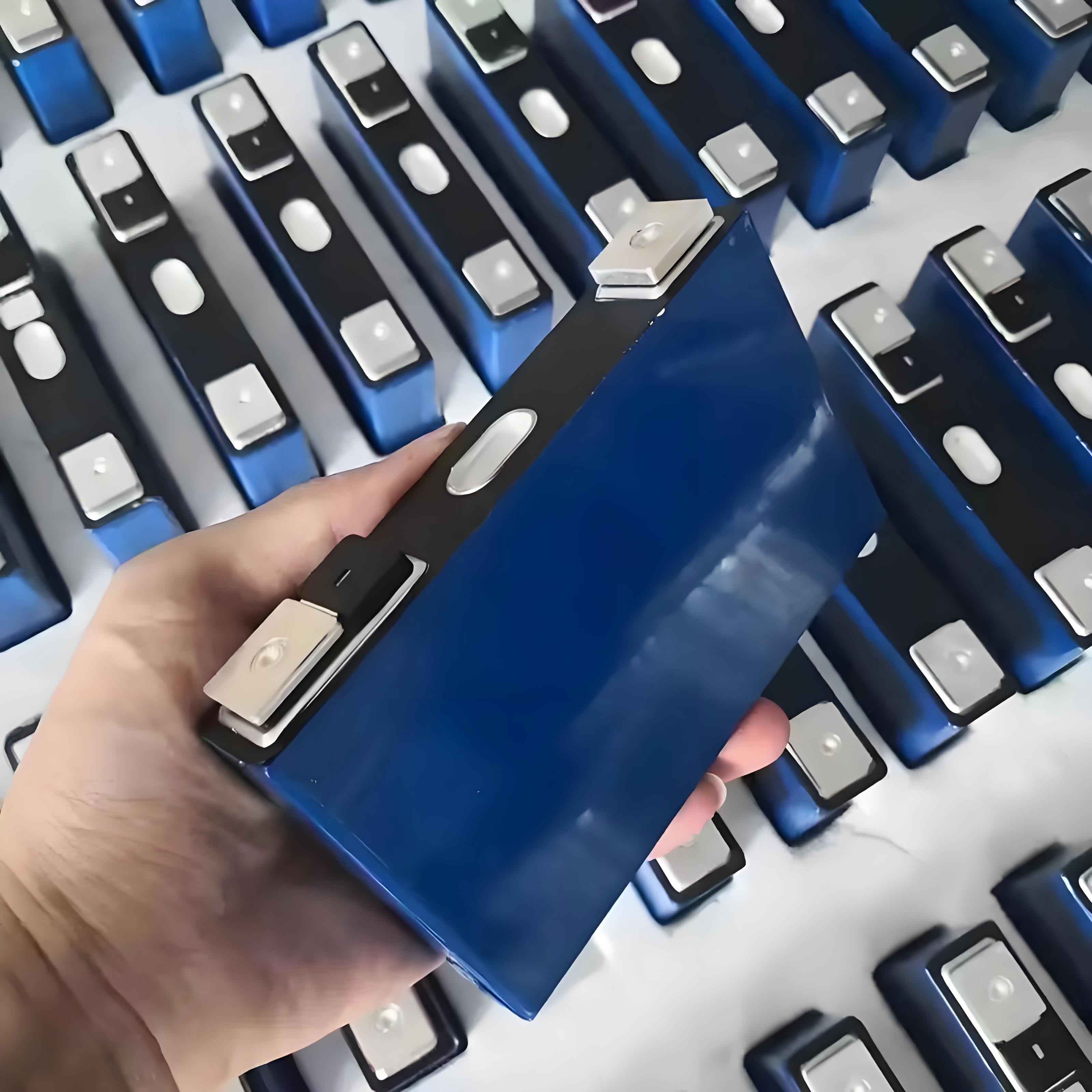
The LiFePO4 cells (230 Ah, 3.65 V nominal voltage) were sourced from China Lithium Battery Technology Co., Ltd. Key parameters are summarized in Table 1.
Table 1: LiFePO4 Battery Properties
| Parameter | Value |
|---|---|
| Dimensions (mm) | 175 × 54 × 207 |
| Density (kg/m³) | 2151.3 |
| Specific Heat (J/kg·K) | 1412 |
| Thermal Conductivity (W/m·K) | x: 18.0, y: 1.5, z: 18.0 |
Cells were fully charged (3.65 V CC-CV) and equilibrated at 25°C for 24 hours before testing.
2.2 Module Configuration
- Single-column module: Four cells connected in series.
- Dual-column module: Extended to two columns for multi-directional propagation analysis.
Thermocouples (KPS-BP-K-0.3-300-FF-K-0.5-300) were embedded at the center of each cell’s large surfaces to monitor temperature. A 900 W heating plate and aerogel insulation pads (3 mm thickness) were used to trigger and confine thermal runaway.
3. Mathematical Model
3.1 Governing Equations
Heat transfer within the LiFePO4 module was modeled using the energy conservation equation:ρCp∂T∂t+∇⋅(k∇T)=Qtot−hA(T−Tamb)+ΦρCp∂t∂T+∇⋅(k∇T)=Qtot−hA(T−Tamb)+Φ
where:
- ρρ: Density (kg/m³)
- CpCp: Specific heat (J/kg·K)
- kk: Thermal conductivity tensor (W/m·K)
- QtotQtot: Total heat generation (W/m³)
- ΦΦ: Radiative heat flux (W/m²), calculated as:
Φ=ϵσ(Tamb4−T4)Φ=ϵσ(Tamb4−T4)
3.2 Thermal Abuse Reactions
Four exothermic reactions dominate LiFePO4 thermal runaway:
- SEI Decomposition (80–120°C):
Rsei=Aseiexp(−Ea,seiRT)cseimseiRsei=Aseiexp(−RTEa,sei)cseimsei
- Anode-Electrolyte Reaction (>120°C):
Rne=Ane(tseitsei,ref)exp(−Ea,neRT)Rne=Ane(tsei,reftsei)exp(−RTEa,ne)
- Cathode-Electrolyte Reaction:
Rpe=Apeα(1−α)Rpe=Apeα(1−α)
- Electrolyte Self-Decomposition (>200°C):
Rele=ARele=A
Total heat generation:Qtot=Qsei+Qne+Qpe+QeleQtot=Qsei+Qne+Qpe+Qele
Table 2: Reaction Parameters for LiFePO4 Thermal Abuse Model
| Reaction | HH (J/kg) | AA (s⁻¹) | EaEa (J/mol) |
|---|---|---|---|
| SEI Decomposition | 7.21×1067.21×106 | 1.70×1051.70×105 | 1.14×1051.14×105 |
| Anode-Electrolyte | 9.00×1069.00×106 | 2.50×1052.50×105 | 1.17×1051.17×105 |
| Cathode-Electrolyte | 2.53×1062.53×106 | 6.70×1056.70×105 | 1.26×1051.26×105 |
| Electrolyte Decomposition | 1.60×1061.60×106 | 5.14×1055.14×105 | 2.70×1052.70×105 |
4. Results and Analysis
4.1 Single-Column Module (End-Triggered)
- Propagation Pattern: Sequential front-to-back (1→2→3→4).
- Peak Temperatures:
- Cell 1: 363°C (initial trigger)
- Cell 4: 662°C (final stage)
- Total Duration: 2,890 s.
Table 3: Thermal Runaway Trigger Times (End-Triggered)
| Cell | Trigger Time (s) |
|---|---|
| 1 | 720 |
| 2 | 1,710 |
| 3 | 2,660 |
| 4 | 2,890 |
4.2 Dual-Column Module
- Stage I (0–3,200 s): Sequential propagation in Column 1 (1→2→3→4).
- Stage II (3,200–4,860 s): Reverse-sequential + sequential in Column 2 (6→5→7→8).
- Peak Temperature: 735°C (Cell 8).
4.3 Internal-Triggered Scenario
- Propagation Pattern: Reverse-sequential (2→1→3→4).
- Total Duration: 2,600 s (290 s faster than end-triggered).
- Peak Temperature: 550°C (lower than end-triggered case).
Table 4: Thermal Runaway Trigger Times Comparison
| Trigger Position | Total Duration (s) | Peak Temp. (°C) |
|---|---|---|
| End | 2,890 | 662 |
| Internal | 2,600 | 550 |
5. Discussion
- Propagation Dynamics:
- End-triggered thermal runaway exhibits slower but more intense heat accumulation.
- Internal triggering accelerates propagation due to bidirectional heat transfer.
- Design Implications:
- Single-column modules: Prioritize insulation at terminals to delay sequential.
- Multi-column modules: Implement inter-column barriers to mitigate reverse-sequential.
- Safety Protocols:
- Detection systems must account for trigger position-dependent response times.
- Phase-change materials (PCMs) could reduce speed by >60% (as per prior studies).
6. Conclusion
This study establishes a validated numerical model for predicting thermal runaway in LiFePO4 battery modules. Key findings include:
- End-triggered thermal runaway in single-column modules causes sequential with higher peak temperatures (662°C) but allows longer intervention windows (~2,890 s).
- Internal triggering reduces peak temperatures (550°C) but accelerates by 290 s, posing higher short-term risks.
- Dual-column modules exhibit hybrid patterns, necessitating tailored safety strategies.
These insights are critical for advancing thermal management systems in large-scale LiFePO4 battery applications, ensuring safer energy storage solutions.