
Lithium iron phosphate (LiFePO4) has emerged as a cornerstone of modern lithium-ion battery technology, prized for its safety, environmental sustainability, and cost-effectiveness. Despite these advantages, LiFePO4 batteries face inherent limitations in ion diffusion rates and electrical conductivity, which hinder their performance in high-power and low-temperature applications. Recent research has focused on overcoming these challenges through advanced modification techniques, including ion doping, surface coating, morphology control, and lithium supplementation. This article synthesizes the latest breakthroughs, theoretical frameworks, and practical implications of these strategies, supported by quantitative analyses, tables, and formulas.
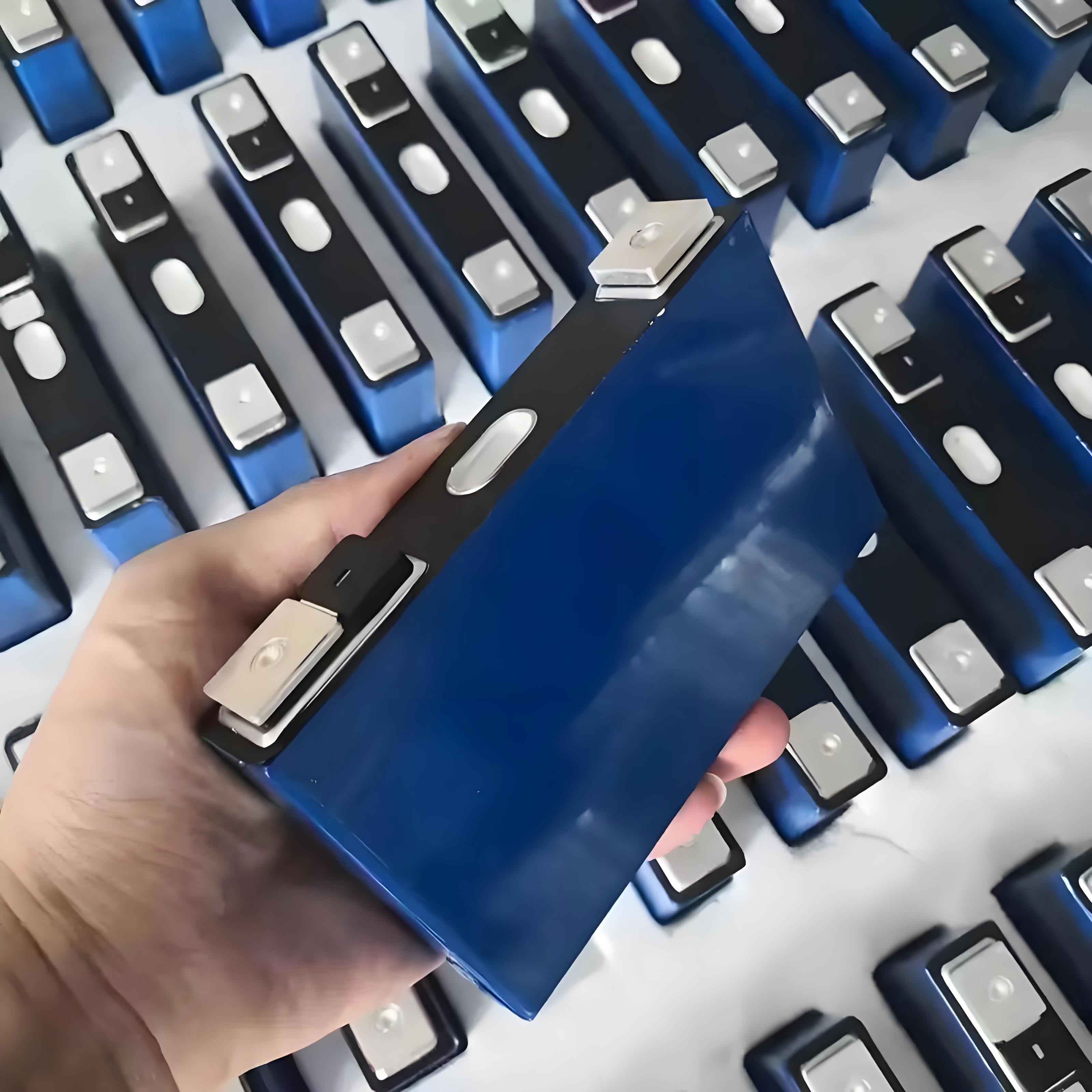
Fundamental Challenges in LiFePO4 Battery Performance
The orthorhombic crystal structure of LiFePO4 (space group Pnma) features Li+ ions migrating unidirectionally along the b-axis through octahedral channels. While this structure ensures thermal stability, it inherently restricts Li+ diffusion kinetics. The intrinsic electronic conductivity of LiFePO4 is exceptionally low (~10⁻⁹ S/cm), necessitating modifications to enhance both ionic and electronic transport. Key performance metrics such as rate capability, cycle life, and low-temperature efficiency are directly tied to these properties.
Strategies for Enhancing LiFePO4 Performance
1. Ion Doping: Tailoring Crystal Structure for Improved Conductivity
Ion doping introduces foreign atoms into the LiFePO4 lattice, creating structural defects that facilitate Li+ migration and electronic conduction. The effectiveness of doping depends on the ionic radius, valence state, and substitution site (Li, Fe, or O).
Mechanisms of Ion Doping:
- Lattice Expansion: Doping ions with smaller radii (e.g., Cu²⁺, Ti⁴⁺) widen Li+ diffusion channels.
- Electronic Bandgap Reduction: Conductive dopants (e.g., Al³⁺, Nb⁵⁺) lower the energy barrier for electron hopping.
- Charge Compensation: Aliovalent doping (e.g., Mg²⁺ substituting Li⁺) generates vacancies or interstitial sites, enhancing Li+ mobility.
The ionic diffusion coefficient (DLiDLi) can be modeled using the Arrhenius equation:DLi=D0⋅exp(−EakBT)DLi=D0⋅exp(−kBTEa)
where EaEa is the activation energy, kBkB is Boltzmann’s constant, and TT is temperature. Doping reduces EaEa, thereby increasing DLiDLi.
Table 1: Impact of Selected Dopants on LiFePO4 Electrochemical Performance
| Dopant | Substitution Site | Optimal Concentration | Initial Capacity (mAh/g) | Capacity Retention (%) |
|---|---|---|---|---|
| Al³⁺ | Li | Li₀.₉₃Al₀.₀₇FePO₄ | 95 (0.2C) | 98 (200 cycles) |
| Cu²⁺ | Fe | LiFe₀.₉₈Cu₀.₀₂PO₄ | 141.5 (0.1C) | 98 (100 cycles) |
| F⁻ | O | LiFePO₃.₈₇F₀.₁₃ | 165.7 (0.1C) | 92.8 (50 cycles) |
| V³⁺ + F⁻ | Fe + O | LiFe₀.₉₅V₀.₀₅PO₃.₉₁F₀.₀₉ | 165.7 (0.1C) | 95.7 (500 cycles) |
Dual-element doping (e.g., Mg²⁺ + F⁻) often yields synergistic effects, further lowering EaEa and improving rate performance. For instance, Huang et al. demonstrated that Mg-F co-doping increased DLiDLi by 40% compared to undoped LiFePO4.
2. Surface Coating: Bridging Electronic and Ionic Pathways
Surface coatings mitigate LiFePO4’s poor electronic conductivity by creating conductive networks. Common coating materials include carbon, metals, and ion-conductive ceramics.
Carbon Coating:
Carbon layers (e.g., graphene, carbon nanotubes) form percolation networks that enhance electron transport. The electrical conductivity (σσ) of carbon-coated LiFePO4 follows:σ=σLiFePO4+σcarbon⋅ϕcarbonσ=σLiFePO4+σcarbon⋅ϕcarbon
where ϕcarbonϕcarbon is the volume fraction of carbon. Qiao et al. achieved σ=4×10⁻²σ=4×10⁻² S/cm using carbon nanotubes, surpassing uncoated LiFePO4 by six orders of magnitude.
Metal and Ceramic Coatings:
Metals (Ag, Cu) and oxides (Al₂O₃, TiO₂) improve interfacial stability and suppress side reactions. For example, Ag-coated LiFePO4 exhibited negligible capacity fade after 200 cycles at 1C.
3. Morphology Control: Nanostructuring for Shortened Diffusion Paths
Reducing particle size to the nanoscale shortens Li+ diffusion paths, as described by the equation:τ=L2DLiτ=DLiL2
where ττ is the diffusion time and LL is the diffusion length. Nanoscale LiFePO4 (<100 nm) reduces ττ by up to 90%, enabling high-rate performance.
Table 2: Performance of Nanostructured LiFePO4
| Synthesis Method | Particle Size (nm) | Discharge Capacity (mAh/g) | Rate (C) | Capacity Retention (%) |
|---|---|---|---|---|
| Solvothermal | 50–100 | 163.4 (0.1C) | 10C | 90 (1,000 cycles) |
| Ball Milling + Sintering | 40–100 | 160 (0.2C) | 5C | 92.9 (100 cycles) |
| Solvent-Free | 20–50 | 148.6 (5C) | 30C | 96.88 (700 cycles) |
However, nanoparticles face challenges such as agglomeration and reduced tap density. Advanced synthesis techniques, including spray drying and template-assisted growth, address these issues.
4. Lithium Supplementation: Compensating Irreversible Losses
Initial lithium loss during solid-electrolyte interface (SEI) formation reduces coulombic efficiency. Prelithiation additives (e.g., Li₂O, LiF) replenish active lithium:Litotal=LiLiFePO4+Lisupplement−LiSEILitotal=LiLiFePO4+Lisupplement−LiSEI
Sun et al. reported a 20% increase in initial capacity using LiF-Co nanocomposites.
Future Directions and Integrated Approaches
While individual modification strategies yield significant improvements, hybrid approaches combining doping, coating, and nanostructuring show promise. For instance, dual-doped LiFePO4 with carbon and TiO₂ coatings achieved a capacity of 161.5 mAh/g at 5C and 92.9% retention over 100 cycles.
Emerging Trends:
- Atomic-Scale Characterization: In-situ TEM and DFT simulations to map Li+ migration pathways.
- Multi-Functional Coatings: Materials that simultaneously enhance ionic and electronic conductivity (e.g., Li3PO4-LiTiO3 composites).
- Sustainable Synthesis: Low-energy methods for scalable production of modified LiFePO4.
Conclusion
The LiFePO4 battery remains a pivotal technology for energy storage, driven by relentless innovation in material science. By systematically addressing ion diffusion and conductivity limitations through doping, coating, morphology control, and lithium supplementation, researchers have unlocked unprecedented performance metrics. Future advancements will hinge on integrating these strategies and deepening mechanistic understanding at atomic scales. As global demand for high-performance, sustainable batteries grows, LiFePO4 stands poised to dominate the next generation of energy storage solutions.